
 افریقہ
 ایشیا
ایشیا یورپ
یورپ جنوبی امریکا
 آسٹریلیا اور اوشیانا
 انٹارکٹیکا
 بحر الکاہل
 بحر اوقیانوس
 بحر ہند
 بحر منجمد شمالی
 بحیرۂ روم
 بحیرۂ احمر
 بحیرۂ کیریبین
 بحیرۂ مرجان
 بحیرۂ جنوبی چین
 بحیرۂ فلپائن
 بحیرۂ انڈمان
 بحیرۂ شمال
 بحیرۂ تیمور اور ارافورا
 خلیج بنگال
 خلیج کیلیفورنیا
Blue blubber jellyfish
 ڈنک والے دھاگے
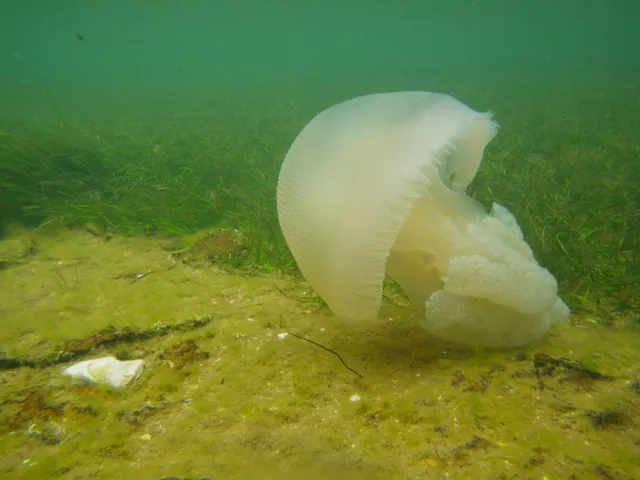
The blue blubber jellyfish is a large, rounded jellyfish that lives along the coast of Eastern Australia. It is blue to purple and pulses slowly as it swims. Its arms carry stings, and it can form huge blooms in estuaries and shallow bays.1


 اسے کیسے پہچانیں
- Colour ranges from light blue to dark blue or purple.1
- Large, rounded bell, about 25 to 30 cm across.1
- The bell pulses in a rapid, staccato rhythm.1
- Found along the Eastern Australian coast, often in large numbers.1
اکثر اس سے غلطی ہوتی ہے: Two forms are recognised on the Eastern Australian coast. Catostylus mosaicus mosaicus, found in New South Wales and southern Queensland, has small or no papillae (small projections) and a larger bell. Catostylus mosaicus conservitus, found in the Bass Strait, has clear papillae, is blue or white, and has a smaller bell.1
زہر کی طاقت
کچھ چھوتے ہی ہزاروں ننھے ڈنک والے خلیے چل پڑتے ہیں۔
اس کا زہر کیا کرتا ہے؟
Its arms carry stinging cells and can produce a mild but irritating sting. The sting is described as mild, and no further effects on the body are described.1
یہ انسانوں کے لیے کتنا خطرناک ہے؟
انسانوں کے لیے خطرہ: تکلیف دہبہت درد ہو سکتا ہے، لیکن تقریباً کبھی سنگین نہیں ہوتا۔Its sting is described as mild but irritating. The main problem is the large blooms, which can interrupt recreation in coastal areas.1
ڈرنے پر یہ کیا کرتا ہے؟
Its stinging cells on the arms are used to defend it from threats.1
 اگر یہ ڈنک مارے
- پانی سے باہر نکلو اور چپکے ہوئے دھاگے (دستانوں یا کپڑے سے) ہٹا دو۔
- گرم سمندروں کی باکس جیلی فش کے لیے: ڈنک پر کم از کم 30 سیکنڈ سرکہ ڈالو، مدد بلاؤ اور CPR کے لیے تیار رہو۔ نیلی بوتل اور زیادہ تر دوسری جیلی فش کے لیے: سمندری پانی سے دھوؤ، پھر درد کے لیے گرم پانی۔
ہمیشہ پہلے اپنا ایمرجنسی نمبر (112، 000، 911) ملاؤ۔ یہ ابتدائی طبی امداد کی عام رہنمائی ہے، طبی مشورہ نہیں۔ ابتدائی طبی امداد کی بنیادی باتیں
 محفوظ رہو
- کسی جنگلی جانور کو کبھی مت چھوؤ، پکڑو یا چھیڑو، چاہے وہ چھوٹا ہو، اور چاہے سویا ہوا یا مرا ہوا لگے۔
- اسے جگہ دو۔ اگر یہ ملے تو پرسکون رہو، آہستہ آہستہ پیچھے ہٹو اور اسے اپنے راستے جانے دو۔
- اگر یہ تمہیں ڈنک مارے: پرسکون رہو، ہلو مت، اپنا ایمرجنسی نمبر (112، 000، 911) ملاؤ یا جلدی ہسپتال پہنچو۔ یاد رکھو کہ یہ کیسا دکھتا تھا، تصویر مدد کرتی ہے۔
یہ تمہارے پیچھے نہیں پڑا۔ یہ اپنا زہر شکار پکڑنے یا اپنی حفاظت کے لیے استعمال کرتا ہے، اور چھپنا زیادہ پسند کرتا ہے۔ محفوظ رہنے کے بارے میں مزید
دنیا میں کہاں؟
یہ کتنا بڑا ہے؟
یہ کتنا لمبا ہے؟
 ایک قطار میں 9 کھلونا اینٹوں جتنا لمبا
Blue blubber jellyfish تمہارے مقابلے میں کتنا بڑا ہے؟
بس تمہارے براؤزر میں تھوڑا حساب۔ کچھ بھی محفوظ یا کہیں بھیجا نہیں جاتا۔
یہ کتنا تیز ہے؟


حقائق
Its stinging venom is being studied for possible anticancer effects against lung cancer cells in laboratory research.1
It is harvested for food and is considered a delicacy in some countries, including China and Japan.1
A small copepod lives on its oral arms and is thought to feed on mucus the jellyfish produces.1
Blooms can be very dense, and they can take food away from other animals such as fish.1
Sea turtles and jellyfish-eating fish, including tuna, butterfish, sunfish and spiny dogfish, prey on it.1
It has a partnership with photosynthetic algae, though it has less of these algae than many other jellyfish.1
زہر کے ماہرین کے لیے
- سائنسی نام
- Catostylus mosaicus
- گروہ
- جیلی فش اور ڈنک مارنے والے سمندری جانور
- خاندان
- Catostylidae2
- ترتیب
- Rhizostomeae
- براعظم
- بحر ہند, بحر الکاہل, بحیرۂ مرجان, سمندر
- بچے
- Fertilised eggs develop into free-swimming planula larvae, which settle on the seabed and grow into a polyp stage. The polyp then produces young jellyfish (ephyrae), which mature into the free-swimming medusa.1
- انسانوں کے لیے خطرہ
- 2 / 5: تکلیف دہ3
حقائق کہاں سے آتے ہیں
- Jelly blubber (Wikipedia (CC BY-SA 4.0))
- Catostylus mosaicus (iNaturalist): نام اور درجہ بندی۔
- Venom Wiki: خطرے کی سطح، عام سائز اور رفتار کا اندازہ ہمارا اپنا ہے۔ دیکھو ہم انہیں کیسے نکالتے ہیں: ہم خطرہ کیسے ناپتے ہیں.
اس صفحے کی ہر حقیقت کے ساتھ ایک نمبر ہے جو اس کے ذریعے کی طرف اشارہ کرتا ہے۔ اگر ہم سے کچھ غلط ہوا تو معاف کرنا، ہم جانوروں کے شوقین ہیں، کوئی سائنسی رسالہ نہیں۔ ہمیں [email protected] پر بتاؤ، ہم ٹھیک کر دیں گے۔
 بچھو بھوکا ہے! Venom Wiki ایک شخص کا منصوبہ ہے: مفت، بغیر اشتہار اور بغیر ٹریکر۔ ایک چھوٹی سی ٹپ اسے آن لائن رکھنے میں مدد کرتی ہے۔بچھو کو کھانا کھلاؤ
اسی گروہ کے مزید جانور: جیلی فش اور ڈنک مارنے والے سمندری جانور
 Australian box jellyfishجیلی فش اور ڈنک مارنے والے سمندری جانورجان لیوامت چھوؤ
 Irukandji jellyfishجیلی فش اور ڈنک مارنے والے سمندری جانورجان لے سکتا ہےمت چھوؤ
 Portuguese man o' warجیلی فش اور ڈنک مارنے والے سمندری جانورڈاکٹر کی ضرورت ہےمت چھوؤ
 Lion's mane jellyfishجیلی فش اور ڈنک مارنے والے سمندری جانوربس درد ہوتا ہےمت چھوؤ
 Moon jellyfishجیلی فش اور ڈنک مارنے والے سمندری جانوربے ضرر
 Common kingslayerجیلی فش اور ڈنک مارنے والے سمندری جانورجان لے سکتا ہےمت چھوؤ
یہاں بھی رہتا ہے: بحر ہند
 Geography coneمخروطی گھونگے اور آکٹوپسجان لیوا
 Greater blue-ringed octopusمخروطی گھونگے اور آکٹوپسجان لیوا
 Southern blue-ringed octopusمخروطی گھونگے اور آکٹوپسجان لیوا
 Hawksbill sea turtleدوسرے زہریلے جانورجان لے سکتا ہے
 Reef stonefishزہریلی مچھلیاںجان لے سکتا ہےمت چھوؤ
 Crown-of-thorns starfishخارپشت، ستارہ مچھلیاں اور کیڑےڈاکٹر کی ضرورت ہےمت چھوؤ