
 افریقہ
 ایشیا
ایشیا یورپ
یورپ جنوبی امریکا
 آسٹریلیا اور اوشیانا
 انٹارکٹیکا
 بحر الکاہل
 بحر اوقیانوس
 بحر ہند
 بحر منجمد شمالی
 بحیرۂ روم
 بحیرۂ احمر
 بحیرۂ کیریبین
 بحیرۂ مرجان
 بحیرۂ جنوبی چین
 بحیرۂ فلپائن
 بحیرۂ انڈمان
 بحیرۂ شمال
 بحیرۂ تیمور اور ارافورا
 خلیج بنگال
 خلیج کیلیفورنیا
By-the-wind sailor
 ڈنک والے دھاگے
The by-the-wind sailor is a small, deep blue animal that floats on the surface of the open ocean. It is not a single creature but a colony of tiny linked animals, and it moves by catching the wind with a small stiff sail. Its stinging tentacles are generally harmless to people, but they can irritate the skin.1

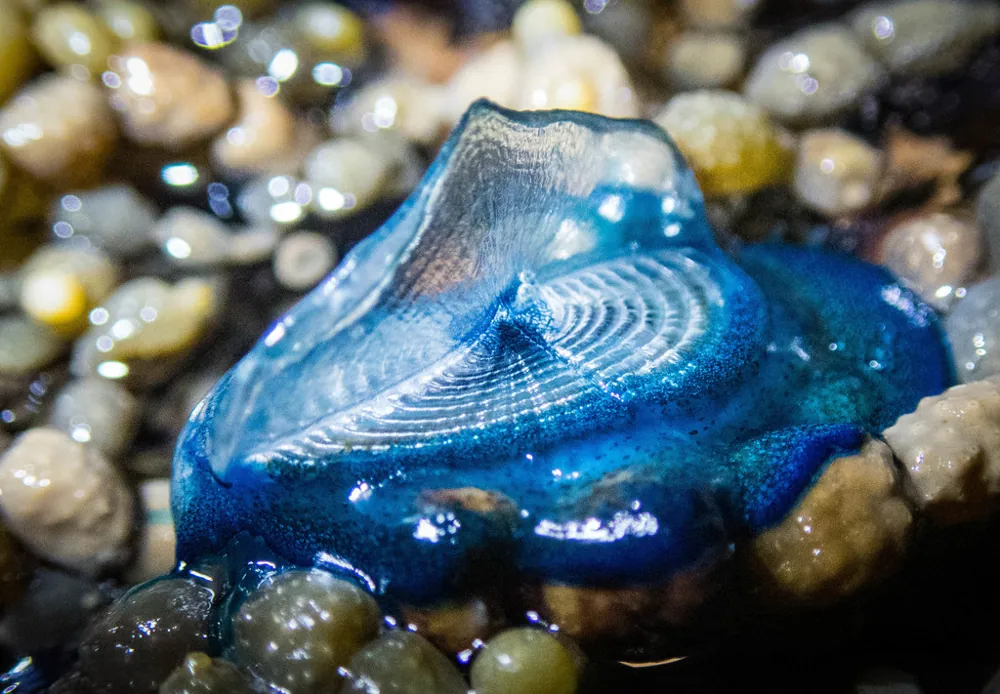
 اسے کیسے پہچانیں
زہر کی طاقت
کچھ چھوتے ہی ہزاروں ننھے ڈنک والے خلیے چل پڑتے ہیں۔
اس کا زہر کیا کرتا ہے؟
Its nematocysts contain toxins that are effective against its prey, which are mostly plankton. The nematocysts are relatively benign to humans, but each person may respond differently to the toxin. Contact may cause irritation to exposed skin.1
یہ انسانوں کے لیے کتنا خطرناک ہے؟
انسانوں کے لیے خطرہ: ہلکاشہد کی مکھی کے ڈنک جتنا یا اس سے کم۔ انسانوں کے لیے تقریباً بے ضرر۔It is relatively harmless to humans. Its main effect is possible skin irritation after contact. Mass strandings can leave large numbers of dying and rotting animals on beaches.1
 اگر یہ ڈنک مارے
- پانی سے باہر نکلو اور چپکے ہوئے دھاگے (دستانوں یا کپڑے سے) ہٹا دو۔
- گرم سمندروں کی باکس جیلی فش کے لیے: ڈنک پر کم از کم 30 سیکنڈ سرکہ ڈالو، مدد بلاؤ اور CPR کے لیے تیار رہو۔ نیلی بوتل اور زیادہ تر دوسری جیلی فش کے لیے: سمندری پانی سے دھوؤ، پھر درد کے لیے گرم پانی۔
ہمیشہ پہلے اپنا ایمرجنسی نمبر (112، 000، 911) ملاؤ۔ یہ ابتدائی طبی امداد کی عام رہنمائی ہے، طبی مشورہ نہیں۔ ابتدائی طبی امداد کی بنیادی باتیں
 محفوظ رہو
- کسی جنگلی جانور کو کبھی مت چھوؤ، پکڑو یا چھیڑو، چاہے وہ چھوٹا ہو، اور چاہے سویا ہوا یا مرا ہوا لگے۔
- اسے جگہ دو۔ اگر یہ ملے تو پرسکون رہو، آہستہ آہستہ پیچھے ہٹو اور اسے اپنے راستے جانے دو۔
- اگر یہ تمہیں ڈنک مارے: پرسکون رہو، ہلو مت، اپنا ایمرجنسی نمبر (112، 000، 911) ملاؤ یا جلدی ہسپتال پہنچو۔ یاد رکھو کہ یہ کیسا دکھتا تھا، تصویر مدد کرتی ہے۔
یہ تمہارے پیچھے نہیں پڑا۔ یہ اپنا زہر شکار پکڑنے یا اپنی حفاظت کے لیے استعمال کرتا ہے، اور چھپنا زیادہ پسند کرتا ہے۔ محفوظ رہنے کے بارے میں مزید
دنیا میں کہاں؟
یہ کتنا بڑا ہے؟
یہ کتنا لمبا ہے؟
 ایک قطار میں 2 کھلونا اینٹوں جتنا لمبا
 180 سیکنڈ میں بڑے سوئمنگ پول (50 میٹر) کی لمبائی تیر سکتا ہے
By-the-wind sailor تمہارے مقابلے میں کتنا بڑا ہے؟
بس تمہارے براؤزر میں تھوڑا حساب۔ کچھ بھی محفوظ یا کہیں بھیجا نہیں جاتا۔
یہ کتنا تیز ہے؟

حقائق
Its floating colonies are mirror images of each other, either 'left-handed' or 'right-handed', and this affects where they drift. In the northern Pacific, one form tends to drift to North America and the other to eastern Asia, such as Japan.1
Each blue 'animal' with a sail is really a colony of linked polyps that share food through a canal system.1
Each colony is either all male or all female.1
Its sail is not a fin. It works like a sail, so the animal tends to drift downwind at a small angle to the wind.1
Its tiny jellyfish carry zooxanthellae, single-celled organisms that use sunlight to provide energy, a feature also found in corals.1
It has no means of moving other than its sail, so it depends on prevailing winds, and mass strandings on beaches happen in many parts of the world.1
غلط فہمی توڑو
غلط فہمی: Each blue sail is a single, simple animal.
سچ: Each apparent individual is a colony of many connected polyps that share food and divide the work between feeding, reproductive and protective polyps.1
زہر کے ماہرین کے لیے
- سائنسی نام
- Velella velella
- گروہ
- جیلی فش اور ڈنک مارنے والے سمندری جانور
- خاندان
- Porpitidae2
- ترتیب
- Anthoathecata
- براعظم
- بحر الکاہل, بحر اوقیانوس, بحر ہند, بحیرۂ روم, بحر جنوبی, انٹارکٹیکا, سمندر
- بچے
- Each colony's feeding polyps (gonozooids) bud off thousands of tiny jellyfish, each about 1 mm wide, over several weeks. These develop into a free-swimming larva called a conaria, which grows into a new floating colony.1
- انسانوں کے لیے خطرہ
- 1 / 5: ہلکا3
حقائق کہاں سے آتے ہیں
- Velella (Wikipedia (CC BY-SA 4.0))
- Velella velella (iNaturalist): نام اور درجہ بندی۔
- Venom Wiki: خطرے کی سطح، عام سائز اور رفتار کا اندازہ ہمارا اپنا ہے۔ دیکھو ہم انہیں کیسے نکالتے ہیں: ہم خطرہ کیسے ناپتے ہیں.
اس صفحے کی ہر حقیقت کے ساتھ ایک نمبر ہے جو اس کے ذریعے کی طرف اشارہ کرتا ہے۔ اگر ہم سے کچھ غلط ہوا تو معاف کرنا، ہم جانوروں کے شوقین ہیں، کوئی سائنسی رسالہ نہیں۔ ہمیں [email protected] پر بتاؤ، ہم ٹھیک کر دیں گے۔
 بچھو بھوکا ہے! Venom Wiki ایک شخص کا منصوبہ ہے: مفت، بغیر اشتہار اور بغیر ٹریکر۔ ایک چھوٹی سی ٹپ اسے آن لائن رکھنے میں مدد کرتی ہے۔بچھو کو کھانا کھلاؤ
اسی گروہ کے مزید جانور: جیلی فش اور ڈنک مارنے والے سمندری جانور
 Australian box jellyfishجیلی فش اور ڈنک مارنے والے سمندری جانورجان لیوامت چھوؤ
 Irukandji jellyfishجیلی فش اور ڈنک مارنے والے سمندری جانورجان لے سکتا ہےمت چھوؤ
 Portuguese man o' warجیلی فش اور ڈنک مارنے والے سمندری جانورڈاکٹر کی ضرورت ہےمت چھوؤ
 Lion's mane jellyfishجیلی فش اور ڈنک مارنے والے سمندری جانوربس درد ہوتا ہےمت چھوؤ
 Moon jellyfishجیلی فش اور ڈنک مارنے والے سمندری جانوربے ضرر
 Common kingslayerجیلی فش اور ڈنک مارنے والے سمندری جانورجان لے سکتا ہےمت چھوؤ
یہاں بھی رہتا ہے: بحر الکاہل
 Geography coneمخروطی گھونگے اور آکٹوپسجان لیوا
 Greater blue-ringed octopusمخروطی گھونگے اور آکٹوپسجان لیوا
 Japanese pufferfishدوسرے زہریلے جانورجان لیوا
 Southern blue-ringed octopusمخروطی گھونگے اور آکٹوپسجان لیوا
 Hawksbill sea turtleدوسرے زہریلے جانورجان لے سکتا ہے
 Reef stonefishزہریلی مچھلیاںجان لے سکتا ہےمت چھوؤ