
 افریقہ
 ایشیا
ایشیا یورپ
یورپ جنوبی امریکا
 آسٹریلیا اور اوشیانا
 انٹارکٹیکا
 بحر الکاہل
 بحر اوقیانوس
 بحر ہند
 بحر منجمد شمالی
 بحیرۂ روم
 بحیرۂ احمر
 بحیرۂ کیریبین
 بحیرۂ مرجان
 بحیرۂ جنوبی چین
 بحیرۂ فلپائن
 بحیرۂ انڈمان
 بحیرۂ شمال
 بحیرۂ تیمور اور ارافورا
 خلیج بنگال
 خلیج کیلیفورنیا
Forest cobra
 کاٹنا
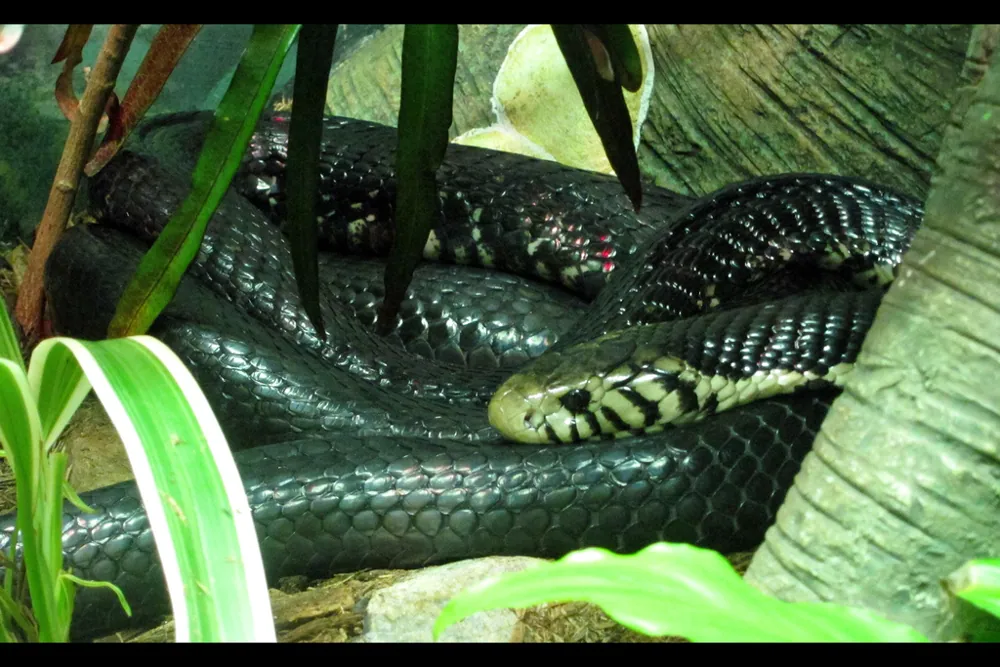
کاٹناThe forest cobra is a large, highly venomous snake that lives in central and western Africa. It is the largest true cobra, and it is one of the few African cobras that lives in high forest. It is dangerous, so anyone bitten needs urgent medical care.1



 اسے کیسے پہچانیں
- Forest and forest-edge forms are glossy black, with cream or white chin, throat and belly, and broad black cross-bars and blotches.1
- The sides of the head show black and white markings that look like vertical bars on the lips.1
- West African savanna forms are banded black and yellow, with a black tail and yellow lips, chin and throat.1
- East African coastal forms are brownish or blackish-brown above, with a yellow or cream belly speckled with brown or black.1
- Adults are usually 140 to 220 cm long.1
زہر کی طاقت
کاٹتے وقت زہر اس کے زہریلے دانتوں یا دانتوں سے باہر آتا ہے۔
اس کا زہر کیا کرتا ہے؟
Its venom is a postsynaptic neurotoxin, which attacks the nerves and causes severe neurotoxicity. Symptoms can include drooping eyelids, drowsiness, limb paralysis, hearing loss, inability to speak, dizziness, shock, low blood pressure, stomach pain, fever and breathing problems. A large amount of venom can be injected in one bite.1
یہ انسانوں کے لیے کتنا خطرناک ہے؟
انسانوں کے لیے خطرہ: بہت خطرناکبغیر علاج کے یہ انسان کی جان لے سکتا ہے۔It is one of the least frequent causes of snake bites among African cobras, largely because it lives in forests. Even so, it ranks as the 4th most venomous Naja (true cobra) species, and a bite is a life-threatening emergency. Deaths from respiratory failure have been reported. A child in Ghana died within 20 minutes of being bitten by a snake thought to be this species.1
 اچھی خبر: ڈاکٹروں کے پاس اس کی دوا (تریاق) یا علاج ہے۔1
ڈرنے پر یہ کیا کرتا ہے؟
When threatened, it raises the front of its body off the ground, spreads a narrow hood and hisses loudly. If cornered or agitated, it can attack quickly.1
 اگر یہ کاٹے
- Most victims survive if antivenom is given promptly, as soon as signs of envenomation appear. Because a bite is a life-threatening emergency, the bitten person needs urgent medical care.1
- اس شخص کو ساکت اور پرسکون رکھو، انگوٹھیاں اور تنگ چیزیں اتارو، اور جلدی ہسپتال پہنچو: تریاق ہی علاج ہے۔
ہمیشہ پہلے اپنا ایمرجنسی نمبر (112، 000، 911) ملاؤ۔ یہ ابتدائی طبی امداد کی عام رہنمائی ہے، طبی مشورہ نہیں۔ ابتدائی طبی امداد کی بنیادی باتیں
 محفوظ رہو
- کسی جنگلی جانور کو کبھی مت چھوؤ، پکڑو یا چھیڑو، چاہے وہ چھوٹا ہو، اور چاہے سویا ہوا یا مرا ہوا لگے۔
- اسے جگہ دو۔ اگر یہ ملے تو پرسکون رہو، آہستہ آہستہ پیچھے ہٹو اور اسے اپنے راستے جانے دو۔
- اگر یہ تمہیں کاٹے: پرسکون رہو، ہلو مت، اپنا ایمرجنسی نمبر (112، 000، 911) ملاؤ یا جلدی ہسپتال پہنچو۔ یاد رکھو کہ یہ کیسا دکھتا تھا، تصویر مدد کرتی ہے۔
یہ تمہارے پیچھے نہیں پڑا۔ یہ اپنا زہر شکار پکڑنے یا اپنی حفاظت کے لیے استعمال کرتا ہے، اور چھپنا زیادہ پسند کرتا ہے۔ محفوظ رہنے کے بارے میں مزید
یہ کتنا بڑا ہے؟
یہ کتنا لمبا ہے؟
یہ کتنا بھاری ہے؟
 ناک سے دم تک 3 کتوں جتنا لمبا
 ایک قطار میں رکھے 18 کیلوں جتنا لمبا
 تقریباً ایک پالتو بلی جتنا بھاری
 41 سیکنڈ میں 100 میٹر طے کر سکتا ہے (سب سے تیز انسان کو 9.6 لگتے ہیں)
Forest cobra تمہارے مقابلے میں کتنا بڑا ہے؟
بس تمہارے براؤزر میں تھوڑا حساب۔ کچھ بھی محفوظ یا کہیں بھیجا نہیں جاتا۔
یہ کتنا تیز ہے؟


حقائق
It is the largest true cobra species and possibly the largest of all Naja species in the world.1
It is an excellent climber and has been known to climb trees to 10 m or more.1
It swims well and is often considered semi-aquatic.1
It does not spit or spray its venom.1
It is mainly active during the day in quiet areas, but it can be active at night in towns.1
حقائق کہاں سے آتے ہیں
- Forest cobra (Wikipedia (CC BY-SA 4.0))
- Naja melanoleuca (iNaturalist): نام اور درجہ بندی۔
- Venom Wiki: خطرے کی سطح، عام سائز اور رفتار کا اندازہ ہمارا اپنا ہے۔ دیکھو ہم انہیں کیسے نکالتے ہیں: ہم خطرہ کیسے ناپتے ہیں.
اس صفحے کی ہر حقیقت کے ساتھ ایک نمبر ہے جو اس کے ذریعے کی طرف اشارہ کرتا ہے۔ اگر ہم سے کچھ غلط ہوا تو معاف کرنا، ہم جانوروں کے شوقین ہیں، کوئی سائنسی رسالہ نہیں۔ ہمیں [email protected] پر بتاؤ، ہم ٹھیک کر دیں گے۔
 بچھو بھوکا ہے! Venom Wiki ایک شخص کا منصوبہ ہے: مفت، بغیر اشتہار اور بغیر ٹریکر۔ ایک چھوٹی سی ٹپ اسے آن لائن رکھنے میں مدد کرتی ہے۔بچھو کو کھانا کھلاؤ
 Black mamba
 Egyptian cobra
 Cape cobra
 Eastern green mamba
 Jameson's mamba
 Western green mamba
 Deathstalker
 Puff adder
 Boomslang
 Fat-tailed scorpion
 Gaboon viper
 Western honey bee