
 افریقہ
 ایشیا
ایشیا یورپ
یورپ جنوبی امریکا
 آسٹریلیا اور اوشیانا
 انٹارکٹیکا
 بحر الکاہل
 بحر اوقیانوس
 بحر ہند
 بحر منجمد شمالی
 بحیرۂ روم
 بحیرۂ احمر
 بحیرۂ کیریبین
 بحیرۂ مرجان
 بحیرۂ جنوبی چین
 بحیرۂ فلپائن
 بحیرۂ انڈمان
 بحیرۂ شمال
 بحیرۂ تیمور اور ارافورا
 خلیج بنگال
 خلیج کیلیفورنیا
Hickory tussock moth
 ڈنک والے بال
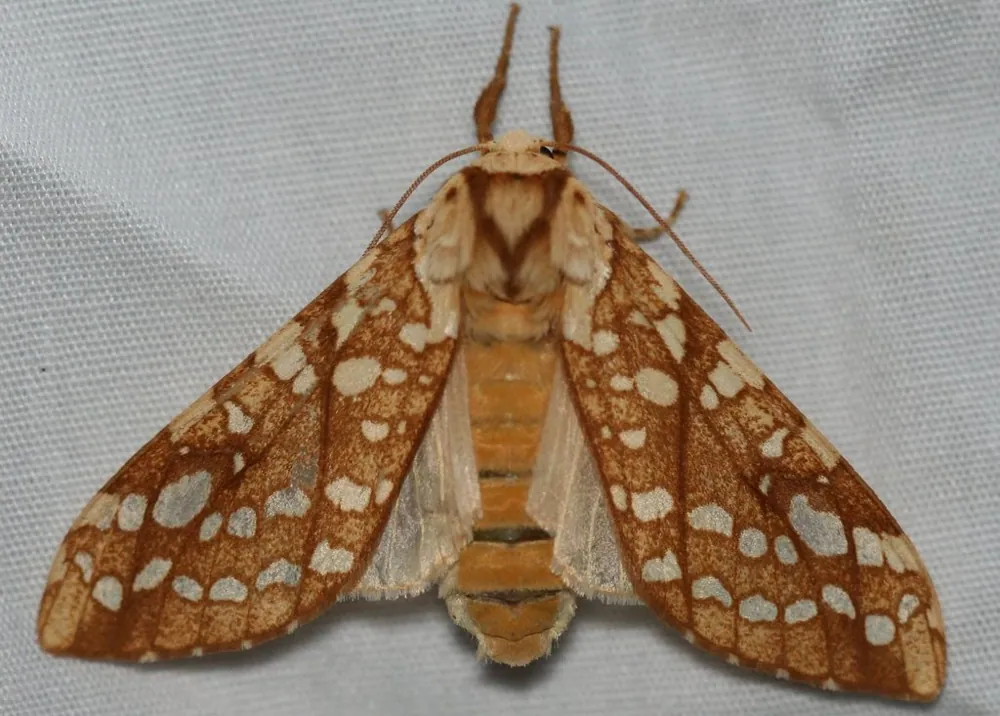
The hickory tussock moth is a moth whose caterpillars are covered in long, hairy tufts. It lives across the eastern half of North America. Its hairs can cause an itchy rash, but no venom has been found in it.1

 اسے کیسے پہچانیں
- The caterpillar is completely covered in long, hairlike setae arranged in spreading tufts, and most are white.1
- The caterpillar has black tufts along the middle of its back and four long black hair pencils, two near the front and two near the back.1
- The caterpillar has black spots along its sides and a black head capsule.1
- The adult moth has yellowish-brown forewings marked with white splotches, which look like stained glass.1
- The adult moth has mostly white hindwings and a hairy, pale brown body.1
زہر کی طاقت
ننھے بال یا روئیں جلد میں ٹوٹ کر چبھتے ہیں۔
اس کا زہر کیا کرتا ہے؟
No venom has yet been isolated or identified in this moth. Its hairs cause irritant contact dermatitis, an itchy rash, in many people, especially those prone to allergies. The rash can resemble exposure to urushiol, the irritant found in poison ivy.1
یہ انسانوں کے لیے کتنا خطرناک ہے؟
انسانوں کے لیے خطرہ: ہلکاشہد کی مکھی کے ڈنک جتنا یا اس سے کم۔ انسانوں کے لیے تقریباً بے ضرر۔In over 350 documented cases, most people had no symptoms within 24 hours. No case involved anaphylaxis, a severe allergic reaction. The hairs are microscopically barbed, and if they are transferred from the hands to the eyes they may rarely cause serious medical complications.1
 اگر تم اس کے بال چھوؤ
- سنڈی کے ڈنک والے بالوں کے لیے: انہیں چپکنے والی ٹیپ سے اتارو، پھر جلد دھوؤ۔ رگڑو مت۔
- کاٹنے پر: دھوؤ اور ٹھنڈا کرو۔ اگر طبیعت خراب لگے یا آسانی سے خون بہے تو طبی مدد لو۔
ہمیشہ پہلے اپنا ایمرجنسی نمبر (112، 000، 911) ملاؤ۔ یہ ابتدائی طبی امداد کی عام رہنمائی ہے، طبی مشورہ نہیں۔ ابتدائی طبی امداد کی بنیادی باتیں
 محفوظ رہو
- کسی جنگلی جانور کو کبھی مت چھوؤ، پکڑو یا چھیڑو، چاہے وہ چھوٹا ہو، اور چاہے سویا ہوا یا مرا ہوا لگے۔
- اسے جگہ دو۔ اگر یہ ملے تو پرسکون رہو، آہستہ آہستہ پیچھے ہٹو اور اسے اپنے راستے جانے دو۔
- اگر تم نے اس کے بال چھو لیے: پرسکون رہو، ہلو مت، اپنا ایمرجنسی نمبر (112، 000، 911) ملاؤ یا جلدی ہسپتال پہنچو۔ یاد رکھو کہ یہ کیسا دکھتا تھا، تصویر مدد کرتی ہے۔
یہ تمہارے پیچھے نہیں پڑا۔ یہ اپنا زہر شکار پکڑنے یا اپنی حفاظت کے لیے استعمال کرتا ہے، اور چھپنا زیادہ پسند کرتا ہے۔ محفوظ رہنے کے بارے میں مزید
یہ کتنا بڑا ہے؟
یہ کتنا لمبا ہے؟
 تمہاری چھوٹی انگلی سے بھی چھوٹا
 باغ کے گھونگے سے بھی آہستہ
Hickory tussock moth تمہارے مقابلے میں کتنا بڑا ہے؟
بس تمہارے براؤزر میں تھوڑا حساب۔ کچھ بھی محفوظ یا کہیں بھیجا نہیں جاتا۔
یہ کتنا تیز ہے؟

حقائق
The hairs of the caterpillar are microscopically barbed, which is why they can irritate the skin.1
Young caterpillars feed in groups of about 100, but older caterpillars are solitary.1
The adult's forewings are marked with white splotches that look like stained glass.1
The loose cocoon has hairs woven into it and overwinters in leaf litter.1
غلط فہمی توڑو
غلط فہمی: The hickory tussock moth is venomous, as some anecdotal claims say.
سچ: No venom has been isolated or identified in this species. Its hairs cause an irritant skin rash in many people.1
حقائق کہاں سے آتے ہیں
- Lophocampa caryae (Wikipedia (CC BY-SA 4.0))
- Lophocampa caryae (iNaturalist): نام اور درجہ بندی۔
- Venom Wiki: خطرے کی سطح، عام سائز اور رفتار کا اندازہ ہمارا اپنا ہے۔ دیکھو ہم انہیں کیسے نکالتے ہیں: ہم خطرہ کیسے ناپتے ہیں.
اس صفحے کی ہر حقیقت کے ساتھ ایک نمبر ہے جو اس کے ذریعے کی طرف اشارہ کرتا ہے۔ اگر ہم سے کچھ غلط ہوا تو معاف کرنا، ہم جانوروں کے شوقین ہیں، کوئی سائنسی رسالہ نہیں۔ ہمیں [email protected] پر بتاؤ، ہم ٹھیک کر دیں گے۔
 بچھو بھوکا ہے! Venom Wiki ایک شخص کا منصوبہ ہے: مفت، بغیر اشتہار اور بغیر ٹریکر۔ ایک چھوٹی سی ٹپ اسے آن لائن رکھنے میں مدد کرتی ہے۔بچھو کو کھانا کھلاؤ
 Giant water bug
 Puss caterpillar
 Saddleback caterpillar
 Wheel bug
 Giant vinegaroon
 Rhodnius kissing bug
 ٹرسیوپیلو
 Eastern coral snake
 Eastern diamondback rattlesnake
 Eyelash viper
 Timber rattlesnake
 Western diamondback rattlesnake