
 افریقہ
 ایشیا
ایشیا یورپ
یورپ جنوبی امریکا
 آسٹریلیا اور اوشیانا
 انٹارکٹیکا
 بحر الکاہل
 بحر اوقیانوس
 بحر ہند
 بحر منجمد شمالی
 بحیرۂ روم
 بحیرۂ احمر
 بحیرۂ کیریبین
 بحیرۂ مرجان
 بحیرۂ جنوبی چین
 بحیرۂ فلپائن
 بحیرۂ انڈمان
 بحیرۂ شمال
 بحیرۂ تیمور اور ارافورا
 خلیج بنگال
 خلیج کیلیفورنیا
Six-eyed sand spider
 کاٹنا
کاٹناHahn's six-eyed sand spider is a medium-to-large spider that lives in deserts and sandy places in southern Africa. It rests flat against the ground or under a little loose soil, and its velvety hairs let it blend in almost perfectly. Its bite can be medically significant, but people rarely come across it.1
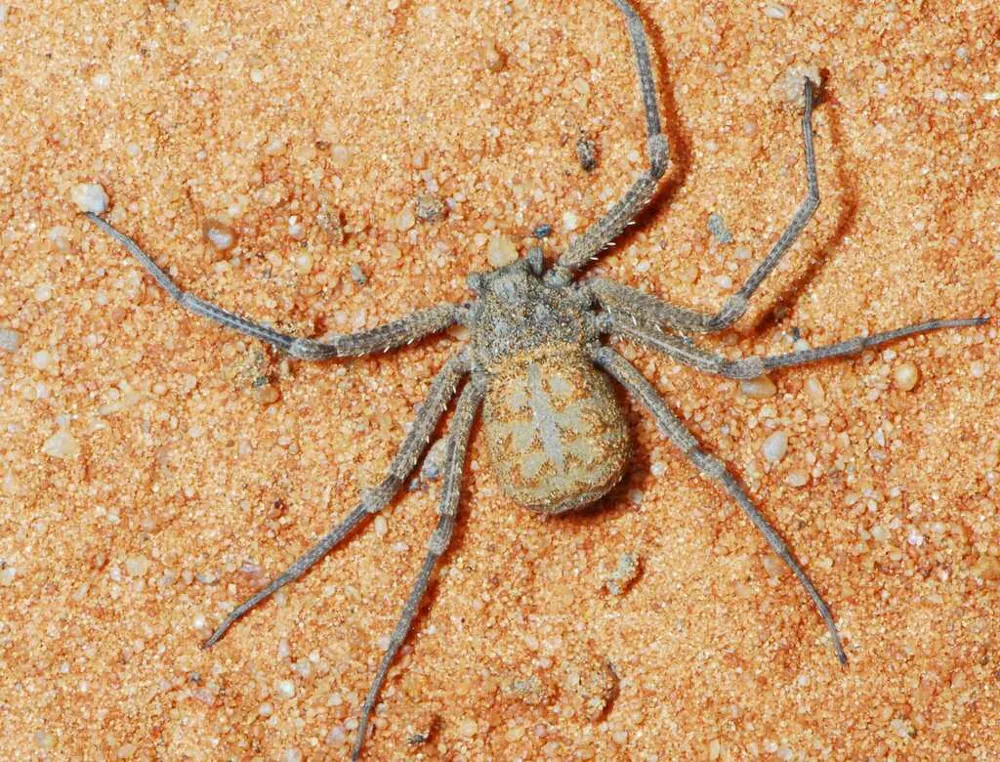
 اسے کیسے پہچانیں
زہر کی طاقت
کاٹتے وقت زہر اس کے زہریلے دانتوں یا دانتوں سے باہر آتا ہے۔
اس کا زہر کیا کرتا ہے؟
All Hexophthalma spiders produce venom with dermonecrotic effects, which means it can destroy skin and tissue. The damage is caused by proteins related to sphingomyelinase D, which are found in the venom of all sicariid spiders. For this species, the detailed effects on humans are unknown, because its venom has mainly been studied in the laboratory.1
یہ انسانوں کے لیے کتنا خطرناک ہے؟
انسانوں کے لیے خطرہ: سنگینکاٹنے پر ڈاکٹر کو دکھانا ضروری ہے۔ موت بہت کم ہوتی ہے۔The spider is capable of a medically significant bite. Serious or even life-threatening wounds are possible, especially if the wound becomes infected or the venom spreads through the body. No bites from this spider in southern Africa have been proven, and contact with people is considered unlikely.1
ڈرنے پر یہ کیا کرتا ہے؟
It relies on stillness and camouflage rather than running, and it can shift quickly across loose sand when disturbed.1
 اگر یہ کاٹے
- کاٹی ہوئی جگہ دھوؤ اور درد کے لیے برف کی پٹی رکھو۔ اگر درد تیز ہو، پھیلے یا طبیعت خراب لگے تو طبی مدد لو۔
ہمیشہ پہلے اپنا ایمرجنسی نمبر (112، 000، 911) ملاؤ۔ یہ ابتدائی طبی امداد کی عام رہنمائی ہے، طبی مشورہ نہیں۔ ابتدائی طبی امداد کی بنیادی باتیں
 محفوظ رہو
- کسی جنگلی جانور کو کبھی مت چھوؤ، پکڑو یا چھیڑو، چاہے وہ چھوٹا ہو، اور چاہے سویا ہوا یا مرا ہوا لگے۔
- اسے جگہ دو۔ اگر یہ ملے تو پرسکون رہو، آہستہ آہستہ پیچھے ہٹو اور اسے اپنے راستے جانے دو۔
- اگر یہ تمہیں کاٹے: پرسکون رہو، ہلو مت، اپنا ایمرجنسی نمبر (112، 000، 911) ملاؤ یا جلدی ہسپتال پہنچو۔ یاد رکھو کہ یہ کیسا دکھتا تھا، تصویر مدد کرتی ہے۔
یہ تمہارے پیچھے نہیں پڑا۔ یہ اپنا زہر شکار پکڑنے یا اپنی حفاظت کے لیے استعمال کرتا ہے، اور چھپنا زیادہ پسند کرتا ہے۔ محفوظ رہنے کے بارے میں مزید
یہ کتنا بڑا ہے؟
یہ کتنا لمبا ہے؟
 تمہاری چھوٹی انگلی سے بھی چھوٹا
 330 سیکنڈ میں 100 میٹر طے کر سکتا ہے (سب سے تیز انسان کو 9.6 لگتے ہیں)
Six-eyed sand spider تمہارے مقابلے میں کتنا بڑا ہے؟
بس تمہارے براؤزر میں تھوڑا حساب۔ کچھ بھی محفوظ یا کہیں بھیجا نہیں جاتا۔
یہ کتنا تیز ہے؟


حقائق
حقائق کہاں سے آتے ہیں
- Hexophthalma hahni (Wikipedia (CC BY-SA 4.0))
- Hexophthalma hahni (iNaturalist): نام اور درجہ بندی۔
- Venom Wiki: خطرے کی سطح، عام سائز اور رفتار کا اندازہ ہمارا اپنا ہے۔ دیکھو ہم انہیں کیسے نکالتے ہیں: ہم خطرہ کیسے ناپتے ہیں.
اس صفحے کی ہر حقیقت کے ساتھ ایک نمبر ہے جو اس کے ذریعے کی طرف اشارہ کرتا ہے۔ اگر ہم سے کچھ غلط ہوا تو معاف کرنا، ہم جانوروں کے شوقین ہیں، کوئی سائنسی رسالہ نہیں۔ ہمیں [email protected] پر بتاؤ، ہم ٹھیک کر دیں گے۔
 بچھو بھوکا ہے! Venom Wiki ایک شخص کا منصوبہ ہے: مفت، بغیر اشتہار اور بغیر ٹریکر۔ ایک چھوٹی سی ٹپ اسے آن لائن رکھنے میں مدد کرتی ہے۔بچھو کو کھانا کھلاؤ
 Mediterranean black widow
 Brown widow
 Noble false widow
 Darwin's bark spider
 Wasp spider
 Black button spider
 Black mamba
 Deathstalker
 Egyptian cobra
 Puff adder
 Boomslang
 Fat-tailed scorpion