
 Châu Phi
 Châu Á
 Châu Âu
 Nam Mỹ
 Úc và châu Đại Dương
 Châu Nam Cực
 Thái Bình Dương
 Đại Tây Dương
 Ấn Độ Dương
 Bắc Băng Dương
 Địa Trung Hải
 Biển Đỏ
 Biển Caribe
 Biển San Hô
 Biển Đông
 Biển Philippines
 Biển Andaman
 Biển Bắc
 Biển Timor và Arafura
 Vịnh Bengal
 Vịnh California
Mojave rattlesnake
 Vết cắn
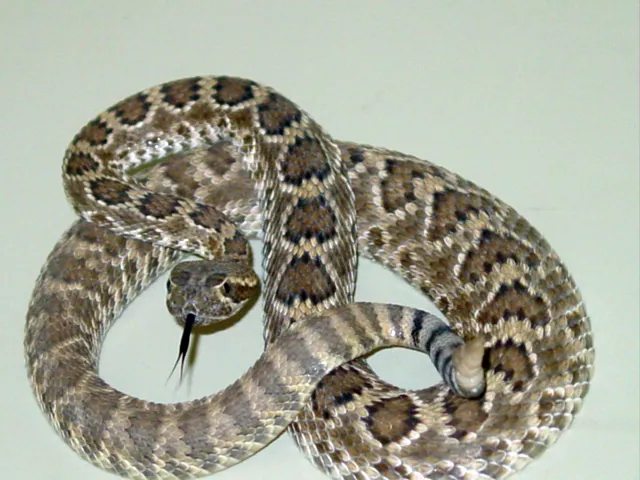
The Mojave rattlesnake is a venomous pit viper that lives in the deserts of the southwestern United States and northern Mexico. Its venom is among the most studied of any rattlesnake, and it varies a lot from one population to another. Knowing how to recognise it helps people in its range stay safe.1


 Cách nhận biết
- Has a row of large diamond-shaped blotches along the back, without the dark speckling found on the Western Diamond-backed Rattlesnake.1
- The diamonds usually lack the white edges seen on most Western Diamond-backed Rattlesnakes.1
- The tail has pale and dark rings, and the dark rings are often narrower than the pale ones.1
- The rattle is usually yellow and black, or entirely yellow.1
- Its back colour ranges from green to brown, grey or yellowish, so colour alone is not a reliable guide.1
Hay bị nhầm với: It closely resembles the Western Diamond-backed Rattlesnake, which lives in the same areas. The Mojave rattlesnake has no dark speckling on its back, usually lacks white edges on the diamonds, has a facial stripe that bends toward the neck rather than meeting the mouth, and usually has a yellow or bicoloured rattle rather than a black one. No single trait reliably separates the two.1
Sức mạnh nọc độc
Nọc độc thoát ra qua răng nanh hoặc răng khi nó cắn.
Nọc độc của nó gây ra gì?
Its venom comes in two main types. Venom A contains Mojave toxin, a neurotoxic venom that attacks the nerves and can cause delayed respiratory paralysis, meaning the muscles used for breathing fail, with little or no local tissue damage. Venom B has no Mojave toxin and instead contains tissue-destroying enzymes called metalloproteinases.1
Nó nguy hiểm thế nào với con người?
Nguy hiểm với con người: Rất nguy hiểmCó thể giết một người không được điều trị.For decades this snake has been described as one of the deadliest rattlesnakes, and some sources call it the most dangerous snake in the United States. The danger depends on the population, because the neurotoxic venom is not found everywhere in its range. Some animals in between produce a mix of both venom types.1
Nó làm gì khi sợ?
It is shy and tends to avoid confrontation, but it will strike and bite vigorously when disturbed, especially if surprised or if there is no nearby vegetation or burrow to escape into.1
 Nếu nó cắn
- Giữ người bị nạn nằm yên và bình tĩnh, để chi bị cắn ngang tầm tim, tháo nhẫn và đồ bó chặt, và đến bệnh viện thật nhanh.
Luôn gọi số khẩn cấp trước tiên (112, 000, 911). Đây là hướng dẫn sơ cứu chung, không phải lời khuyên y tế. Sơ cứu cơ bản
 Giữ an toàn
- Đừng bao giờ chạm, bắt hay trêu chọc động vật hoang dã, dù nó nhỏ, và dù trông như đang ngủ hay đã chết.
- Chừa khoảng cách cho nó. Nếu gặp, hãy bình tĩnh, lùi lại từ từ và để nó đi.
- Nếu nó cắn bạn: bình tĩnh, nằm yên, gọi số khẩn cấp (112, 000, 911) hoặc đến bệnh viện thật nhanh. Hãy nhớ hình dạng nó, có ảnh càng tốt.
Nó không nhắm vào bạn. Nó dùng nọc để bắt mồi hoặc tự vệ, và nó thích trốn hơn nhiều. Thêm về cách giữ an toàn
Nó to cỡ nào?
Nó dài bao nhiêu?
 dài bằng 2,5 con mèo nhà nối từ mũi đến đuôi
 dài bằng 7 quả chuối nối đuôi nhau
 có thể chạy 100 mét trong 97 giây (người nhanh nhất cần 9,6)
Mojave rattlesnake to cỡ nào so với BẠN?
Chỉ là phép tính trong trình duyệt của bạn. Không có gì được lưu hay gửi đi đâu cả.
Nó nhanh cỡ nào?


Thông tin
Phá tan lời đồn
Lời đồn: Every Mojave rattlesnake bite is extraordinarily deadly.
Sự thật: The reputation for deadliness comes mainly from the neurotoxic venom, which is found in most populations but not all. Venom from some populations is non-neurotoxic and mainly destroys tissue.1
Cho chuyên gia về nọc độc
- Tên khoa học
- Crotalus scutulatus
- Nhóm
- Rắn đuôi chuông
- Gia đình
- Viperidae2
- Thứ tự
- Squamata
- Các châu lục
- Bắc Mỹ
- Con non
- It bears live young, usually between 2 and 17 (average about eight), from July through September.1
- Tình trạng trong tự nhiên
- Least Concern (IUCN Red List)1
- Nguy hiểm với con người
- 4 / 5: Rất nguy hiểm3
Thông tin lấy từ đâu
- Crotalus scutulatus (Wikipedia (CC BY-SA 4.0))
- Crotalus scutulatus (iNaturalist): tên gọi và phân loại.
- Venom Wiki: mức nguy hiểm, kích thước điển hình và tốc độ ước đoán là của chúng tôi. Xem cách chúng tôi tính: Cách chúng tôi đánh giá nguy hiểm.
Mỗi thông tin trên trang này có một con số dẫn đến nguồn của nó. Nếu chúng tôi sai điều gì, xin lỗi nhé, chúng tôi là người mê động vật, không phải tạp chí khoa học. Hãy báo cho chúng tôi qua [email protected] và chúng tôi sẽ sửa.
 Bọ cạp đói rồi! Venom Wiki là dự án của một người: miễn phí, không quảng cáo, không theo dõi. Một chút tiền tip giúp trang tiếp tục hoạt động.Cho bọ cạp ăn
Cùng nhóm: Rắn đuôi chuông
 Eastern diamondback rattlesnakeRắn đuôi chuôngCó thể gây chết người
 Timber rattlesnakeRắn đuôi chuôngCó thể gây chết người
 Western diamondback rattlesnakeRắn đuôi chuôngCó thể gây chết người
 SidewinderRắn đuôi chuôngCần đi khám
 Aruba rattlesnakeRắn đuôi chuôngCần đi khám
 Black-tailed rattlesnakeRắn đuôi chuôngCần đi khám
 Rắn terciopelo
 Eastern coral snake
 Eyelash viper
 Arizona bark scorpion
 Brown recluse
 Cane toad