
 Châu Phi
 Châu Á
 Châu Âu
 Nam Mỹ
 Úc và châu Đại Dương
 Châu Nam Cực
 Thái Bình Dương
 Đại Tây Dương
 Ấn Độ Dương
 Bắc Băng Dương
 Địa Trung Hải
 Biển Đỏ
 Biển Caribe
 Biển San Hô
 Biển Đông
 Biển Philippines
 Biển Andaman
 Biển Bắc
 Biển Timor và Arafura
 Vịnh Bengal
 Vịnh California
Woodlouse spider
 Vết cắn
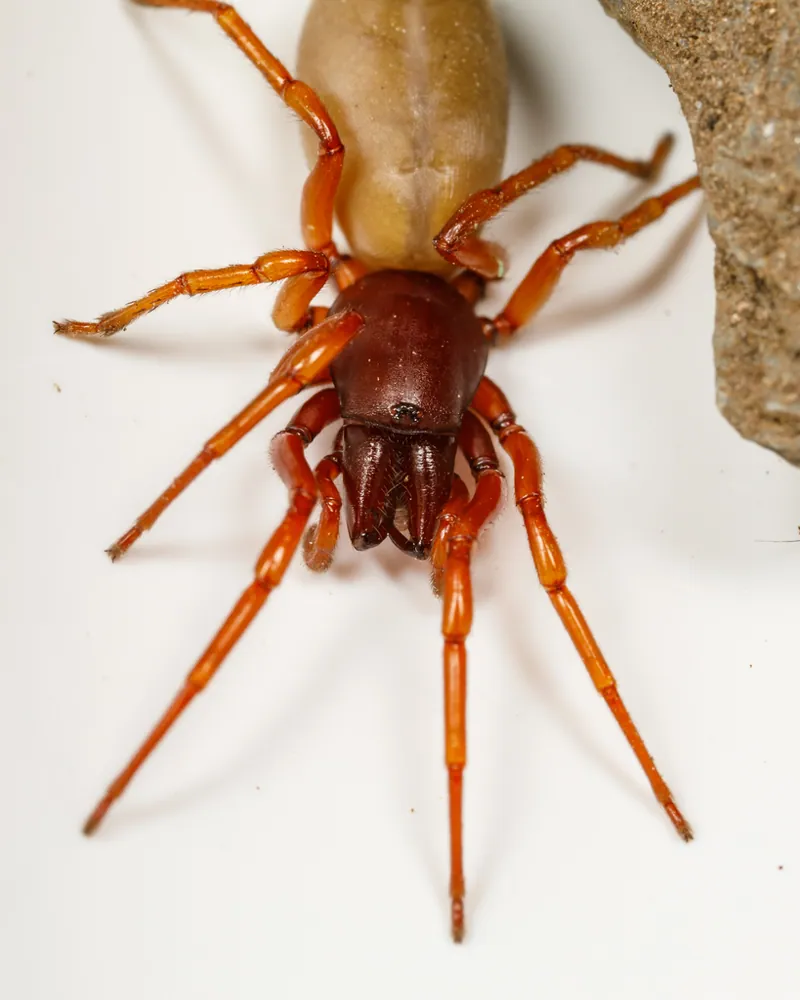
The woodlouse spider is a small spider that hunts woodlice, the small grey creatures that curl up when touched. It lives in warm places under logs, stones and plant pots, and it is now found on almost every continent except Antarctica. It is a skilled hunter with large fangs, but it is not known to be a health risk to people.1



 Cách nhận biết
- Six eyes.1
- A tawny orange to dark red head and chest section (cephalothorax) and legs.1
- A shiny, pale beige to yellow-brown abdomen, which can be dark grey and sometimes very shiny.1
- Very large fangs (chelicerae) for a spider of its size.1
- Adult females are 11 to 15 mm long, and males are 9 to 10 mm long.1
Hay bị nhầm với: The woodlouse spider can be hard to tell apart from Dysdera erythrina, which is much less common. D. erythrina is not usually found near human homes, so location can help.1
Sức mạnh nọc độc
Nọc độc thoát ra qua răng nanh hoặc răng khi nó cắn.
Nọc độc của nó gây ra gì?
It injects venom through its fangs to subdue its prey. In people, bites have been known to cause localised itching at the bite site.1
Nó nguy hiểm thế nào với con người?
Nguy hiểm với con người: NhẹNhư bị ong đốt hoặc nhẹ hơn. Gần như vô hại với con người.It is a dangerous predator for woodlice but is not known to be a health hazard to humans or smaller animals. It has been known to bite people if handled. Verified bites have caused no major medical problems.1
 Nếu nó cắn
- Rửa vết cắn và chườm đá để giảm đau. Đi khám nếu đau nhiều, đau lan rộng hoặc người bị cắn thấy không khỏe.
Luôn gọi số khẩn cấp trước tiên (112, 000, 911). Đây là hướng dẫn sơ cứu chung, không phải lời khuyên y tế. Sơ cứu cơ bản
 Giữ an toàn
- Đừng bao giờ chạm, bắt hay trêu chọc động vật hoang dã, dù nó nhỏ, và dù trông như đang ngủ hay đã chết.
- Chừa khoảng cách cho nó. Nếu gặp, hãy bình tĩnh, lùi lại từ từ và để nó đi.
- Nếu nó cắn bạn: bình tĩnh, nằm yên, gọi số khẩn cấp (112, 000, 911) hoặc đến bệnh viện thật nhanh. Hãy nhớ hình dạng nó, có ảnh càng tốt.
Nó không nhắm vào bạn. Nó dùng nọc để bắt mồi hoặc tự vệ, và nó thích trốn hơn nhiều. Thêm về cách giữ an toàn
Nó to cỡ nào?
Nó dài bao nhiêu?
 ngắn hơn ngón tay út của bạn
Woodlouse spider to cỡ nào so với BẠN?
Chỉ là phép tính trong trình duyệt của bạn. Không có gì được lưu hay gửi đi đâu cả.
Nó nhanh cỡ nào?


Thông tin
It is an unusually dominant predator for its size because of its large fangs and wide gape.1
It often dominates and sometimes kills other spiders and centipedes.1
Courtship is typically aggressive, and mates can be injured by each other's large fangs.1
It hunts at night and does not spin a web. Instead, it searches warm places for prey.1
Although it began in the Mediterranean, it is now found on several continents, including Australia and New Zealand.1
Phá tan lời đồn
Lời đồn: Woodlouse spiders are dangerous to people.
Sự thật: They are not known to be a health hazard to humans. They can bite if handled, but verified bites have not caused major medical problems.1
Thông tin lấy từ đâu
- Woodlouse spider (Wikipedia (CC BY-SA 4.0))
- Dysdera crocata (iNaturalist): tên gọi và phân loại.
- Venom Wiki: mức nguy hiểm, kích thước điển hình và tốc độ ước đoán là của chúng tôi. Xem cách chúng tôi tính: Cách chúng tôi đánh giá nguy hiểm.
Mỗi thông tin trên trang này có một con số dẫn đến nguồn của nó. Nếu chúng tôi sai điều gì, xin lỗi nhé, chúng tôi là người mê động vật, không phải tạp chí khoa học. Hãy báo cho chúng tôi qua [email protected] và chúng tôi sẽ sửa.
 Bọ cạp đói rồi! Venom Wiki là dự án của một người: miễn phí, không quảng cáo, không theo dõi. Một chút tiền tip giúp trang tiếp tục hoạt động.Cho bọ cạp ăn
Cùng nhóm: Nhện
 Mediterranean black widow
 Diving bell spider
 European yellow sac spider
 Noble false widow
 Tarantula wolf spider
 Daddy long-legs spider
Cũng sống ở: Châu Âu
 Common European adderRắn lụcCần đi khám
 Spanish flyCác loài có độc khácCần đi khámĐừng chạm vào
 Common waspOng, ong bắp cày và ong vò vẽChỉ đau thôi
 European hornetOng, ong bắp cày và ong vò vẽChỉ đau thôi
 Fire salamanderẾch độc, cóc và sa giôngChỉ đau thôiĐừng chạm vào
 Western honey beeOng, ong bắp cày và ong vò vẽChỉ đau thôi