
 Afrika
 Asiya
Asiya Avropa
 Cənubi Amerika
 Avstraliya və Okeaniya
 Antarktida
 Sakit okean
 Atlantik okeanı
 Hind okeanı
 Şimal Buzlu okeanı
 Aralıq dənizi
 Qırmızı dəniz
 Karib dənizi
 Mərcan dənizi
 Cənubi Çin dənizi
 Filippin dənizi
 Andaman dənizi
 Şimal dənizi
 Timor və Arafura dənizləri
 Benqal körfəzi
 Kaliforniya körfəzi
Blue blubber jellyfish
 Sancan tentakllar
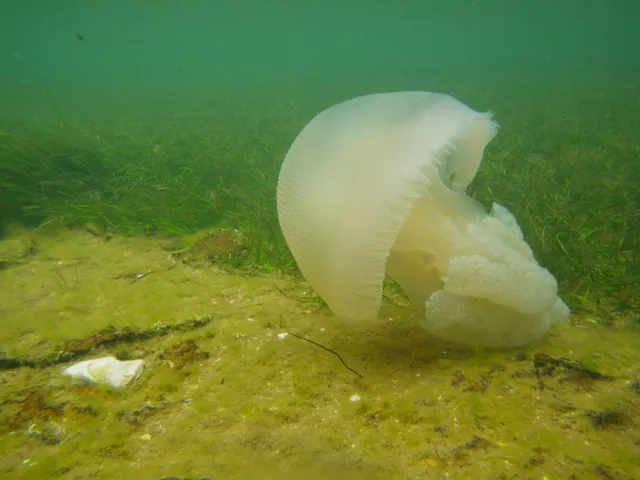
The blue blubber jellyfish is a large, rounded jellyfish that lives along the coast of Eastern Australia. It is blue to purple and pulses slowly as it swims. Its arms carry stings, and it can form huge blooms in estuaries and shallow bays.1


 Necə tanımalı
- Colour ranges from light blue to dark blue or purple.1
- Large, rounded bell, about 25 to 30 cm across.1
- The bell pulses in a rapid, staccato rhythm.1
- Found along the Eastern Australian coast, often in large numbers.1
Tez-tez qarışdırılır: Two forms are recognised on the Eastern Australian coast. Catostylus mosaicus mosaicus, found in New South Wales and southern Queensland, has small or no papillae (small projections) and a larger bell. Catostylus mosaicus conservitus, found in the Bass Strait, has clear papillae, is blue or white, and has a smaller bell.1
Zəhər gücü
Nəsə toxunanda minlərlə xırda sancan hüceyrə atəş açır.
Onun zəhəri nə edir?
Its arms carry stinging cells and can produce a mild but irritating sting. The sting is described as mild, and no further effects on the body are described.1
İnsanlar üçün nə qədər təhlükəlidir?
İnsanlar üçün təhlükə: AğrılıÇox ağrıda bilər, amma demək olar ki, heç vaxt ciddi olmur.Its sting is described as mild but irritating. The main problem is the large blooms, which can interrupt recreation in coastal areas.1
Qorxanda nə edir?
Its stinging cells on the arms are used to defend it from threats.1
 Sancsa
- Sudan çıx və tentaklları (əlcəklə və ya parça ilə) qoparıb götür.
- Tropik kub meduzalar üçün: sancılan yerlərə ən azı 30 saniyə sirkə tök, kömək çağır və ürək-ağciyər reanimasiyası (ÜAR) etməyə hazır ol. Fizaliyalar və digərlərinin çoxu üçün: dəniz suyu ilə yaxala, sonra ağrı üçün isti su istifadə et.
Həmişə əvvəlcə təcili yardım nömrənə zəng et (112, 000, 911). Bu, ümumi ilk yardım tövsiyəsidir, tibbi məsləhət deyil. İlk yardımın əsasları
 Təhlükəsiz qal
- Vəhşi heyvana heç vaxt toxunma, onu tutma və ya ona sataşma, hətta kiçik olsa belə, hətta yatmış və ya ölü görünsə belə.
- Ona yer ver. Rast gəlsən, sakit ol, yavaşca geri çəkil və qoy öz yolu ilə getsin.
- Biri səni sancsa: sakit ol, hərəkət etmə, təcili yardım nömrənə (112, 000, 911) zəng et və ya tez xəstəxanaya get. Onun necə göründüyünü yadda saxla, şəkil kömək edir.
O, sənin dalınca düşməyib. Zəhərini yem tutmaq və ya özünü qorumaq üçün istifadə edir və gizlənməyi daha çox sevir. Təhlükəsizlik haqqında daha çox
Dünyanın harasında?
Nə qədər böyükdür?
Nə qədər uzundur?
 cərgə ilə düzülmüş 9 oyuncaq kubik uzunluğunda
Blue blubber jellyfish SƏNİNLƏ müqayisədə nə qədər böyükdür?
Sadəcə brauzerində riyaziyyat. Heç nə yadda saxlanmır və heç yerə göndərilmir.
Nə qədər sürətlidir?


Faktlar
Its stinging venom is being studied for possible anticancer effects against lung cancer cells in laboratory research.1
It is harvested for food and is considered a delicacy in some countries, including China and Japan.1
A small copepod lives on its oral arms and is thought to feed on mucus the jellyfish produces.1
Blooms can be very dense, and they can take food away from other animals such as fish.1
Sea turtles and jellyfish-eating fish, including tuna, butterfish, sunfish and spiny dogfish, prey on it.1
It has a partnership with photosynthetic algae, though it has less of these algae than many other jellyfish.1
Zəhər ekspertləri üçün
- Elmi adı
- Catostylus mosaicus
- Qrup
- Meduzalar və sancan dəniz canlıları
- Ailə
- Catostylidae2
- Dəstə
- Rhizostomeae
- Qitələr
- Hind okeanı, Sakit okean, Mərcan dənizi, Okeanlar
- Balalar
- Fertilised eggs develop into free-swimming planula larvae, which settle on the seabed and grow into a polyp stage. The polyp then produces young jellyfish (ephyrae), which mature into the free-swimming medusa.1
- İnsanlar üçün təhlükə
- 2 / 5: Ağrılı3
Faktlar haradan gəlir
- Jelly blubber (Wikipedia (CC BY-SA 4.0))
- Catostylus mosaicus (iNaturalist): adlar və təsnifat.
- Venom Wiki: təhlükə səviyyəsi, tipik ölçü və sürət təxmini bizimdir. Onları necə hesabladığımıza bax: Təhlükəni necə qiymətləndiririk.
Bu səhifədəki hər faktın yanında mənbəyini göstərən nömrə var. Səhv bir şey yazmışıqsa, bağışla, biz elmi jurnal yox, sadəcə heyvan həvəskarlarıyıq. [email protected] ünvanına yaz, düzəldək.
 Əqrəb acdır! Venom Wiki bir nəfərin layihəsidir: pulsuz, reklamsız və izləyicisiz. Kiçik bəxşiş onun onlayn qalmasına kömək edir.Əqrəbi yemlə
Eyni qrupdan daha çox: Meduzalar və sancan dəniz canlıları
 Australian box jellyfishMeduzalar və sancan dəniz canlılarıÖlümcülToxunma
 Irukandji jellyfishMeduzalar və sancan dəniz canlılarıÖldürə bilərToxunma
 Portuguese man o' warMeduzalar və sancan dəniz canlılarıHəkim lazımdırToxunma
 Lion's mane jellyfishMeduzalar və sancan dəniz canlılarıSadəcə ağrıdırToxunma
 Moon jellyfishMeduzalar və sancan dəniz canlılarıZərərsiz
 Common kingslayerMeduzalar və sancan dəniz canlılarıÖldürə bilərToxunma
Həmçinin yaşadığı yerlər: Hind okeanı
 Geography coneKonus ilbizləri və səkkizayaqlarÖlümcül
 Greater blue-ringed octopusKonus ilbizləri və səkkizayaqlarÖlümcül
 Southern blue-ringed octopusKonus ilbizləri və səkkizayaqlarÖlümcül
 Hawksbill sea turtleDigər toksik heyvanlarÖldürə bilər
 Reef stonefishZəhərli balıqlarÖldürə bilərToxunma
 Crown-of-thorns starfishDəniz kirpiləri, dəniz ulduzları və qurdlarHəkim lazımdırToxunma