
 Bitten or stung?
 All animals
 Pick a continent
 Africa
 Asia
 Europe
 South America
 Australia & Oceania
 Antarctica
 Pacific Ocean
 Atlantic Ocean
 Indian Ocean
 Arctic Ocean
 Mediterranean Sea
 Red Sea
 Caribbean Sea
 Coral Sea
 South China Sea
 Philippine Sea
 Andaman Sea
 North Sea
 Timor & Arafura Sea
 Bay of Bengal
 Gulf of California
 Games
 Venom battle
 Animal race
 Field notebook
 Venom TOP lists
 Stay safe
 Surprise me

Mexican honey wasp
 Stings
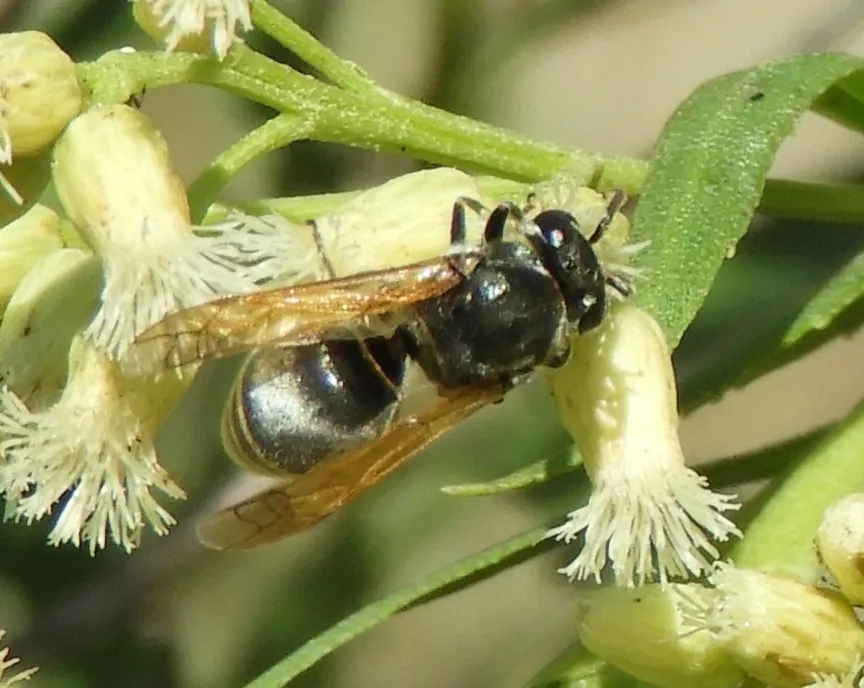
The Mexican honey wasp is a small social wasp that lives in colonies and builds large paper nests. It is one of the few wasps that makes honey, and it helps pollinate avocado flowers. It lives from Panama through Central America and Mexico, and in parts of Arizona and Texas.1
 How to recognise it
- Alternating bands of yellow and black across the abdomen (the rear part of the body).1
- Small, with a body length of 7 to 9 mm.1
- Abdomen can be almost as wide as it is long.1
- Paper nests 40 to 50 cm across, with a rough, brown or grey, non-glossy surface like cardboard.1
- Queens have a dark reddish-brown abdomen.1
Often confused with: It is very similar in appearance to Brachygastra lecheguana. The two species are mainly told apart by where they live.1
Venom power
Venom comes out through a stinger.
How dangerous is it to people?
Danger to people: PainfulIt can really hurt, but it is almost never serious. If it stings
Call your emergency number at once if the person has trouble breathing, swelling of the face or throat, or feels faint.
- Scrape out a bee sting and cool the spot.
- If the person has trouble breathing, swelling of the face or throat, or feels faint, it is an allergic emergency: call your emergency number and use their adrenaline pen if they have one.
This is general first aid guidance, not medical advice. Based on the first aid guidelines of the World Health Organization and the Australian Resuscitation Council. Facts come from public sources and may contain mistakes. When in doubt, always get medical help. First aid basics
 Stay safe
- Never touch, catch or tease a wild animal, even a small one, and even if it looks asleep or dead.
- Give it space. If you meet one, stay calm, step back slowly and let it go its own way.
- If it hurts you: wash the spot, stay calm and get medical help if the pain is strong or spreads, or the person feels unwell.
It is not out to get you. It uses its venom to catch food or to protect itself, and it would much rather hide. More about staying safe
Where in the world?
How big is it?
How long is it?
 smaller than a fingernail
 could fly across a whole football pitch in 19 seconds
How big is Mexican honey wasp compared to you?
Just maths in your browser. Nothing is saved or sent anywhere.
How fast is it?


Facts
It is one of only a few insects besides bees that make and store their own honey.1
A single nest can house anywhere from 3,500 to 18,700 wasps.1
In Los Reyes Metzontla, Mexico, the Popoloca people eat its honey and larvae, harvesting them when the moon is between its last quarter and waning gibbous.1
It helps pollinate avocados, carrying avocado pollen on its hairy head, thorax and legs.1
Scientists have studied it as a natural control for Diaphorina citri, a pest that spreads citrus greening disease.1
Where the facts come from
- Brachygastra mellifica (Wikipedia (CC BY-SA 4.0))
- Brachygastra mellifica (iNaturalist): names and classification.
- Venom Wiki: the danger level, the typical size and the speed guess are our own. See how we work them out: How we rate danger.
Every fact on this page has a number that points to its source. If we got something wrong, sorry, we are animal fans, not a science journal. Tell us at [email protected] and we will fix it.
Get the Venom Wiki app
Every creature, every picture and the games in your pocket, even without internet.


 Support Venom Wiki Venom Wiki is a one-man project: free, with no ads and no cookies. A small tip helps keep it online.Feed the scorpion
 Tarantula hawk
 Western honey bee
 Bald-faced hornet
 Cow killer velvet ant
 Executioner wasp
 Warrior wasp
 Terciopelo
 Eastern coral snake
 Eastern diamondback rattlesnake
 Timber rattlesnake
 Western diamondback rattlesnake
 Arizona bark scorpion