
 Bitten or stung?
 All animals
 Pick a continent
 Africa
 Asia
 Europe
 South America
 Australia & Oceania
 Antarctica
 Pacific Ocean
 Atlantic Ocean
 Indian Ocean
 Arctic Ocean
 Mediterranean Sea
 Red Sea
 Caribbean Sea
 Coral Sea
 South China Sea
 Philippine Sea
 Andaman Sea
 North Sea
 Timor & Arafura Sea
 Bay of Bengal
 Gulf of California
 Games
 Venom battle
 Animal race
 Field notebook
 Venom TOP lists
 Stay safe
 Surprise me

Puss caterpillar
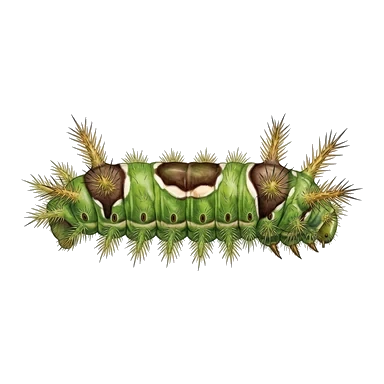 Stinging hairs
The puss caterpillar is a furry caterpillar that grows into a moth. It lives in the southern and eastern United States, Mexico and parts of Central and South America. Its hairs contain venomous spines that can cause a very painful skin reaction, so it is important to recognise it and leave it alone.1
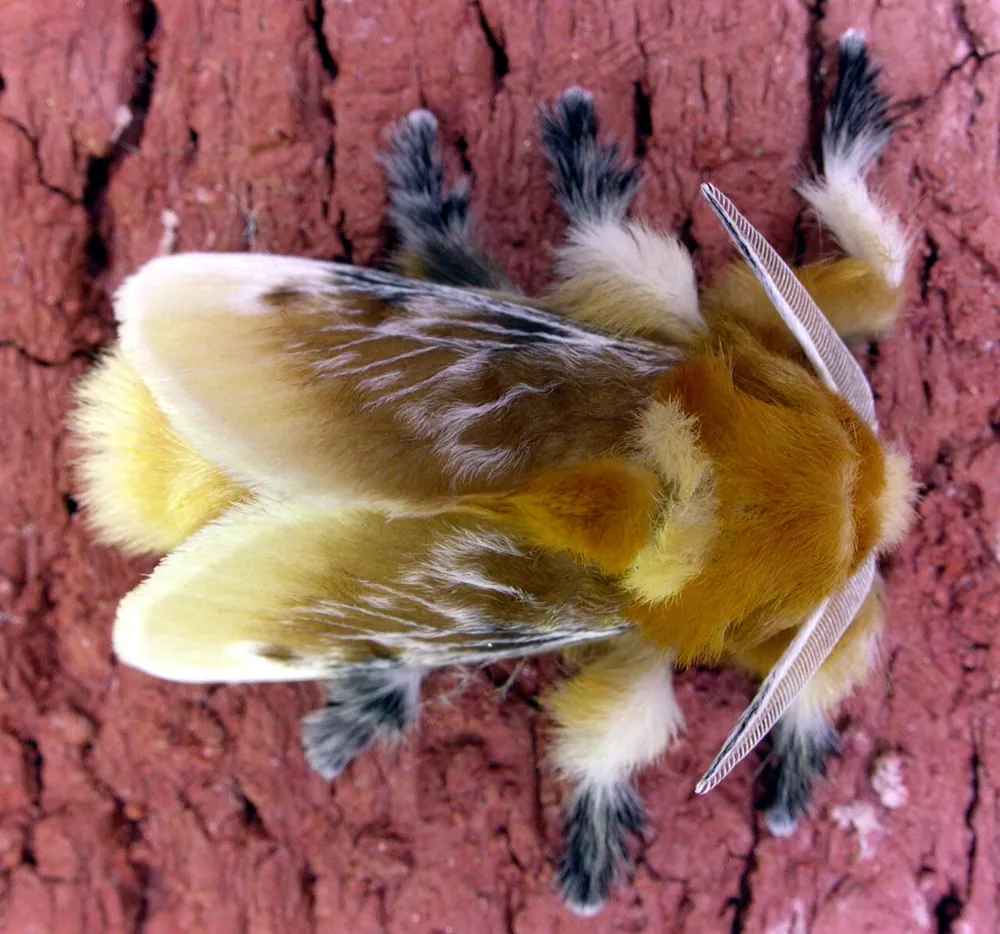
 How to recognise it
- The larva is about one inch (2.5 cm) long and covered in long, hair-like fur.1
- Its fur can be grey-white, golden brown or dark charcoal grey.1
- It often has a bright orange streak running along its body.1
- In the early stage, the body tapers to a tail that extends well beyond the body.1
- The adult moth has long fur in colours from dull orange to lemon yellow, with hairy legs and fuzzy black feet.1
Often confused with: Its relative M. crispata looks similar, but its tail does not extend well beyond the body, unlike the puss caterpillar's. The middle stage of the puss caterpillar has no distinct tail at all.1
Venom power
Tiny hairs or bristles break off in the skin and sting.
What does its venom do?
The caterpillar's fur contains venomous spines. Contact causes an immediate skin reaction with a grid-like rash and severe radiating pain. Victims often describe the pain as like a broken bone, blunt-force trauma or white hot. The pain can spread up a limb and cause burning, swelling, nausea, headache, stomach pain, rashes, blisters, and sometimes chest pain, numbness or difficulty breathing.1
How dangerous is it to people?
Danger to people: PainfulIt can really hurt, but it is almost never serious.The caterpillar is regarded as a dangerous insect because of its venomous spines. Reactions are sometimes limited to the sting site but are often very severe. The sting causes a condition called urticarial dermatitis or erucism, and M. opercularis is the most commonly reported source of this in the United States.1
 If you touch its hairs
Call your emergency number at once if the person has trouble breathing, swelling of the face or throat, or feels faint.
- Press sticky tape on the skin and pull it off to remove spines, then wash with soap and water. An ice pack and antihistamine tablets can ease the pain and itching. Get medical help if the pain is severe, and call the emergency number if there is trouble breathing or chest pain.1
- For stinging caterpillar hairs: lift them off with sticky tape, then wash the skin. Do not rub.
This is general first aid guidance, not medical advice. Based on the first aid guidelines of the World Health Organization and the Australian Resuscitation Council. Facts come from public sources and may contain mistakes. When in doubt, always get medical help. First aid basics
 Stay safe
- Never touch, catch or tease a wild animal, even a small one, and even if it looks asleep or dead.
- Give it space. If you meet one, stay calm, step back slowly and let it go its own way.
- If it hurts you: wash the spot, stay calm and get medical help if the pain is strong or spreads, or the person feels unwell.
It is not out to get you. It uses its venom to catch food or to protect itself, and it would much rather hide. More about staying safe
Where in the world?
How big is it?
How long is it?
 about as long as a paper clip
 slower than a garden snail
How big is Puss caterpillar compared to you?
Just maths in your browser. Nothing is saved or sent anywhere.
How fast is it?

Facts
Victims often say the pain feels like a broken bone, or even white hot.1
The name "puss" probably comes from the caterpillar's fur, which looks like a tiny Persian cat.1
Its spines can cause a condition called urticarial dermatitis, also known as erucism.1
Early-stage larvae can have very curly fur that looks cottony and puffed up.1
Late larvae can spend the whole winter inside their cocoon before emerging in spring.1
For venom experts
- Scientific name
- Megalopyge opercularis
- Group
- Caterpillars & bugs
- Also called
- Southern flannel moth, Asp caterpillar, Italian asp1
- Family
- Megalopygidae2
- Order
- Lepidoptera
- Continents
- North America
- Babies
- The caterpillar has two broods a year, one in summer and one in autumn. Late larvae may stay in their cocoon all winter and emerge as adults in late spring.1
- Danger to people
- 2 / 5: Painful3
Where the facts come from
- Megalopyge opercularis (Wikipedia (CC BY-SA 4.0))
- Megalopyge opercularis (iNaturalist): names and classification.
- Venom Wiki: the danger level, the typical size and the speed guess are our own. See how we work them out: How we rate danger.
Every fact on this page has a number that points to its source. If we got something wrong, sorry, we are animal fans, not a science journal. Tell us at [email protected] and we will fix it.
Get the Venom Wiki app
Every creature, every picture and the games in your pocket, even without internet.


 Support Venom Wiki Venom Wiki is a one-man project: free, with no ads and no cookies. A small tip helps keep it online.Feed the scorpion
 Giant water bug
 Saddleback caterpillar
 Wheel bug
 Giant vinegaroon
 Rhodnius kissing bug
 Black-waved flannel moth
 Terciopelo
 Eastern coral snake
 Eastern diamondback rattlesnake
 Timber rattlesnake
 Western diamondback rattlesnake
 Arizona bark scorpion
