
 Bitten or stung?
 All animals
 Pick a continent
 Africa
 Asia
 Europe
 South America
 Australia & Oceania
 Antarctica
 Pacific Ocean
 Atlantic Ocean
 Indian Ocean
 Arctic Ocean
 Mediterranean Sea
 Red Sea
 Caribbean Sea
 Coral Sea
 South China Sea
 Philippine Sea
 Andaman Sea
 North Sea
 Timor & Arafura Sea
 Bay of Bengal
 Gulf of California
 Games
 Venom battle
 Animal race
 Field notebook
 Venom TOP lists
 Stay safe
 Surprise me

Tadpole madtom
 Venomous spines
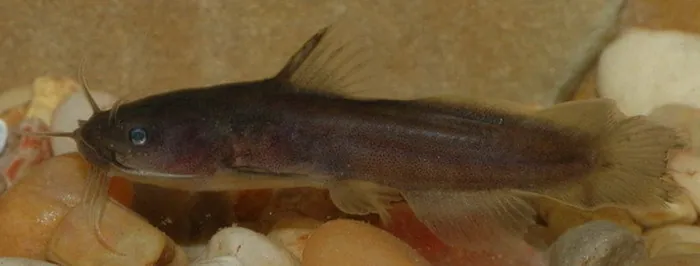
The tadpole madtom is a small freshwater fish that lives in slow, weedy waters in Canada and the United States. It has two spines near its chest that carry a venom, which it uses to defend itself from predators. Its name comes partly from its rounded tail fin, which makes it look a little like a tadpole.1
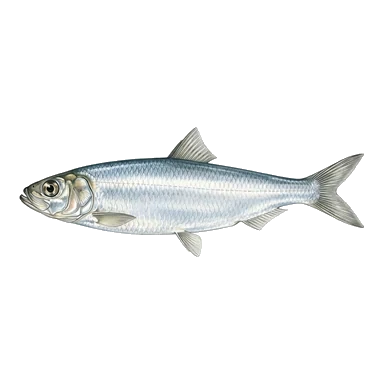
 How to recognise it
- Dark brown back with lighter brown sides and a yellow or white belly1
- A dark horizontal streak along each side, from bands of dark pigment on the jaws1
- A large, round tail fin that is joined to the small fin on its back, giving it a tadpole-like shape1
- Two spines on the pectoral (chest) fins, which carry venom1
Venom power
Sharp spines carry the venom. Stepping on it or grabbing it hurts.
What does its venom do?
Two pectoral spines transmit an anti-predatory venom. The spines are used to deter predators that get stuck by them.1
How dangerous is it to people?
Danger to people: PainfulIt can really hurt, but it is almost never serious.What does it do when it is scared?
When startled, it darts about in all directions, and it uses its venomous spines against predators.1
 If its spines stab you
Call your emergency number at once if the person has trouble breathing, swelling of the face or throat, or feels faint.
- Put the wound in hot water, about 45 °C: as hot as the helper can comfortably hold their own hand in, never hotter, for 30 to 90 minutes. Get medical help, especially for stonefish and stingrays.
This is general first aid guidance, not medical advice. Based on the first aid guidelines of the World Health Organization and the Australian Resuscitation Council. Facts come from public sources and may contain mistakes. When in doubt, always get medical help. First aid basics
 Stay safe
- Never touch, catch or tease a wild animal, even a small one, and even if it looks asleep or dead.
- Give it space. If you meet one, stay calm, step back slowly and let it go its own way.
- If it hurts you: wash the spot, stay calm and get medical help if the pain is strong or spreads, or the person feels unwell.
It is not out to get you. It uses its venom to catch food or to protect itself, and it would much rather hide. More about staying safe
Where in the world?
How big is it?
How long is it?
 as long as 1.5 bank cards end to end
 could swim the length of a big swimming pool (50 m) in 47 seconds
How big is Tadpole madtom compared to you?
Just maths in your browser. Nothing is saved or sent anywhere.
How fast is it?
Facts
It does not build a nest. It sometimes lays its eggs on submerged rubbish such as drink cans.1
Males sometimes use abandoned crayfish burrows as places to house eggs.1
Breeding males develop swollen lips and enlarged muscles on top of the head.1
Researchers in Wisconsin found that its stomach contents were about 44% insects and 28% small crustaceans.1
Myth buster
Myth: It is a tadpole.
Truth: It is a fish. Its rounded tail fin gives it the appearance of a tadpole, which is where part of its name comes from.1
For venom experts
- Scientific name
- Noturus gyrinus
- Group
- Venomous fish
- Also called
- Willow Cat1
- Family
- Ictaluridae2
- Order
- Siluriformes
- Continents
- North America
- Babies
- The female lays several clutches of 75 to 200 eggs during the breeding season, usually in June or July. The eggs are attached to solid objects such as rocks, logs or vegetation, and the male guards them until they hatch.1
- How it is doing in the wild
- Secure in most areas. Critically endangered in Pennsylvania, and considered vulnerable in several other regions.1
- Danger to people
- 2 / 5: Painful3
Where the facts come from
- Tadpole madtom (Wikipedia (CC BY-SA 4.0))
- Noturus gyrinus (iNaturalist): names and classification.
- Venom Wiki: the danger level, the typical size and the speed guess are our own. See how we work them out: How we rate danger.
Every fact on this page has a number that points to its source. If we got something wrong, sorry, we are animal fans, not a science journal. Tell us at [email protected] and we will fix it.
Get the Venom Wiki app
Every creature, every picture and the games in your pocket, even without internet.


 Support Venom Wiki Venom Wiki is a one-man project: free, with no ads and no cookies. A small tip helps keep it online.Feed the scorpion
 Channel catfish
 Brown bullhead
 Carolina madtom
 Margined madtom
 Stonecat
 Reef stonefish
 Terciopelo
 Eastern coral snake
 Eastern diamondback rattlesnake
 Timber rattlesnake
 Western diamondback rattlesnake
 Arizona bark scorpion