
 Afrika
 Asie
Asie Evropa
 Jižní Amerika
 Austrálie a Oceánie
 Antarktida
 Tichý oceán
 Atlantský oceán
 Indický oceán
 Severní ledový oceán
 Středozemní moře
 Rudé moře
 Karibské moře
 Korálové moře
 Jihočínské moře
 Filipínské moře
 Andamanské moře
 Severní moře
 Timorské a Arafurské moře
 Bengálský záliv
 Kalifornský záliv
Asian hornet
 Bodnutí
The Asian hornet is a hornet from Southeast Asia that has spread to many other countries, including most of Europe, where it is an invasive species. It is a concern because it hunts honeybees and its stings can be serious for people.1


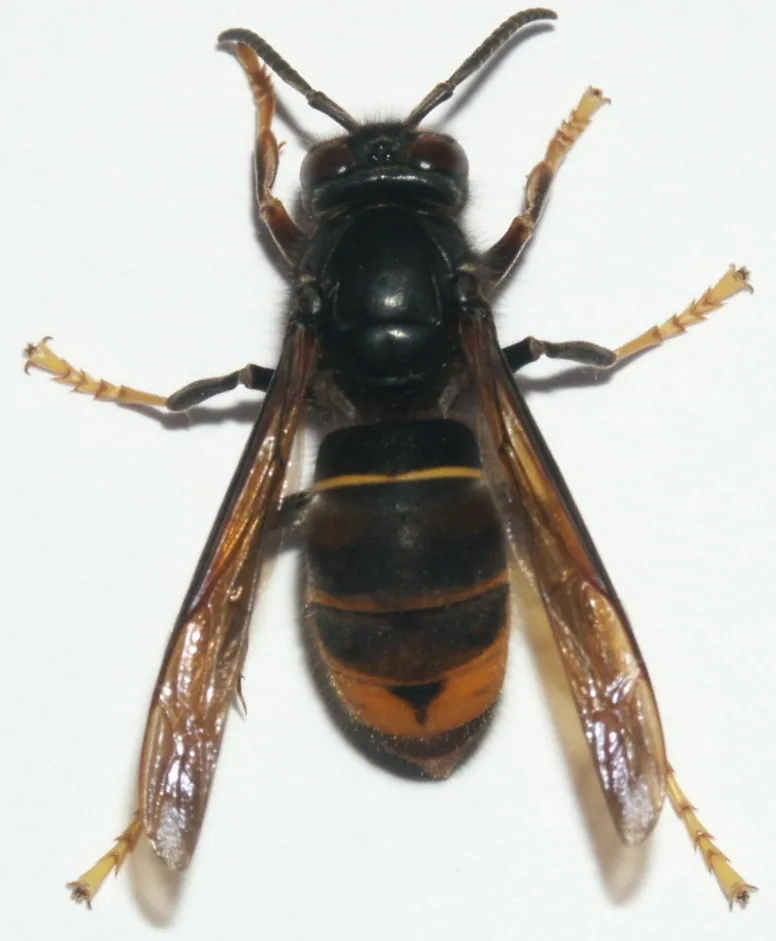
 Jak ho poznat
- Queens are about 3 cm long, males about 2.4 cm and workers about 2 cm, so it is significantly smaller than the European hornet.1
- Its legs (tarsi) are yellow, which gives it the name yellow-legged hornet.1
- The thorax is velvety brown or black, with a brown abdomen.1
- Each abdominal segment has a narrow yellow border at the back, except the fourth segment, which is orange.1
- The head is black and the face is yellow.1
Často se plete s: It looks like the European hornet (V. crabro), which is much larger. Its nest exit is usually on the side rather than at the bottom.1
Síla jedu
Jed vychází žihadlem.
Co dělá jeho jed?
Multiple stings have caused anaphylactic shock, a severe allergic reaction, in people who were hospitalised in France.1
Jak je nebezpečné pro lidi?
Nebezpečí pro lidi: BolestivéMůže to hodně bolet, ale skoro nikdy to není vážné.Although the species is not aggressive, people have been attacked after disturbing nests. A man in Galicia, Spain, was killed in 2017 after being stung over 20 times while pruning an apple tree. Several people have died in south west France, including in 2019 and 2020. Because of its larger size, its stings are more serious than those of western honeybees.1
Co dělá, když se bojí?
When it feels its nest is threatened, it charges in a group.1
 Když bodne
- Vyškrábni včelí žihadlo a zchlaď to místo.
- Pokud má postižený potíže s dýcháním, otok obličeje nebo krku nebo se cítí na omdlení, jde o alergickou pohotovost: zavolej na tísňovou linku a použij jeho adrenalinový autoinjektor, pokud ho má.
Vždy nejdřív zavolej na tísňovou linku (112, 000, 911). Jde o obecné rady k první pomoci, ne o lékařskou radu. Základy první pomoci
 Buď v bezpečí
- Nikdy se nedotýkej divokého zvířete, nechytej ho a neprovokuj, ani malé, a ani když vypadá, že spí nebo je mrtvé.
- Nech mu prostor. Když ho potkáš, zůstaň v klidu, pomalu couvej a nech ho jít svou cestou.
- Když tě bodne: zůstaň v klidu, nehýbej se, zavolej na tísňovou linku (112, 000, 911) nebo se rychle dostaň do nemocnice. Zapamatuj si, jak vypadalo, fotka pomůže.
Nejde po tobě. Jed používá k lovu potravy nebo k obraně a mnohem radši se schová. Víc o bezpečí
Jak je velké?
Jak je dlouhé?
 zhruba tak dlouhé jako kancelářská sponka
 let přes celé fotbalové hřiště za 13 s
Asian hornet: jak je velké ve srovnání s TEBOU?
Jen matematika ve tvém prohlížeči. Nic se neukládá ani nikam neposílá.
Jak je rychlé?


Fakta
In its native range, its main prey is the eastern honeybee, which defends the hive by balling hornets and raising the temperature inside the ball to a level that kills the hornet.1
A hornet hunting honeybees holds a territory of about 0.5 m² above a beehive and catches bees as they return to the hive.1
It is believed to have reached France in boxes of pottery from China in 2004.1
A colony often starts a nest in a low shrub, then abandons it after some months and builds a new one high in a tree, possibly to avoid parasites.1
Young queens leave the colony in late autumn and hibernate over winter.1
Lovec mýtů
Mýtus: Asian hornets are aggressive and will attack anyone who comes near.
Pravda: The species is not aggressive, but it will charge in a group when it feels its nest is threatened.1
Odkud fakta pocházejí
- Asian hornet (Wikipedia (CC BY-SA 4.0))
- Vespa velutina (iNaturalist): jména a zařazení.
- Venom Wiki: úroveň nebezpečí, typická velikost a odhad rychlosti jsou naše vlastní. Podívej se, jak je určujeme: Jak hodnotíme nebezpečí.
Každý fakt na této stránce má číslo, které odkazuje na jeho zdroj. Pokud jsme se spletli, promiň, jsme fanoušci zvířat, ne vědecký časopis. Napiš nám na [email protected] a opravíme to.
 Štír má hlad! Venom Wiki je projekt jednoho člověka: zdarma, bez reklam a bez sledování. Malé spropitné pomáhá udržet ho online.Nakrm štíra
 Asian giant hornet
 Common wasp
 European hornet
 Western honey bee
 Giant honey bee
 European paper wasp
 Štír palestinský
 Kobra indická
 Zmije paví
 Kobra královská
 Zmije útočná
 Zmije řetízková