
 Afrika
 Asie
Asie Evropa
 Jižní Amerika
 Austrálie a Oceánie
 Antarktida
 Tichý oceán
 Atlantský oceán
 Indický oceán
 Severní ledový oceán
 Středozemní moře
 Rudé moře
 Karibské moře
 Korálové moře
 Jihočínské moře
 Filipínské moře
 Andamanské moře
 Severní moře
 Timorské a Arafurské moře
 Bengálský záliv
 Kalifornský záliv
Mediterranean recluse
 Kousnutí
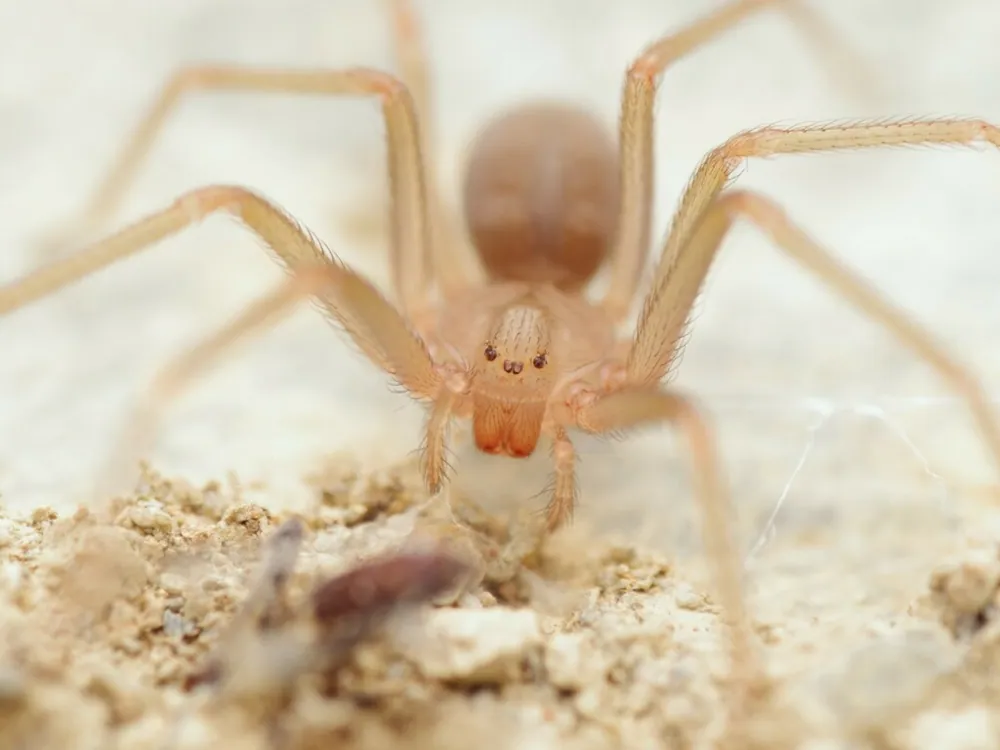
The Mediterranean recluse spider is a small spider that comes from the Mediterranean region. It has spread to many parts of the world through human travel and trade, and it is listed as one of the most invasive spiders in the world. Its bite can cause skin damage, so it is worth knowing what it looks like.1

 Jak ho poznat
- A medium-sized spider with three pairs of two eyes arranged in a triangle, instead of the usual eight eyes1
- A violin-shaped pattern on the front part of the body (cephalothorax)1
- Adults of both sexes grow to about 7 to 7.5 cm... no, 7 to 7.5 mm long1
- Its web is very thin and fragile, made of silk strands laid in a disorganised way1
Často se plete s: It is nearly indistinguishable in appearance from the brown recluse spider (Loxosceles reclusa). Pest control for one can often be adapted for the other.1
Síla jedu
Jed vychází jedovými zuby nebo zuby, když kouše.
Co dělá jeho jed?
Its venom contains an enzyme called sphingomyelinase D, which causes necrosis, meaning the death of skin and other tissue around the bite. Most cases are medically insignificant. In some cases, penetrating pain starts 2 to 8 hours after the bite, followed by burning, and the area becomes red and painful. A blister may form that turns dark blue with a sunken centre over several days. In rare cases, the blood and kidneys can be damaged, which can lead to kidney failure.1
Jak je nebezpečné pro lidi?
Nebezpečí pro lidi: BolestivéMůže to hodně bolet, ale skoro nikdy to není vážné.Most bites are medically insignificant, but some people are affected much more seriously. In 2024, the species was blamed for the deaths of two people in Italy.1
 Když kousne
- Umyj místo kousnutí a dej na něj ledový obklad na bolest. Vyhledej lékařskou pomoc, pokud je bolest silná, šíří se nebo se postiženému udělá zle.
Vždy nejdřív zavolej na tísňovou linku (112, 000, 911). Jde o obecné rady k první pomoci, ne o lékařskou radu. Základy první pomoci
 Buď v bezpečí
- Nikdy se nedotýkej divokého zvířete, nechytej ho a neprovokuj, ani malé, a ani když vypadá, že spí nebo je mrtvé.
- Nech mu prostor. Když ho potkáš, zůstaň v klidu, pomalu couvej a nech ho jít svou cestou.
- Když tě kousne: zůstaň v klidu, nehýbej se, zavolej na tísňovou linku (112, 000, 911) nebo se rychle dostaň do nemocnice. Zapamatuj si, jak vypadalo, fotka pomůže.
Nejde po tobě. Jed používá k lovu potravy nebo k obraně a mnohem radši se schová. Víc o bezpečí
Jak je velké?
Jak je dlouhé?
 tak malé, že se vejde na tvůj nehet
Mediterranean recluse: jak je velké ve srovnání s TEBOU?
Jen matematika ve tvém prohlížeči. Nic se neukládá ani nikam neposílá.
Jak je rychlé?


Fakta
It is listed as one of the most invasive spiders in the world.1
It can survive for long periods without food and water, which makes it hard to control in homes.1
Young spiders shed their skins several times as they grow, and these skins often look pale and ghostly.1
Males hunt more actively than females, partly because they are also searching for a mate.1
Pro znalce jedů
- Vědecký název
- Loxosceles rufescens
- Skupina
- Pavouci
- Rodina
- Sicariidae2
- Pořadí
- Araneae
- Kontinenty
- Evropa, Asie, Afrika
- Mláďata
- Egg sacs contain about 40 eggs, which take a few weeks to hatch, depending on the temperature.1
- Jak se mu daří v přírodě
- Least Concern (South African National Biodiversity Institute)1
- Nebezpečí pro lidi
- 2 / 5: Bolestivé3
Odkud fakta pocházejí
- Mediterranean recluse spider (Wikipedia (CC BY-SA 4.0))
- Loxosceles rufescens (iNaturalist): jména a zařazení.
- Venom Wiki: úroveň nebezpečí, typická velikost a odhad rychlosti jsou naše vlastní. Podívej se, jak je určujeme: Jak hodnotíme nebezpečí.
Každý fakt na této stránce má číslo, které odkazuje na jeho zdroj. Pokud jsme se spletli, promiň, jsme fanoušci zvířat, ne vědecký časopis. Napiš nám na [email protected] a opravíme to.
 Štír má hlad! Venom Wiki je projekt jednoho člověka: zdarma, bez reklam a bez sledování. Malé spropitné pomáhá udržet ho online.Nakrm štíra
Víc ze stejné skupiny: Pavouci
 Mediterranean black widow
 Six-eyed sand spider
 Brown widow
 Diving bell spider
 European yellow sac spider
 Noble false widow
Žije také v: Evropa
 Common European adderZmijePotřebuje lékaře
 Spanish flyDalší toxická zvířataPotřebuje lékařeNedotýkat se
 Common waspVčely, vosy a sršněJen to bolí
 European hornetVčely, vosy a sršněJen to bolí
 Fire salamanderPralesničky, ropuchy a čolciJen to bolíNedotýkat se
 Western honey beeVčely, vosy a sršněJen to bolí