
 Afrika
 Asie
Asie Evropa
 Jižní Amerika
 Austrálie a Oceánie
 Antarktida
 Tichý oceán
 Atlantský oceán
 Indický oceán
 Severní ledový oceán
 Středozemní moře
 Rudé moře
 Karibské moře
 Korálové moře
 Jihočínské moře
 Filipínské moře
 Andamanské moře
 Severní moře
 Timorské a Arafurské moře
 Bengálský záliv
 Kalifornský záliv
Oriental fire-bellied toad
 Toxin v kůži
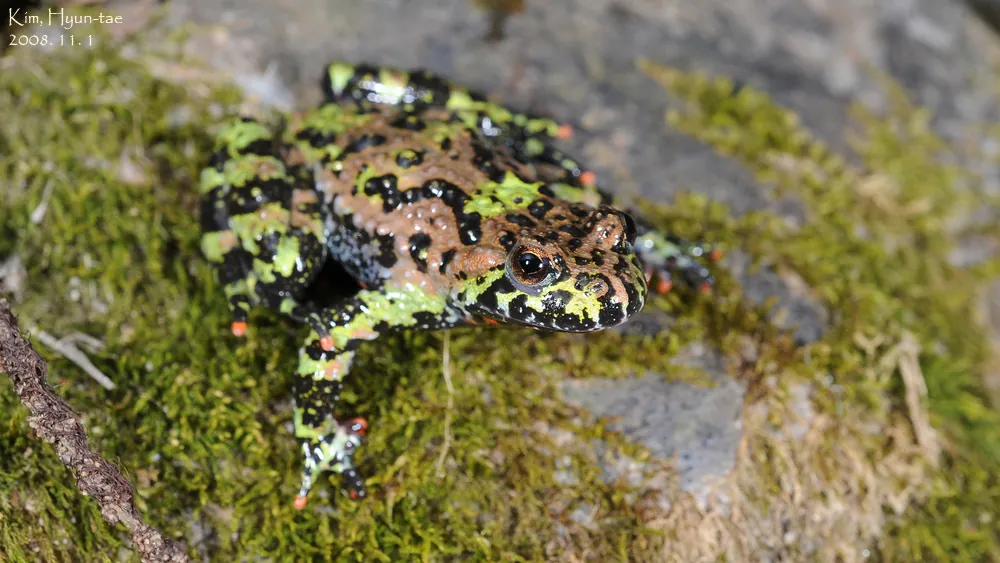
The Oriental fire-bellied toad is a small frog that lives in northeastern Asia, mostly near slow streams, ponds and forests. Its bright belly is a warning: when it is disturbed, it gives off a mild toxin through its skin. It is common across much of its range.1



 Jak ho poznat
- Bright grey, brownish or green upper skin with black mottling.1
- Bright yellow, red or orange-red belly, mottled with dark spots.1
- Red finger and toe tips are usually present.1
- Skin on the upper side is covered in small bumps called tubercles, which give it a toad-like look.1
- Adults are about 3.8 to 5.1 cm long.1
Často se plete s: It is often mistaken for a toad, but it is not a true toad. Compared with other Bombina frogs, it has no gular sacs (throat pouches), its belly is usually more red than yellow, and it has bright finger tips.1
Síla toxinu
Jeho kůže je toxická. Je nebezpečné se jí dotýkat, olizovat ji nebo ji jíst.
Co dělá jeho toxin?
The toad's skin releases a milky, mildly toxic substance when it is disturbed or frightened, mostly from the hind legs and sometimes the belly. Its toxins are described as mild, and the toxin does not pose a significant threat to human health. Captive toads are generally less toxic than wild ones, because their diet in the wild adds to their toxicity.1
Jak je nebezpečné pro lidi?
Nebezpečí pro lidi: MírnéJako včelí bodnutí nebo méně. Pro lidi v podstatě neškodné.The toxin does not pose a significant threat to human health, but its skin mucus can cause discomfort to the mouth and eyes if the toad is handled.1
Co dělá, když se bojí?
When threatened, it releases toxin from its skin, lies on its back to show its brightly coloured belly, and arches its head and holds up its limbs as a warning.1
 Pokud se ho někdo dotkl nebo ho snědl
- Pokud se ho někdo dotkl: pořádně si umyj ruce a nesahej si na oči ani do pusy. Pokud ho dítě nebo domácí zvíře olízlo nebo snědlo: volej toxikologické středisko nebo tísňovou linku.
Vždy nejdřív zavolej na tísňovou linku (112, 000, 911). Jde o obecné rady k první pomoci, ne o lékařskou radu. Základy první pomoci
 Buď v bezpečí
- Nikdy se nedotýkej divokého zvířete, nechytej ho a neprovokuj, ani malé, a ani když vypadá, že spí nebo je mrtvé.
- Nech mu prostor. Když ho potkáš, zůstaň v klidu, pomalu couvej a nech ho jít svou cestou.
- Po dotyku nebo snězení: netři si oči ani pusu, umyj si ruce a vyhledej lékařskou pomoc.
Nejde po tobě. Jeho toxin je tu jen proto, aby ho nikdo nesnědl. Víc o bezpečí
Jak je velké?
Jak je dlouhé?
Kolik váží?
 kratší než tvůj malíček
 100 metrů za 180 s (nejrychlejší člověk potřebuje 9,6)
Oriental fire-bellied toad: jak je velké ve srovnání s TEBOU?
Jen matematika ve tvém prohlížeči. Nic se neukládá ani nikam neposílá.
Jak je rychlé?


Fakta
Unusually for a frog, this species has no eardrum or resonator, and it makes its calls by inhaling.1
In experiments, these toads learned to solve mazes using water as a reward, which other frog types did not manage.1
Its skin contains bombesin, a peptide that affects stomach function in mammals. It was first found in its relative, the European fire-bellied toad.1
Males call to females with a light sound that is compared to a musical triangle.1
Grass snakes and other water-dwelling snakes are known to eat these toads without any ill effect.1
In captivity they often live for around 12 years, and some have lived up to 30 years.1
Lovec mýtů
Mýtus: It is a true toad.
Pravda: It is not a true toad, although its bumpy skin gives it a toad-like appearance.1
Pro znalce jedů
Odkud fakta pocházejí
- Oriental fire-bellied toad (Wikipedia (CC BY-SA 4.0))
- Bombina orientalis (iNaturalist): jména a zařazení.
- Venom Wiki: úroveň nebezpečí, typická velikost a odhad rychlosti jsou naše vlastní. Podívej se, jak je určujeme: Jak hodnotíme nebezpečí.
Každý fakt na této stránce má číslo, které odkazuje na jeho zdroj. Pokud jsme se spletli, promiň, jsme fanoušci zvířat, ne vědecký časopis. Napiš nám na [email protected] a opravíme to.
 Štír má hlad! Venom Wiki je projekt jednoho člověka: zdarma, bez reklam a bez sledování. Malé spropitné pomáhá udržet ho online.Nakrm štíra
Víc ze stejné skupiny: Pralesničky, ropuchy a čolci
 Japanese fire-bellied newtPralesničky, ropuchy a čolciPotřebuje lékařeNedotýkat se
 Common toadPralesničky, ropuchy a čolciJen to bolíNedotýkat se
 Asian common toadPralesničky, ropuchy a čolciPotřebuje lékařeNedotýkat se
 Asiatic toadPralesničky, ropuchy a čolciJen to bolíNedotýkat se
 Emperor newtPralesničky, ropuchy a čolciJen to bolíNedotýkat se
 Himalayan newtPralesničky, ropuchy a čolciJen to bolíNedotýkat se
 Štír palestinský
 Kobra indická
 Zmije paví
 Kobra královská
 Zmije útočná
 Zmije řetízková