
 Afrika
 Asien
Asien Europa
 Südamerika
 Australien & Ozeanien
 Antarktis
 Pazifischer Ozean
 Atlantischer Ozean
 Indischer Ozean
 Nordpolarmeer
 Mittelmeer
 Rotes Meer
 Karibisches Meer
 Korallenmeer
 Südchinesisches Meer
 Philippinensee
 Andamanensee
 Nordsee
 Timorsee & Arafurasee
 Golf von Bengalen
 Golf von Kalifornien
Arizona bark scorpion
 Stiche
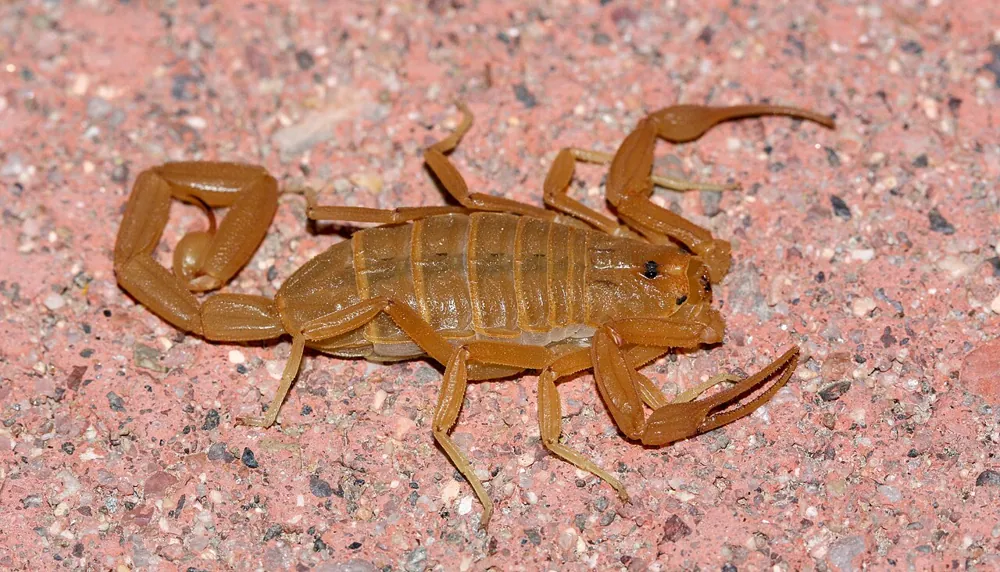
The Arizona bark scorpion is a small, light brown scorpion. It lives in the Sonoran Desert of the southwestern United States and northwestern Mexico. It is the most venomous scorpion in the United States, so it is important to know what it looks like and what to do after a sting.1


 So erkennst du es
- Small and light brown, tan or light beige in colour1
- Adults are up to 8 cm long (males) or up to 7 cm long (females)1
- Glows (fluoresces) under a blacklight, so it can be spotted at night from about six feet away with a UV flashlight1
- Can climb walls, trees and other rough surfaces, and often sits on the underside of objects1
Giftkraft
Das Gift kommt durch einen Stachel heraus.
Was macht sein Gift, wenn es beißt oder sticht?
The venom causes severe pain in adults, along with numbness, tingling and vomiting. These symptoms typically last between 24 and 72 hours. The stung area may stop working for a time, so a hand or arm can be temporarily immobilised or have convulsions. Some victims also feel short breaths and electrical jolts.1
Wie gefährlich ist es für Menschen?
Gefahr für Menschen: ErnstEin Stich gehört zum Arzt. Todesfälle sind sehr selten.Two deaths have been recorded in Arizona since 1968. Thousands of people are estimated to be stung each year in Arizona and New Mexico. Young children are at particular risk of severe symptoms.1
 Gute Nachricht: Ärzte haben dafür ein Medikament (Gegengift) oder eine Behandlung.1
Was macht es, wenn es Angst hat?
It will not seek out humans unless it is provoked or defending its young.1
 Wenn es sticht
- Clean the sting site with soap and water, then apply a cool compress. You can take acetaminophen (paracetamol) or ibuprofen for pain and swelling. Get medical attention straight away if severe symptoms occur, especially in young children.1
- Kühl den Stich mit einem Kühlpack und halte die Person ruhig. Hol schnell ärztliche Hilfe, besonders bei Kindern: Manche Skorpione sind für Kinder tödlich.
Ruf immer zuerst deine Notrufnummer an (112, 000, 911). Das sind allgemeine Erste-Hilfe-Hinweise, keine ärztliche Beratung. Erste-Hilfe-Grundlagen
 Bleib sicher
- Fass ein wildes Tier niemals an, fang es nicht und ärgere es nicht, auch kein kleines, und auch nicht, wenn es schlafend aussieht oder tot.
- Halte Abstand. Wenn du einem begegnest, bleib ruhig, geh langsam zurück und lass es seiner Wege gehen.
- Wenn dich eines sticht: Bleib ruhig, halt still, ruf deine Notrufnummer an (112, 000, 911) oder fahr schnell in ein Krankenhaus. Merk dir, wie es aussah, ein Foto hilft.
Es hat es nicht auf dich abgesehen. Es benutzt sein Gift, um Futter zu fangen oder sich zu schützen, und versteckt sich viel lieber. Mehr über Sicherheit
Wo auf der Welt?
Wie groß ist es?
Wie lang ist es?
 so lang wie 2,5 Bausteine in einer Reihe
 könnte 100 Meter in 220 Sekunden schaffen (der schnellste Mensch braucht 9,6)
Wie groß ist Arizona bark scorpion im Vergleich zu DIR?
Nur Rechnen in deinem Browser. Nichts wird gespeichert oder irgendwohin geschickt.
Wie schnell ist es?


Fakten
Scorpions, including this species, were found near ground zero during American nuclear tests, with no recorded harmful effects.1
Its venom has little effect on grasshopper mice, which scientists found use the toxin as a pain reducer rather than a pain trigger.1
It is the only scorpion genus in the Southwest that can climb rough walls and trees.1
Layers of wax on its outer shell help it resist water loss in the desert.1
Newly moulted scorpions do not glow under UV light for a few days.1
Young scorpions are gently guided onto their mother's back, where they stay after birth.1
Mythen-Check
Mythos: Scorpions go looking for people to sting them.
Wahrheit: They will not seek out humans unless they are provoked or defending their young. Many stings happen when people touch a scorpion on the underside of an object, where it is hiding.1
Für Giftexperten
Woher die Fakten kommen
- Arizona bark scorpion (Wikipedia (CC BY-SA 4.0))
- Centruroides sculpturatus (iNaturalist): Namen und Klassifikation.
- Venom Wiki: die Gefahrenstufe, die typische Größe und die geschätzte Geschwindigkeit sind von uns. So berechnen wir sie: So bewerten wir die Gefahr.
Jeder Fakt auf dieser Seite hat eine Nummer, die auf seine Quelle zeigt. Wenn wir etwas falsch haben: Entschuldigung, wir sind Tierfans, keine Fachzeitschrift. Schreib uns an [email protected] und wir korrigieren es.
 Der Skorpion hat Hunger! Venom Wiki ist ein Ein-Mann-Projekt: kostenlos, ohne Werbung und ohne Tracker. Ein kleines Trinkgeld hilft, es online zu halten.Füttere den Skorpion
 Cuban blue scorpion
 Striped bark scorpion
 Giant desert hairy scorpion
 Colima scorpion
 Durango scorpion
 Mexican bark scorpion
 Terciopelo-Lanzenotter
 Eastern coral snake
 Eastern diamondback rattlesnake
 Eyelash viper
 Timber rattlesnake
 Western diamondback rattlesnake