
 Αφρική
 Ασία
Ασία Ευρώπη
 Νότια Αμερική
 Αυστραλία και Ωκεανία
 Ανταρκτική
 Ειρηνικός Ωκεανός
 Ατλαντικός Ωκεανός
 Ινδικός Ωκεανός
 Αρκτικός Ωκεανός
 Μεσόγειος Θάλασσα
 Ερυθρά Θάλασσα
 Καραϊβική Θάλασσα
 Θάλασσα των Κοραλλιών
 Θάλασσα της Νότιας Κίνας
 Θάλασσα των Φιλιππίνων
 Θάλασσα Ανταμάν
 Βόρεια Θάλασσα
 Θάλασσα του Τιμόρ και Θάλασσα Αραφούρα
 Κόλπος της Βεγγάλης
 Κόλπος της Καλιφόρνιας
Bengal slow loris
 Δαγκώματα
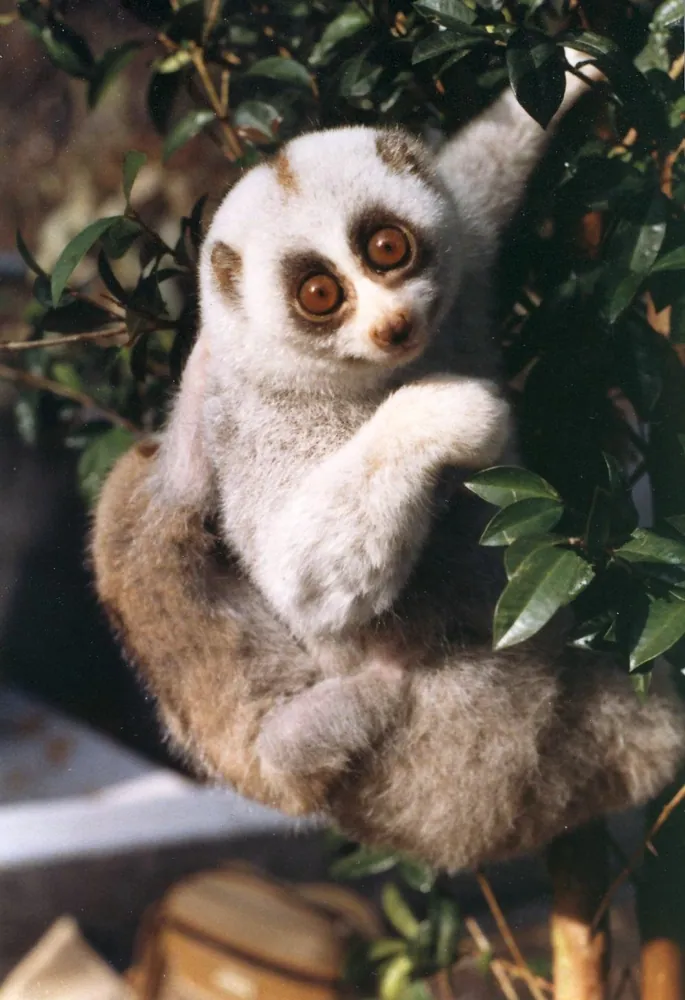
The Bengal slow loris is a small, nocturnal primate with big eyes and dense, woolly fur. It lives in forests across South and Southeast Asia, and it is the largest of the slow loris species. It is endangered, mainly because it is sold in animal markets and used in traditional medicine.1



 Πώς να το αναγνωρίσεις
- Dense, woolly brown-grey fur on its back, with white fur on its underside1
- A dark stripe running up to the top of its head, which does not reach the ears1
- Pale forearms and feet, with limbs that vary from brown to nearly white1
- A round head, flat face, large eyes that show a bright orange eye shine, and short ears1
- Body and head length of 26 to 38 cm1
Συχνά μπερδεύεται με: The Sunda slow loris is similar in size but is smaller and tawny- or golden-brown, without the pale head, nape and shoulders. The pygmy slow loris is much smaller, with dark brown fur, longer ears and no dark dorsal stripe.1
Δύναμη δηλητηρίου
Το δηλητήριο βγαίνει από τα δόντια του όταν δαγκώνει.
Τι κάνει το δηλητήριό του όταν δαγκώνει ή τσιμπάει;
A small gland on the inside of the elbow produces a pungent, clear, oily toxin. The animal wipes this fluid onto its toothcomb as a defence. The main chemical in it is m-cresol, a phenolic compound, and the mixture contains several dozen volatile chemicals.1
Πόσο επικίνδυνο είναι για τους ανθρώπους;
Κίνδυνος για τους ανθρώπους: ΕπώδυνοΜπορεί να πονέσει πολύ, αλλά σχεδόν ποτέ δεν είναι σοβαρό. Αν δαγκώνει
- Πλύνε καλά την πληγή και ζήτα ιατρική βοήθεια.
Πάντα να καλείς πρώτα τον αριθμό έκτακτης ανάγκης (112, 000, 911). Αυτές είναι γενικές οδηγίες πρώτων βοηθειών, όχι ιατρική συμβουλή. Βασικές πρώτες βοήθειες
 Να προσέχεις
- Ποτέ μην αγγίζεις, μην πιάνεις και μην πειράζεις ένα άγριο ζώο, ακόμα κι αν είναι μικρό, και ακόμα κι αν φαίνεται κοιμισμένο ή νεκρό.
- Άφησέ του χώρο. Αν συναντήσεις κάποιο, κράτα την ψυχραιμία σου, κάνε αργά πίσω και άφησέ το να φύγει στον δρόμο του.
- Αν σε δαγκώσει κάποιο: κράτα την ψυχραιμία σου, μην κουνιέσαι, κάλεσε τον αριθμό έκτακτης ανάγκης (112, 000, 911) ή πήγαινε γρήγορα στο νοσοκομείο. Θυμήσου πώς ήταν, μια φωτογραφία βοηθάει.
Δεν σε κυνηγάει. Χρησιμοποιεί το δηλητήριό του για να πιάσει τροφή ή για να προστατευτεί, και προτιμά πολύ περισσότερο να κρυφτεί. Περισσότερα για την ασφάλεια
Πόσο μεγάλο είναι;
Πόσο μακρύ είναι;
Πόσο βαρύ είναι;

 μακρύ σαν 12 τουβλάκια στη σειρά
 περίπου όσο βαρύ είναι μια γάτα του σπιτιού
 θα μπορούσε να τρέξει 100 μέτρα σε 180 δευτερόλεπτα (ο πιο γρήγορος άνθρωπος χρειάζεται 9,6)
Bengal slow loris: πόσο μεγάλο είναι σε σύγκριση με ΕΣΕΝΑ;
Απλώς μαθηματικά στο πρόγραμμα περιήγησής σου. Τίποτα δεν αποθηκεύεται και δεν στέλνεται πουθενά.
Πόσο γρήγορο είναι;


Στοιχεία
Its toxin may carry information about a loris's sex, age, health and social status, so it may act as a form of scent communication.1
It is the largest species of slow loris.1
Its second hind toe has a curved toilet-claw that it uses for scratching and grooming, while its other nails are straight.1
It has an excellent night vision, helped by a tapetum lucidum, a reflective layer in the eye.1
Females can have a new offspring every 12 to 18 months, and could even become pregnant again when the previous young is about six months old.1
It is an important seed disperser and pollinator, and it is also prey for several carnivores.1
Για ειδικούς στα δηλητήρια
- Επιστημονική ονομασία
- Nycticebus bengalensis
- Ομάδα
- Ιοβόλα θηλαστικά
- Οικογένεια
- Lorisidae2
- Σειρά
- Primates
- Ήπειροι
- Ασία
- Μωρά
- It usually gives birth to a single offspring after a six-month pregnancy, and twins are rare. The mother carries the young for about three months, and it becomes independent at around three months of age.1
- Διάρκεια ζωής
- περίπου 20 χρόνια1
- Πώς τα πάει στη φύση
- Endangered1
- Κίνδυνος για τους ανθρώπους
- 2 / 5: Επώδυνο3
Από πού έρχονται τα στοιχεία
- Bengal slow loris (Wikipedia (CC BY-SA 4.0))
- Nycticebus bengalensis (iNaturalist): ονόματα και ταξινόμηση.
- Venom Wiki: το επίπεδο κινδύνου, το τυπικό μέγεθος και η εκτίμηση ταχύτητας είναι δικά μας. Δες πώς τα υπολογίζουμε: Πώς βαθμολογούμε τον κίνδυνο.
Κάθε στοιχείο σε αυτή τη σελίδα έχει έναν αριθμό που δείχνει την πηγή του. Αν κάναμε λάθος, συγγνώμη, είμαστε φαν των ζώων, όχι επιστημονικό περιοδικό. Πες μας στο [email protected] και θα το διορθώσουμε.
 Ο σκορπιός πεινάει! Το Venom Wiki είναι το έργο ενός ανθρώπου: δωρεάν, χωρίς διαφημίσεις και χωρίς ιχνηλάτες. Ένα μικρό φιλοδώρημα βοηθάει να μείνει online.Τάισε τον σκορπιό
 Javan slow loris
 Pygmy slow loris
 Sunda slow loris
 Kayan River slow loris
 Philippine slow loris
 Eurasian water shrew
 Κίτρινος σκορπιός της Παλαιστίνης
 Ινδική κόμπρα
 Ινδική οχιά με πριονωτά λέπια
 Βασιλική κόμπρα
 Αφρικανική οχιά
 Οχιά του Ράσελ