
 Αφρική
 Ασία
Ασία Ευρώπη
 Νότια Αμερική
 Αυστραλία και Ωκεανία
 Ανταρκτική
 Ειρηνικός Ωκεανός
 Ατλαντικός Ωκεανός
 Ινδικός Ωκεανός
 Αρκτικός Ωκεανός
 Μεσόγειος Θάλασσα
 Ερυθρά Θάλασσα
 Καραϊβική Θάλασσα
 Θάλασσα των Κοραλλιών
 Θάλασσα της Νότιας Κίνας
 Θάλασσα των Φιλιππίνων
 Θάλασσα Ανταμάν
 Βόρεια Θάλασσα
 Θάλασσα του Τιμόρ και Θάλασσα Αραφούρα
 Κόλπος της Βεγγάλης
 Κόλπος της Καλιφόρνιας
Katipo
 Δαγκώματα
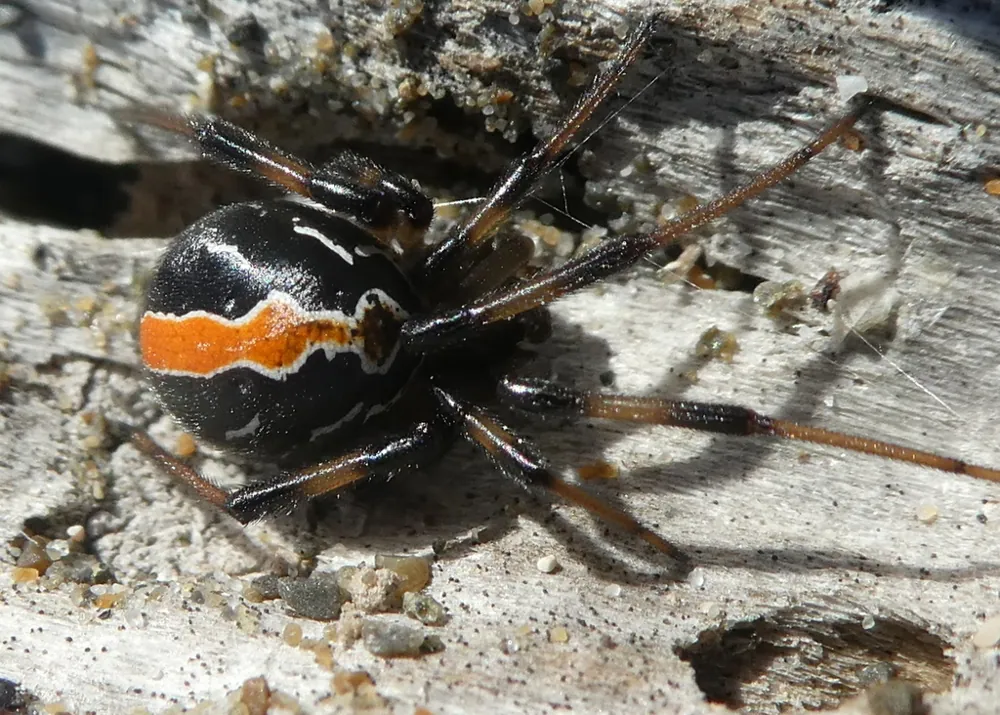
The katipō is a cobweb spider found only in New Zealand, where it lives in coastal sand dunes. It is closely related to the Australian redback spider. Its bite is venomous to people, but bites are rare.1

 Πώς να το αναγνωρίσεις
- Adult females have a body length of 8–10 mm (about 0.3–0.4 in).1
- The red katipō, found in the South Island and lower North Island, has a large black, shiny abdomen with a white-bordered orange or red stripe on top, and a red hourglass-shaped marking underneath.1
- The black katipō, found in the upper North Island, has no upper red or orange stripe and is somewhat lighter in colour.1
- Males are 4–5 mm long, white with black stripes and red hourglass-shaped markings.1
Συχνά μπερδεύεται με: Steatoda species, which share the same habitat, are very similar and are called "false katipō" in New Zealand. The katipō has a less shiny, more tapered abdomen, and its side eyes are further apart. It is also similar to the redback, but the katipō has only short hair-like spines on its abdomen, while the redback has a mix of long and short ones.1
Δύναμη δηλητηρίου
Το δηλητήριο βγαίνει από τα δόντια του όταν δαγκώνει.
Τι κάνει το δηλητήριό του όταν δαγκώνει ή τσιμπάει;
The bite can cause latrodectism, a toxic syndrome that affects the nerves and body. Symptoms include extreme pain and, potentially, high blood pressure (hypertension) or seizures.1
Πόσο επικίνδυνο είναι για τους ανθρώπους;
Κίνδυνος για τους ανθρώπους: ΣοβαρόΈνα δάγκωμα χρειάζεται γιατρό. Οι θάνατοι είναι πολύ σπάνιοι.Katipō are venomous to humans, but bites are described as rare. Serious symptoms are possible, including extreme pain, high blood pressure and seizures.1
 Καλά νέα: οι γιατροί έχουν φάρμακο (ορό κατά του δηλητηρίου) ή θεραπεία γι' αυτό.1
 Αν δαγκώνει
- Πλύνε το δάγκωμα και βάλε πάνω του μια παγοκύστη για τον πόνο. Ζήτα ιατρική βοήθεια αν ο πόνος είναι δυνατός, απλώνεται ή ο άνθρωπος νιώθει άσχημα.
Πάντα να καλείς πρώτα τον αριθμό έκτακτης ανάγκης (112, 000, 911). Αυτές είναι γενικές οδηγίες πρώτων βοηθειών, όχι ιατρική συμβουλή. Βασικές πρώτες βοήθειες
 Να προσέχεις
- Ποτέ μην αγγίζεις, μην πιάνεις και μην πειράζεις ένα άγριο ζώο, ακόμα κι αν είναι μικρό, και ακόμα κι αν φαίνεται κοιμισμένο ή νεκρό.
- Άφησέ του χώρο. Αν συναντήσεις κάποιο, κράτα την ψυχραιμία σου, κάνε αργά πίσω και άφησέ το να φύγει στον δρόμο του.
- Αν σε δαγκώσει κάποιο: κράτα την ψυχραιμία σου, μην κουνιέσαι, κάλεσε τον αριθμό έκτακτης ανάγκης (112, 000, 911) ή πήγαινε γρήγορα στο νοσοκομείο. Θυμήσου πώς ήταν, μια φωτογραφία βοηθάει.
Δεν σε κυνηγάει. Χρησιμοποιεί το δηλητήριό του για να πιάσει τροφή ή για να προστατευτεί, και προτιμά πολύ περισσότερο να κρυφτεί. Περισσότερα για την ασφάλεια
Πόσο μεγάλο είναι;
Πόσο μακρύ είναι;
 τόσο μικρό που χωράει πάνω στο νύχι σου
Katipo: πόσο μεγάλο είναι σε σύγκριση με ΕΣΕΝΑ;
Απλώς μαθηματικά στο πρόγραμμα περιήγησής σου. Τίποτα δεν αποθηκεύεται και δεν στέλνεται πουθενά.
Πόσο γρήγορο είναι;


Στοιχεία
In one 24-hour study of young spiders, 28% left the web by ballooning, carried by air currents.1
Katipō is one of the few Māori words that refers to a specific species of spider.1
The female does not usually eat the male after mating, unlike some other widow spiders.1
Females cover their egg sacs with silk and sand, which partly hides them in the web.1
The katipō is found only in New Zealand.1
Καταρρίπτω μύθους
Μύθος: The katipō is just a form of the redback spider.
Αλήθεια: The katipō is genetically and physically distinct from the redback, even though the two are closely related. It was once thought to be a subspecies of the redback.1
Για ειδικούς στα δηλητήρια
- Επιστημονική ονομασία
- Latrodectus katipo
- Ομάδα
- Αράχνες
- Οικογένεια
- Theridiidae2
- Σειρά
- Araneae
- Ήπειροι
- Αυστραλία και Ωκεανία
- Μωρά
- The female lays five or six egg sacs in November or December, with about 70 to 90 eggs in each. The young hatch after 20–25 days and leave the egg sac in January and February.1
- Πώς τα πάει στη φύση
- In serious decline (New Zealand Threat Classification System)1
- Κίνδυνος για τους ανθρώπους
- 3 / 5: Σοβαρό3
Από πού έρχονται τα στοιχεία
- Katipō (Wikipedia (CC BY-SA 4.0))
- Latrodectus katipo (iNaturalist): ονόματα και ταξινόμηση.
- Venom Wiki: το επίπεδο κινδύνου, το τυπικό μέγεθος και η εκτίμηση ταχύτητας είναι δικά μας. Δες πώς τα υπολογίζουμε: Πώς βαθμολογούμε τον κίνδυνο.
Κάθε στοιχείο σε αυτή τη σελίδα έχει έναν αριθμό που δείχνει την πηγή του. Αν κάναμε λάθος, συγγνώμη, είμαστε φαν των ζώων, όχι επιστημονικό περιοδικό. Πες μας στο [email protected] και θα το διορθώσουμε.
 Ο σκορπιός πεινάει! Το Venom Wiki είναι το έργο ενός ανθρώπου: δωρεάν, χωρίς διαφημίσεις και χωρίς ιχνηλάτες. Ένα μικρό φιλοδώρημα βοηθάει να μείνει online.Τάισε τον σκορπιό
Περισσότερα από την ίδια ομάδα: Αράχνες
 Redback spider
 White-tailed spider
 Peacock spider
 Badge huntsman spider
 Black house spider
 Eastern white-tailed spider
Ζει επίσης σε: Αυστραλία και Ωκεανία
 Coastal taipanΦίδια της ΑυστραλίαςΘανατηφόρο
 Common death adderΦίδια της ΑυστραλίαςΘανατηφόρο
 Eastern brown snakeΦίδια της ΑυστραλίαςΘανατηφόρο
 Ταϊπάν της ενδοχώραςΦίδια της ΑυστραλίαςΘανατηφόρο
 Sydney funnel-web spiderΤαραντούλες και αράχνες με χωνοειδή ιστόΘανατηφόρο
 Φίδι-τίγρηςΦίδια της ΑυστραλίαςΘανατηφόρο