
 Αφρική
 Ασία
Ασία Ευρώπη
 Νότια Αμερική
 Αυστραλία και Ωκεανία
 Ανταρκτική
 Ειρηνικός Ωκεανός
 Ατλαντικός Ωκεανός
 Ινδικός Ωκεανός
 Αρκτικός Ωκεανός
 Μεσόγειος Θάλασσα
 Ερυθρά Θάλασσα
 Καραϊβική Θάλασσα
 Θάλασσα των Κοραλλιών
 Θάλασσα της Νότιας Κίνας
 Θάλασσα των Φιλιππίνων
 Θάλασσα Ανταμάν
 Βόρεια Θάλασσα
 Θάλασσα του Τιμόρ και Θάλασσα Αραφούρα
 Κόλπος της Βεγγάλης
 Κόλπος της Καλιφόρνιας
New Guinea small-eyed snake
 Δαγκώματα
The New Guinea small-eyed snake, Micropechis ikaheka, is a highly venomous snake that lives on New Guinea and nearby islands. It is the only species in its genus, and it is known for causing many deadly bites, especially on Karkar Island in Papua New Guinea. Its bites are a serious medical concern in the places where it lives.1



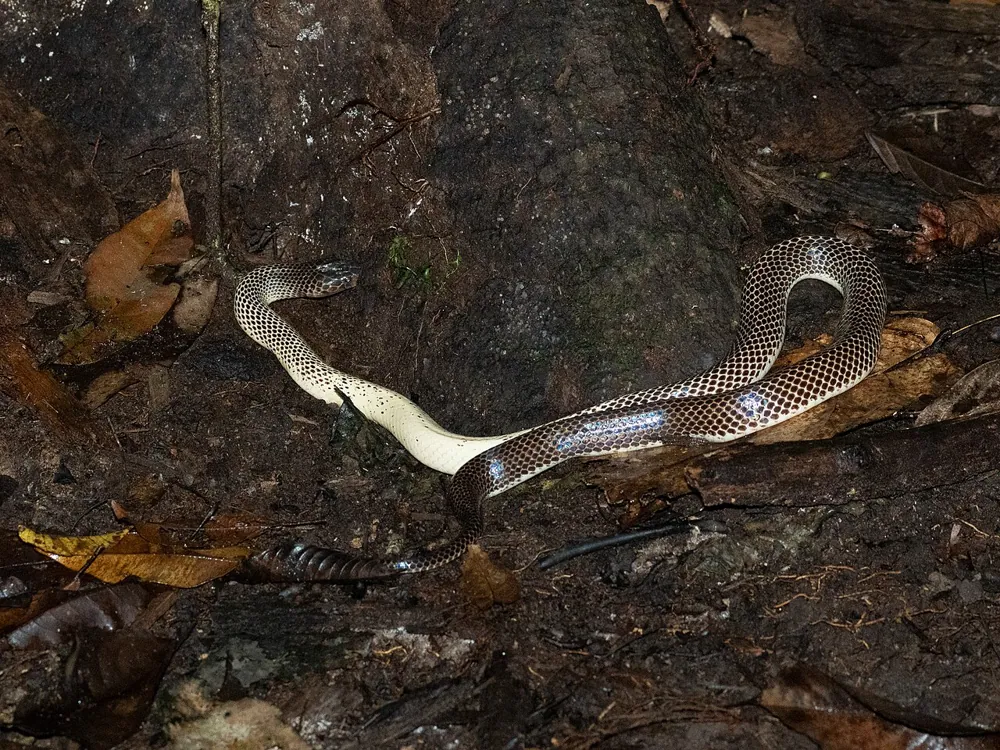
 Πώς να το αναγνωρίσεις
Δύναμη δηλητηρίου
Το δηλητήριο βγαίνει από τα δόντια του όταν δαγκώνει.
Τι κάνει το δηλητήριό του όταν δαγκώνει ή τσιμπάει;
Its venom is strong enough that it is considered a dangerous snake. Common symptoms include local muscle pain and tenderness, fever, abdominal pain, vomiting, dizziness, headache, low blood pressure and spontaneous bleeding. In severe cases, the venom also affects the nerves and muscles, causing drooping eyelids, slurred speech and jaw locking, and death can result from respiratory paralysis (when the muscles used for breathing stop working).1
Πόσο επικίνδυνο είναι για τους ανθρώπους;
Κίνδυνος για τους ανθρώπους: Πολύ επικίνδυνοΜπορεί να σκοτώσει έναν άνθρωπο που δεν παίρνει θεραπεία.This snake has been linked to many fatal bites. The first proven human death occurred in 1958 in Wau, Papua New Guinea, where a young man died 36 hours after being bitten on the base of the thumb while handling the snake. It causes about 40% of snake envenomations on Karkar Island, but less than 10% on the mainland, where death adders cause most snakebites. Plantation workers are most at risk, especially when moving husk piles, cutting grass, walking on plantation tracks or harvesting cocoa beans.1
 Καλά νέα: οι γιατροί έχουν φάρμακο (ορό κατά του δηλητηρίου) ή θεραπεία γι' αυτό.1
Τι κάνει όταν φοβάται;
Although it is normally shy, it becomes highly aggressive when disturbed, for example if it is handled or stepped on, and then it strikes quickly and readily. Its bite is tenacious and chewing, and it is not easily released.1
 Αν δαγκώνει
- Ακινητοποίηση με πίεση: τύλιξε έναν σφιχτό ελαστικό επίδεσμο πάνω από το δάγκωμα και μετά προς τα πάνω σε όλο το άκρο, βάλε νάρθηκα και κράτα τον άνθρωπο εντελώς ακίνητο μέχρι να έρθει βοήθεια.
- Μην πλένεις το δάγκωμα: στο νοσοκομείο μπορούν να εξετάσουν το δηλητήριο που έμεινε στο δέρμα για να διαλέξουν τον σωστό ορό κατά του δηλητηρίου.
Πάντα να καλείς πρώτα τον αριθμό έκτακτης ανάγκης (112, 000, 911). Αυτές είναι γενικές οδηγίες πρώτων βοηθειών, όχι ιατρική συμβουλή. Βασικές πρώτες βοήθειες
 Να προσέχεις
- Ποτέ μην αγγίζεις, μην πιάνεις και μην πειράζεις ένα άγριο ζώο, ακόμα κι αν είναι μικρό, και ακόμα κι αν φαίνεται κοιμισμένο ή νεκρό.
- Άφησέ του χώρο. Αν συναντήσεις κάποιο, κράτα την ψυχραιμία σου, κάνε αργά πίσω και άφησέ το να φύγει στον δρόμο του.
- Αν σε δαγκώσει κάποιο: κράτα την ψυχραιμία σου, μην κουνιέσαι, κάλεσε τον αριθμό έκτακτης ανάγκης (112, 000, 911) ή πήγαινε γρήγορα στο νοσοκομείο. Θυμήσου πώς ήταν, μια φωτογραφία βοηθάει.
Δεν σε κυνηγάει. Χρησιμοποιεί το δηλητήριό του για να πιάσει τροφή ή για να προστατευτεί, και προτιμά πολύ περισσότερο να κρυφτεί. Περισσότερα για την ασφάλεια
Πόσο μεγάλο είναι;
Πόσο μακρύ είναι;
 μακρύ σαν 4 γάτες του σπιτιού από τη μύτη ως την ουρά
 μακρύ σαν 12 μπανάνες στη σειρά
 θα μπορούσε να τρέξει 100 μέτρα σε 46 δευτερόλεπτα (ο πιο γρήγορος άνθρωπος χρειάζεται 9,6)
New Guinea small-eyed snake: πόσο μεγάλο είναι σε σύγκριση με ΕΣΕΝΑ;
Απλώς μαθηματικά στο πρόγραμμα περιήγησής σου. Τίποτα δεν αποθηκεύεται και δεν στέλνεται πουθενά.
Πόσο γρήγορο είναι;


Στοιχεία
A bite from this snake was linked to a human death in 1958, when a young man died 36 hours after being bitten on the thumb while handling it.1
It is cannibalistic, and it also hunts rodents, lizards and other snakes.1
On Karkar Island, where it is common, it is called the "white snake" because of its pale colouring.1
Its name, ikaheca, means "land eel" in a local West Papuan language.1
Καταρρίπτω μύθους
Μύθος: A dead snake is harmless and cannot bite.
Αλήθεια: A villager was bitten on the thumb by a snake he had reportedly killed, possibly because of a reflex action after death. Dead snakes can still bite, so they should be handled with care.1
Για ειδικούς στα δηλητήρια
Από πού έρχονται τα στοιχεία
- Micropechis (Wikipedia (CC BY-SA 4.0))
- Micropechis ikaheka (iNaturalist): ονόματα και ταξινόμηση.
- Venom Wiki: το επίπεδο κινδύνου, το τυπικό μέγεθος και η εκτίμηση ταχύτητας είναι δικά μας. Δες πώς τα υπολογίζουμε: Πώς βαθμολογούμε τον κίνδυνο.
Κάθε στοιχείο σε αυτή τη σελίδα έχει έναν αριθμό που δείχνει την πηγή του. Αν κάναμε λάθος, συγγνώμη, είμαστε φαν των ζώων, όχι επιστημονικό περιοδικό. Πες μας στο [email protected] και θα το διορθώσουμε.
 Ο σκορπιός πεινάει! Το Venom Wiki είναι το έργο ενός ανθρώπου: δωρεάν, χωρίς διαφημίσεις και χωρίς ιχνηλάτες. Ένα μικρό φιλοδώρημα βοηθάει να μείνει online.Τάισε τον σκορπιό
Περισσότερα από την ίδια ομάδα: Φίδια της Αυστραλίας
 Παράκτιο ταϊπάν
 Κοινή οχιά του θανάτου
 Ανατολικό καφέ φίδι
 Ταϊπάν της ενδοχώρας
 Φίδι-τίγρης
 Collett's snake
Ζει επίσης σε: Αυστραλία και Ωκεανία
 Αράχνη του Σίδνεϊ με χωνοειδή ιστόΤαραντούλες και αράχνες με χωνοειδή ιστόΘανατηφόρο
 Redback spiderΑράχνεςΧρειάζεται γιατρό
 Brown tree snakeΟπισθόγλυφα φίδιαΑπλώς πονάει
 Hooded pitohuiΆλλα δηλητηριώδη ζώαΑπλώς πονάειΜην αγγίζεις
 PlatypusΙοβόλα θηλαστικάΑπλώς πονάει
 Northern tree-dwelling funnel-web spiderΤαραντούλες και αράχνες με χωνοειδή ιστόΘανατηφόρο