
 África
 Asia
Asia Europa
 Sudamérica
 Australia y Oceanía
 Antártida
 Océano Pacífico
 Océano Atlántico
 Océano Índico
 Océano Ártico
 Mar Mediterráneo
 Mar Rojo
 Mar Caribe
 Mar del Coral
 Mar de China Meridional
 Mar de Filipinas
 Mar de Andamán
 Mar del Norte
 Mar de Timor y de Arafura
 Golfo de Bengala
 Golfo de California
Cane toad
 Veneno en la piel
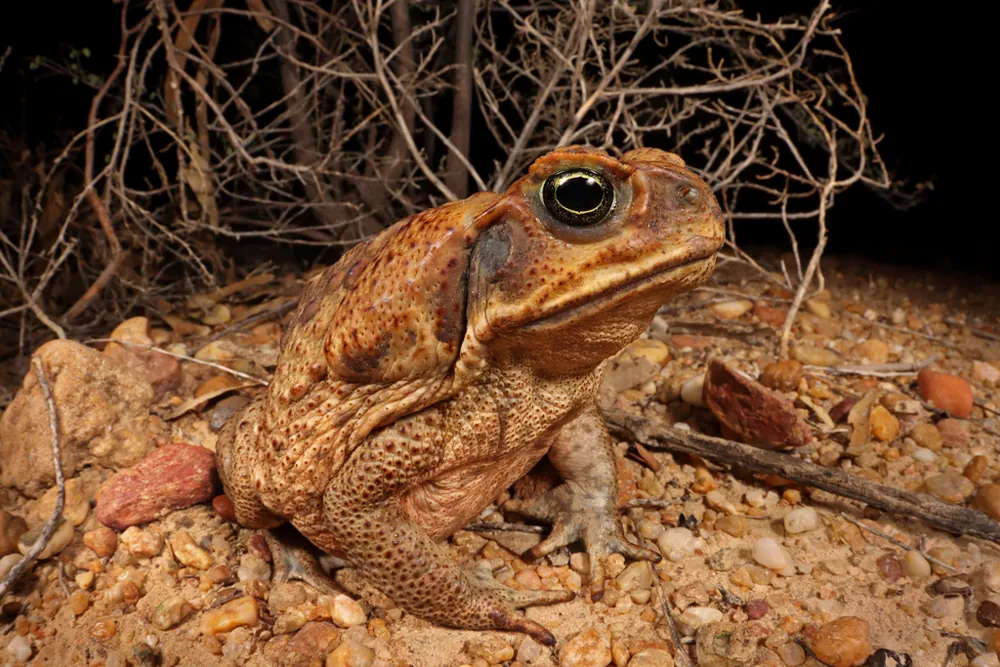
The cane toad is a large toad that is very poisonous to many animals. It is native to South and mainland Central America, but people have moved it to islands in Oceania and the Caribbean and to northern Australia. It matters because it spreads quickly and harms native wildlife and pets.1
 Cómo reconocerlo
- Very large, with adults usually 10 to 15 cm long1
- Dry, warty skin with distinct ridges above the eyes that run down the snout1
- A large parotoid gland (a swollen gland) behind each eye1
- Grey, yellowish, red-brown or olive-brown skin, often with patterns1
- Horizontal pupils and golden irises1
Se confunde a menudo con: In Australia, adults can be confused with large native frogs, but these lack the large parotoid glands and the ridge between the nostril and eye. The giant burrowing frog has vertical pupils and silver-grey irises, while the cane toad has horizontal pupils and golden irises. In the United States, the southern toad has two bulbs in front of the parotoid glands.1
Poder tóxico
Su piel es venenosa. Es peligroso tocarlo, lamerlo o comerlo.
¿Qué hace su toxina?
The toad's glands secrete a milky-white fluid called bufotoxin when it is threatened. Components of bufotoxin are toxic to many animals. In dogs, signs of poisoning include excessive drooling, extremely red gums, head-shaking, crying and loss of coordination.1
¿Qué peligro tiene para las personas?
Peligro para las personas: GraveSi alguien lo toca o se lo come, hay que ir al médico. Las muertes son muy raras.The toxic skin can kill many wild and domestic animals. Dogs are especially at risk from licking or biting the toad. Human deaths have also been recorded after people ate cane toads.1
¿Qué hace cuando se asusta?
When threatened, it releases bufotoxin from its glands.1
 Si alguien lo tocó o se lo comió
- Si alguien tocó uno: lávale bien las manos y que no se toque los ojos ni la boca. Si un niño o una mascota lo lamió o se lo comió: llama al centro de toxicología o a emergencias.
Llama siempre primero a tu número de emergencias (112, 000, 911). Esto son pautas generales de primeros auxilios, no consejo médico. Primeros auxilios básicos
 Mantente a salvo
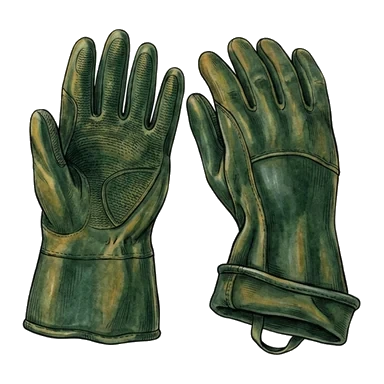
- Nunca toques, atrapes ni molestes a un animal salvaje, aunque sea pequeño y aunque parezca dormido o muerto.
- Déjale espacio. Si te encuentras uno, mantén la calma, retrocede despacio y deja que siga su camino.
- Si lo tocaste o te lo comiste: no te frotes los ojos ni la boca, lávate las manos y busca ayuda médica.
No va a por ti. Su veneno solo está ahí para que nadie se lo coma. Más sobre cómo protegerte
¿En qué parte del mundo?
¿Qué tamaño tiene?
¿Cuánto mide?
 mide como 8 piezas de construcción de juguete en fila
 podría recorrer 100 metros en 180 segundos (el humano más rápido necesita 9,6)
¿Qué tamaño tiene Cane toad comparado contigo?
Solo cálculos en tu navegador. No se guarda ni se envía nada a ningún sitio.
¿Qué velocidad alcanza?


Datos
Young toads lose the toxicity they had as eggs and tadpoles, and they only develop their poison glands later. Only an estimated 0.5% of cane toads reach adulthood.1
In Australia, tadpoles have evolved to be more likely to eat their siblings than tadpoles in South America.1
A female can lay thousands of eggs in one spawn, in strings up to 20 metres long.1
In the wild, cane toads can live 10 to 15 years, and one captive toad was reported to have lived 35 years.1
The cane toad is considered the largest species in the Bufonidae, the toad family.1
Cane toads eat both living and dead matter, which is unusual among frogs and toads.1
Cazamitos
Mito: The name 'marine toad' suggests that cane toads live in the sea.
Verdad: Cane toads do not live in the sea. The name came from a mistaken belief by an early naturalist.1
Para expertos en veneno
- Nombre científico
- Rhinella marina
- Grupo
- Ranas venenosas, sapos y tritones
- Familia
- Bufonidae2
- Orden
- Anura
- Continentes
- Norteamérica, Sudamérica
- Crías
- A female lays 8,000 to 25,000 eggs at once, in long jelly strings that can stretch up to 20 metres.1
- Esperanza de vida
- unos 15 años1
- Peligro para las personas
- 3 / 5: Grave3
De dónde salen los datos
- Cane toad (Wikipedia (CC BY-SA 4.0))
- Rhinella marina (iNaturalist): nombres y clasificación.
- Venom Wiki: el nivel de peligro, el tamaño típico y la velocidad estimada son nuestros. Mira cómo los calculamos: Cómo valoramos el peligro.
Cada dato de esta página tiene un número que lleva a su fuente. Si nos hemos equivocado en algo, perdón, somos fans de los animales, no una revista científica. Escríbenos a [email protected] y lo arreglamos.
 ¡El escorpión tiene hambre! Venom Wiki es un proyecto de una sola persona: gratis, sin anuncios y sin rastreadores. Una pequeña propina ayuda a mantenerlo en línea.Alimenta al escorpión
Más del mismo grupo: Ranas venenosas, sapos y tritones
 Golden poison frogRanas venenosas, sapos y tritonesMortalNo tocar
 Dyeing poison dart frogRanas venenosas, sapos y tritonesSolo dueleNo tocar
 Strawberry poison-dart frogRanas venenosas, sapos y tritonesSolo dueleNo tocar
 Black-legged poison frogRanas venenosas, sapos y tritonesPuede matarNo tocar
 California newtRanas venenosas, sapos y tritonesPuede matarNo tocar
 Rough-skinned newtRanas venenosas, sapos y tritonesPuede matarNo tocar
 Terciopelo
 Eastern coral snake
 Eastern diamondback rattlesnake
 Eyelash viper
 Timber rattlesnake
 Western diamondback rattlesnake