
 África
 Asia
Asia Europa
 Sudamérica
 Australia y Oceanía
 Antártida
 Océano Pacífico
 Océano Atlántico
 Océano Índico
 Océano Ártico
 Mar Mediterráneo
 Mar Rojo
 Mar Caribe
 Mar del Coral
 Mar de China Meridional
 Mar de Filipinas
 Mar de Andamán
 Mar del Norte
 Mar de Timor y de Arafura
 Golfo de Bengala
 Golfo de California
Pinktoe tarantula
 Mordeduras
The pinktoe tarantula is a large spider that lives in the rainforests of northern South America. It spends much of its life high in trees, where it hunts insects and small tree frogs. It is often seen as one of the gentlest tarantulas, and it is a popular pet for beginners.1



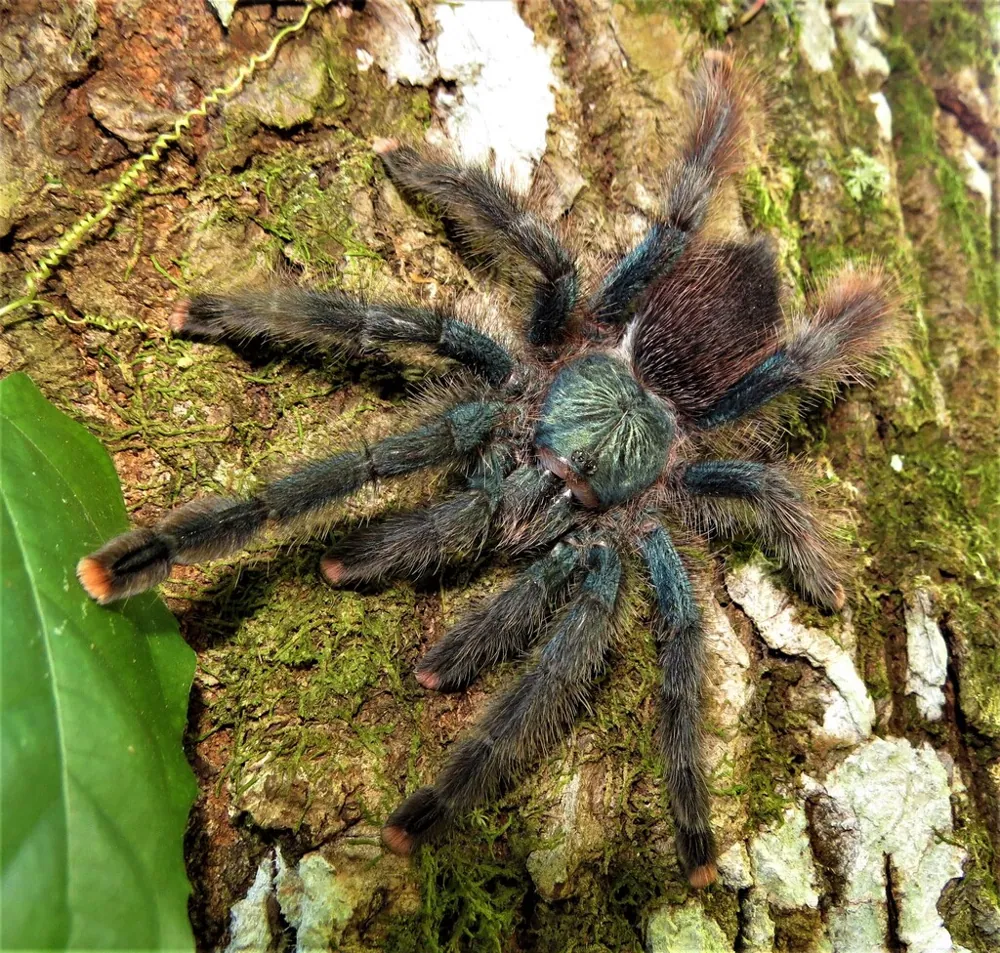
 Cómo reconocerlo
Poder del veneno
El veneno sale por sus colmillos o dientes cuando muerde.
¿Qué hace su veneno?
The spider has a bite that injects venom. Its venom is considered mild, even compared with other New World tarantulas.1
¿Qué peligro tiene para las personas?
Peligro para las personas: LeveComo una picadura de abeja o menos. Prácticamente inofensivo para las personas.It is not very defensive, and it is considered one of the safest tarantulas to handle, although handling is still not recommended. Its venom is mild, so it is a much lower risk than more toxic tarantulas such as those in the genera Psalmopoeus and Poecilotheria.1
¿Qué hace cuando se asusta?
When threatened it usually runs or leaps away, but it may adopt a threat posture, flick its faeces at the threat, or bite if provoked.1
 Si muerde
- Lava la mordedura y enfríala. Busca ayuda médica si el dolor es fuerte o la persona se encuentra mal.
Llama siempre primero a tu número de emergencias (112, 000, 911). Esto son pautas generales de primeros auxilios, no consejo médico. Primeros auxilios básicos
 Mantente a salvo
- Nunca toques, atrapes ni molestes a un animal salvaje, aunque sea pequeño y aunque parezca dormido o muerto.
- Déjale espacio. Si te encuentras uno, mantén la calma, retrocede despacio y deja que siga su camino.
- Si te muerde: mantén la calma, no te muevas, llama a tu número de emergencias (112, 000, 911) o ve rápido a un hospital. Recuerda cómo era, una foto ayuda.
No va a por ti. Usa su veneno para cazar o defenderse, y prefiere mil veces esconderse. Más sobre cómo protegerte
¿En qué parte del mundo?
¿Qué tamaño tiene?
¿Cuánto mide?
 mide como 5 piezas de construcción de juguete en fila
 podría recorrer 100 metros en 220 segundos (el humano más rápido necesita 9,6)
¿Qué tamaño tiene Pinktoe tarantula comparado contigo?
Solo cálculos en tu navegador. No se guarda ni se envía nada a ningún sitio.
¿Qué velocidad alcanza?


Datos
Females of this species may eat males after mating, a behaviour called sexual cannibalism.1
Its urticating hairs, which can irritate skin, are released by direct contact rather than being kicked into the air.1
Adult males live about 2 to 3 years, while females live about 6 to 9 years.1
In captivity, the spider can build nests and tunnels using nearby debris when its enclosure is enriched.1
Mature males have a pair of hooks on the last segment of their pedipalps, which they use to build sperm webs and during courtship.1
Cazamitos
Mito: Pinktoe tarantulas need high humidity to survive.
Verdad: Outdated advice says they need high humidity, but in captivity they should be kept on dry substrate with a water dish. Too much moisture and stagnant air can be fatal to them.1
De dónde salen los datos
- Avicularia avicularia (Wikipedia (CC BY-SA 4.0))
- Avicularia avicularia (iNaturalist): nombres y clasificación.
- Venom Wiki: el nivel de peligro, el tamaño típico y la velocidad estimada son nuestros. Mira cómo los calculamos: Cómo valoramos el peligro.
Cada dato de esta página tiene un número que lleva a su fuente. Si nos hemos equivocado en algo, perdón, somos fans de los animales, no una revista científica. Escríbenos a [email protected] y lo arreglamos.
 ¡El escorpión tiene hambre! Venom Wiki es un proyecto de una sola persona: gratis, sin anuncios y sin rastreadores. Una pequeña propina ayuda a mantenerlo en línea.Alimenta al escorpión
Más del mismo grupo: Tarántulas y arañas de tela en embudo
 Goliath birdeaterTarántulas y arañas de tela en embudoSolo duele
 Brazilian salmon pink birdeaterTarántulas y arañas de tela en embudoInofensivo
 Chilean rose tarantulaTarántulas y arañas de tela en embudoInofensivo
 Greenbottle blue tarantulaTarántulas y arañas de tela en embudoInofensivo
 Brazilian funnel-web spiderTarántulas y arañas de tela en embudoNecesita médico
 Burgundy goliath birdeaterTarántulas y arañas de tela en embudoSolo duele
 Golden poison frog
 Terciopelo
 Brazilian wandering spider
 Eyelash viper
 Golden lancehead
 South American bushmaster