
 África
 Asia
Asia Europa
 Sudamérica
 Australia y Oceanía
 Antártida
 Océano Pacífico
 Océano Atlántico
 Océano Índico
 Océano Ártico
 Mar Mediterráneo
 Mar Rojo
 Mar Caribe
 Mar del Coral
 Mar de China Meridional
 Mar de Filipinas
 Mar de Andamán
 Mar del Norte
 Mar de Timor y de Arafura
 Golfo de Bengala
 Golfo de California
Pygmy slow loris
 Mordeduras
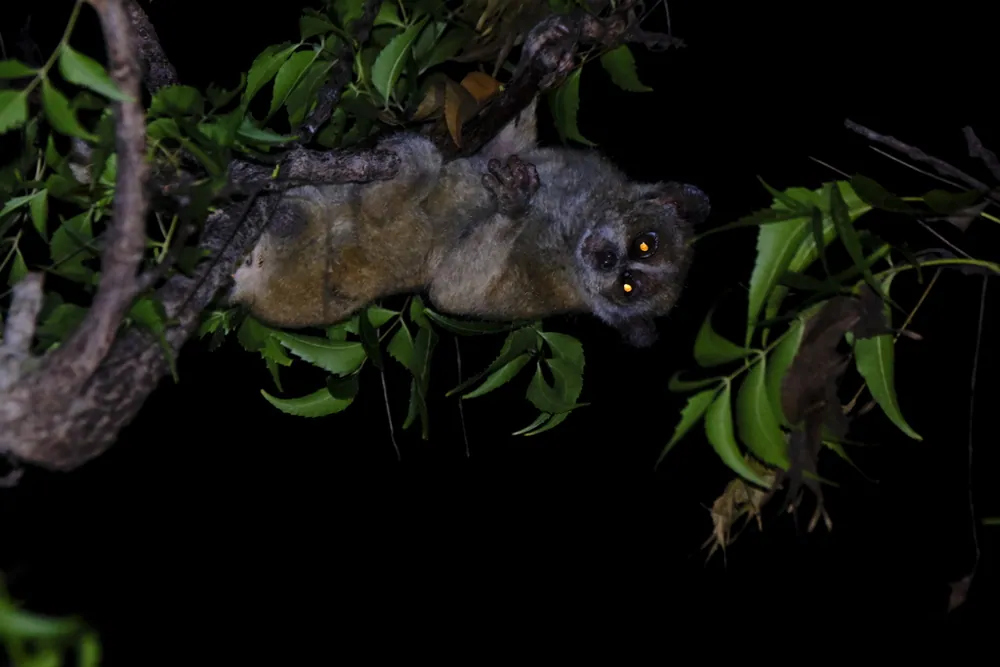
The pygmy slow loris is a small, nocturnal primate that moves slowly through forest trees at night. It lives in parts of Vietnam, Laos, Cambodia and China. It is one of the few primates that can produce a toxic bite, which makes it special and very rare.1



 Cómo reconocerlo
- Rings around the eyes that are seal brown in adults and darker in young animals1
- A white stripe running from the nose up to the forehead1
- Small black ears, about 23 mm long, with no fur on the tips1
- A rufous to brownish-black stripe along the back, from the nape to the middle of the lower back1
- Silvery white hands and feet with yellowish-white nails1
Se confunde a menudo con: The Bengal slow loris (N. bengalensis) lives in some of the same areas, near the border of southern China and Vietnam. The two can be told apart by differences in their chromosomes, not by appearance alone.1
Poder del veneno
El veneno sale por sus colmillos o dientes cuando muerde.
¿Qué hace su veneno?
The bite is toxic. The animal licks a clear, oily secretion from glands on the inside of its elbows and mixes it with its saliva, which creates a noxious toxin. The secretion contains over 200 chemical components, and one of them is a protein similar to an allergen found in cat dander. In people who are sensitive to it, this can cause anaphylaxis, a severe allergic reaction.1
¿Qué peligro tiene para las personas?
Peligro para las personas: DolorosoPuede doler de verdad, pero casi nunca es grave.The main risk is anaphylaxis, which can affect people who are sensitive to the protein in its secretion.1
¿Qué hace cuando se asusta?
When startled, it licks the secretion from its elbow glands and spreads it over its head.1
 Si muerde
- Lava bien la herida y busca ayuda médica.
Llama siempre primero a tu número de emergencias (112, 000, 911). Esto son pautas generales de primeros auxilios, no consejo médico. Primeros auxilios básicos
 Mantente a salvo
- Nunca toques, atrapes ni molestes a un animal salvaje, aunque sea pequeño y aunque parezca dormido o muerto.
- Déjale espacio. Si te encuentras uno, mantén la calma, retrocede despacio y deja que siga su camino.
- Si te muerde: mantén la calma, no te muevas, llama a tu número de emergencias (112, 000, 911) o ve rápido a un hospital. Recuerda cómo era, una foto ayuda.
No va a por ti. Usa su veneno para cazar o defenderse, y prefiere mil veces esconderse. Más sobre cómo protegerte
¿En qué parte del mundo?
¿Qué tamaño tiene?
¿Cuánto mide?
¿Cuánto pesa?

 mide como 7 piezas de construcción de juguete en fila
 podría recorrer 100 metros en 180 segundos (el humano más rápido necesita 9,6)
¿Qué tamaño tiene Pygmy slow loris comparado contigo?
Solo cálculos en tu navegador. No se guarda ni se envía nada a ningún sitio.
¿Qué velocidad alcanza?


Datos
Its lower teeth form a comb-like toothcomb, which it uses for grooming and for scraping resin from tree bark.1
Its weight changes with the seasons. Adults can be about 50 percent heavier in winter than in summer, and individuals up to 700 grams have been recorded.1
Unlike most other primates, it does not leap. It moves by crawling slowly along branches.1
Males mark their territories with scent, and females prefer males whose scent is familiar.1
Females are only fertile for a short time each year, so mating opportunities are rare.1
Cazamitos
Mito: Animals found near Hòa Bình in Vietnam were a separate species, N. intermedius.
Verdad: DNA analysis showed these were adults of the pygmy slow loris. Differences in dorsal stripes and silvery hairs are seasonal variation.1
Para expertos en veneno
- Nombre científico
- Xanthonycticebus pygmaeus
- Grupo
- Mamíferos venenosos
- Familia
- Lorisidae2
- Orden
- Primates
- Continentes
- Asia
- Crías
- It usually has one or two offspring after a gestation of about six months, and the young cling to their mother's belly for the first few days.1
- Esperanza de vida
- unos 20 años1
- Cómo le va en la naturaleza
- Endangered1
- Peligro para las personas
- 2 / 5: Doloroso3
De dónde salen los datos
- Pygmy slow loris (Wikipedia (CC BY-SA 4.0))
- Xanthonycticebus pygmaeus (iNaturalist): nombres y clasificación.
- Venom Wiki: el nivel de peligro, el tamaño típico y la velocidad estimada son nuestros. Mira cómo los calculamos: Cómo valoramos el peligro.
Cada dato de esta página tiene un número que lleva a su fuente. Si nos hemos equivocado en algo, perdón, somos fans de los animales, no una revista científica. Escríbenos a [email protected] y lo arreglamos.
 ¡El escorpión tiene hambre! Venom Wiki es un proyecto de una sola persona: gratis, sin anuncios y sin rastreadores. Una pequeña propina ayuda a mantenerlo en línea.Alimenta al escorpión
 Bengal slow loris
 Javan slow loris
 Sunda slow loris
 Kayan River slow loris
 Philippine slow loris
 Eurasian water shrew
 Escorpión amarillo de Palestina
 Cobra india
 Víbora de escamas aserradas india
 Cobra real
 Víbora bufadora
 Víbora de Russell