
 África
 Asia
Asia Europa
 Sudamérica
 Australia y Oceanía
 Antártida
 Océano Pacífico
 Océano Atlántico
 Océano Índico
 Océano Ártico
 Mar Mediterráneo
 Mar Rojo
 Mar Caribe
 Mar del Coral
 Mar de China Meridional
 Mar de Filipinas
 Mar de Andamán
 Mar del Norte
 Mar de Timor y de Arafura
 Golfo de Bengala
 Golfo de California
Rhodnius kissing bug
 Mordeduras
The Rhodnius kissing bug is a blood-feeding insect that feeds on the skin around people's mouths while they sleep. It lives in northern South America and Central America, and it matters because it spreads the parasite that causes Chagas disease.1



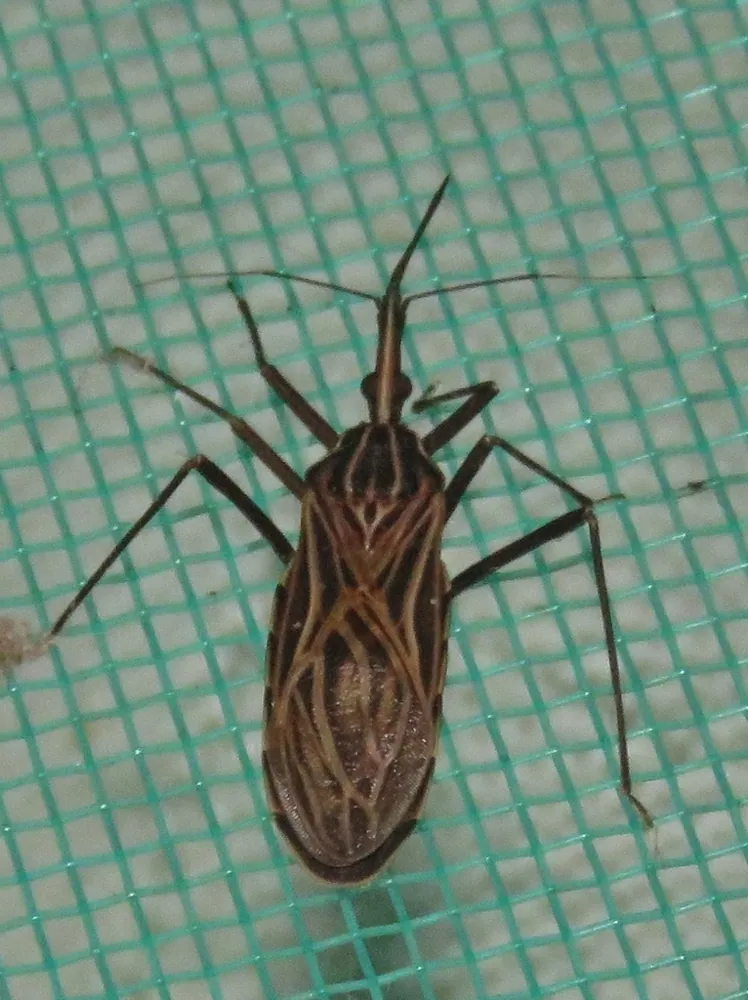
 Cómo reconocerlo
Poder del veneno
El veneno sale por sus colmillos o dientes cuando muerde.
¿Qué peligro tiene para las personas?
Peligro para las personas: GraveUna mordedura necesita médico. Las muertes son muy raras.It is the main carrier of the parasite that causes Chagas disease in northern South America, and the only carrier in Central America. The parasite is passed in the bug's faeces straight after a blood meal. People can become infected when they scratch the bite and rub the faeces into it, through a blood transfusion, or by eating food contaminated with the bug's faeces.1
 Si muerde
- Para los pelos urticantes de orugas: quítalos con cinta adhesiva y luego lava la piel. No frotes.
- Para mordeduras: lava y enfría. Busca ayuda médica si la persona se encuentra mal o sangra con facilidad.
Llama siempre primero a tu número de emergencias (112, 000, 911). Esto son pautas generales de primeros auxilios, no consejo médico. Primeros auxilios básicos
 Mantente a salvo
- Nunca toques, atrapes ni molestes a un animal salvaje, aunque sea pequeño y aunque parezca dormido o muerto.
- Déjale espacio. Si te encuentras uno, mantén la calma, retrocede despacio y deja que siga su camino.
- Si te muerde: mantén la calma, no te muevas, llama a tu número de emergencias (112, 000, 911) o ve rápido a un hospital. Recuerda cómo era, una foto ayuda.
No va a por ti. Usa su veneno para cazar o defenderse, y prefiere mil veces esconderse. Más sobre cómo protegerte
¿En qué parte del mundo?
¿Qué tamaño tiene?
¿Cuánto mide?
 más o menos lo que mide un clip
¿Qué tamaño tiene Rhodnius kissing bug comparado contigo?
Solo cálculos en tu navegador. No se guarda ni se envía nada a ningún sitio.
¿Qué velocidad alcanza?


Datos
Its saliva contains lipocalins, which bind the chemical serotonin. This helps stop the host's blood vessels from narrowing while the bug feeds.1
Sir Vincent Wigglesworth used this bug to study insect hormones. He showed that removing the head during a larval stage makes the insect develop into an adult early.1
Specimens from Venezuela escaped from a research laboratory in San Salvador in 1915 and then spread through Central America, probably helped by travellers carrying them.1
Its wild populations have been linked to the transfer of transposons, which are pieces of DNA that move around, between the bug and some of its hosts, such as squirrel monkeys and opossums.1
The insect goes through five larval stages, and each one ends in a moult about 12 to 15 days after a large blood meal.1
De dónde salen los datos
- Rhodnius prolixus (Wikipedia (CC BY-SA 4.0))
- Rhodnius prolixus (iNaturalist): nombres y clasificación.
- Venom Wiki: el nivel de peligro, el tamaño típico y la velocidad estimada son nuestros. Mira cómo los calculamos: Cómo valoramos el peligro.
Cada dato de esta página tiene un número que lleva a su fuente. Si nos hemos equivocado en algo, perdón, somos fans de los animales, no una revista científica. Escríbenos a [email protected] y lo arreglamos.
 ¡El escorpión tiene hambre! Venom Wiki es un proyecto de una sola persona: gratis, sin anuncios y sin rastreadores. Una pequeña propina ayuda a mantenerlo en línea.Alimenta al escorpión
 Giant silkworm moth caterpillar
 Vinchuca kissing bug
 Giant water bug
 Puss caterpillar
 Saddleback caterpillar
 Wheel bug
 Terciopelo
 Eastern coral snake
 Eastern diamondback rattlesnake
 Eyelash viper
 Timber rattlesnake
 Western diamondback rattlesnake