
 África
 Asia
Asia Europa
 Sudamérica
 Australia y Oceanía
 Antártida
 Océano Pacífico
 Océano Atlántico
 Océano Índico
 Océano Ártico
 Mar Mediterráneo
 Mar Rojo
 Mar Caribe
 Mar del Coral
 Mar de China Meridional
 Mar de Filipinas
 Mar de Andamán
 Mar del Norte
 Mar de Timor y de Arafura
 Golfo de Bengala
 Golfo de California
Warrior wasp
 Picaduras
The warrior wasp is a large paper wasp that lives in Central and South America. It builds paper nests on tree trunks and is known for an extremely painful sting. Its colonies defend their nests together as a group.1
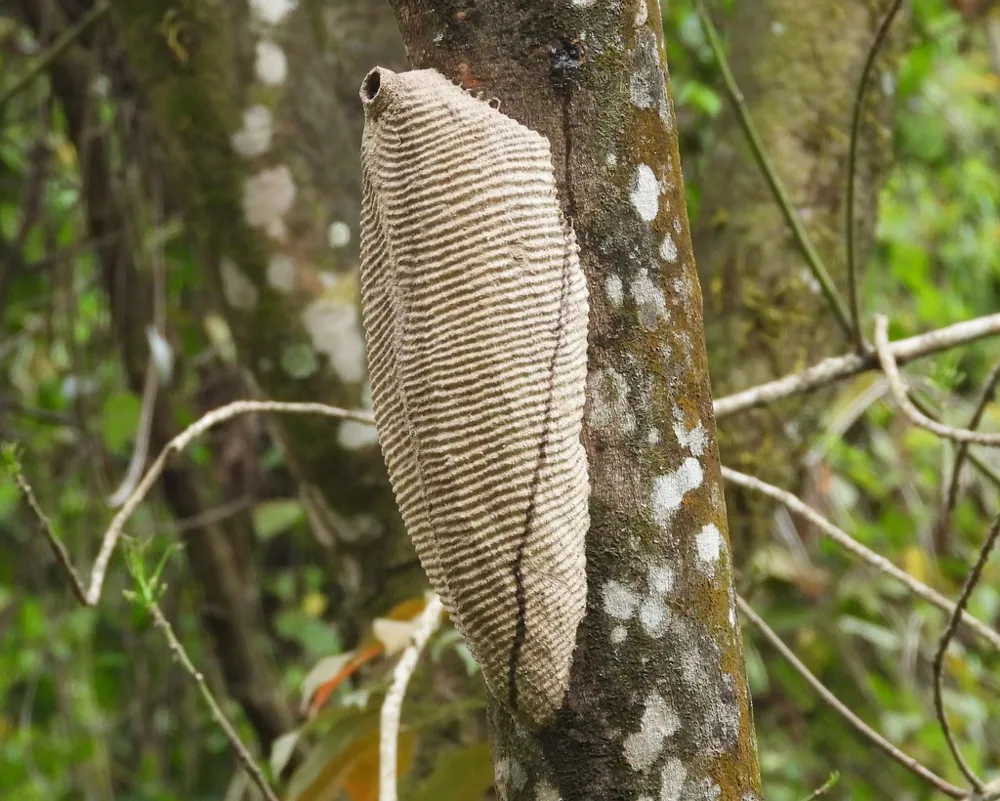
 Cómo reconocerlo
Poder del veneno
El veneno sale por un aguijón.
¿Qué hace su veneno?
The sting is extremely painful. On the Schmidt sting pain index it scores the highest possible rating, the same as the bullet ant. On the Starr sting pain scale it also scores the maximum 4 out of 4, a rating shared by very few other species.1
¿Qué peligro tiene para las personas?
Peligro para las personas: GraveUna picadura necesita médico. Las muertes son muy raras.A sting from this wasp is rated as traumatically painful, and such stings often need some medical attention.1
¿Qué hace cuando se asusta?
When disturbed, many workers leave the nest to display or sting. They raise their abdomen upright in a behaviour called gaster-flagging, and they drum the nest walls to sound an alarm.1
 Si pica
- Because the sting is often traumatically painful, medical attention may be needed.1
- Raspa el aguijón de abeja y enfría la zona.
- Si a la persona le cuesta respirar, se le hincha la cara o la garganta, o se marea, es una emergencia alérgica: llama a tu número de emergencias y usa su autoinyector de adrenalina si tiene uno.
Llama siempre primero a tu número de emergencias (112, 000, 911). Esto son pautas generales de primeros auxilios, no consejo médico. Primeros auxilios básicos
 Mantente a salvo
- Nunca toques, atrapes ni molestes a un animal salvaje, aunque sea pequeño y aunque parezca dormido o muerto.
- Déjale espacio. Si te encuentras uno, mantén la calma, retrocede despacio y deja que siga su camino.
- Si te pica: mantén la calma, no te muevas, llama a tu número de emergencias (112, 000, 911) o ve rápido a un hospital. Recuerda cómo era, una foto ayuda.
No va a por ti. Usa su veneno para cazar o defenderse, y prefiere mil veces esconderse. Más sobre cómo protegerte
¿En qué parte del mundo?
¿Qué tamaño tiene?
¿Cuánto mide?
 más o menos lo que mide un clip
 podría cruzar volando un campo de fútbol entero en 13 segundos
¿Qué tamaño tiene Warrior wasp comparado contigo?
Solo cálculos en tu navegador. No se guarda ni se envía nada a ningún sitio.
¿Qué velocidad alcanza?


Datos
Its sting ranks as high as the bullet ant's on the Schmidt sting pain index, which is the top rating.1
Army ants regularly prey on these wasps, and the wasps have been seen piling their bodies against the nest entrance to defend against them.1
Montezuma oropendola birds often nest in trees where these wasps are present, because the wasps' stings help keep predators and parasites away.1
When moving to a new nest, the wasps rub glands on their abdomen to lay a chemical trail that the colony can follow.1
A colony can have more than one queen at a time, and the number of queens often changes.1
Para expertos en veneno
- Nombre científico
- Synoeca septentrionalis
- Grupo
- Abejas, avispas y avispones
- Familia
- Vespidae2
- Orden
- Hymenoptera
- Continentes
- Norteamérica, Sudamérica
- Crías
- The queen lays eggs in the cells of the nest. The larvae hatch about a week after the nest is finished, and they become adults around 30 days after hatching.1
- Peligro para las personas
- 3 / 5: Grave3
De dónde salen los datos
- Synoeca septentrionalis (Wikipedia (CC BY-SA 4.0))
- Synoeca septentrionalis (iNaturalist): nombres y clasificación.
- Venom Wiki: el nivel de peligro, el tamaño típico y la velocidad estimada son nuestros. Mira cómo los calculamos: Cómo valoramos el peligro.
Cada dato de esta página tiene un número que lleva a su fuente. Si nos hemos equivocado en algo, perdón, somos fans de los animales, no una revista científica. Escríbenos a [email protected] y lo arreglamos.
 ¡El escorpión tiene hambre! Venom Wiki es un proyecto de una sola persona: gratis, sin anuncios y sin rastreadores. Una pequeña propina ayuda a mantenerlo en línea.Alimenta al escorpión
Más del mismo grupo: Abejas, avispas y avispones
 Tarantula hawkAbejas, avispas y avisponesSolo duele
 Executioner waspAbejas, avispas y avisponesNecesita médico
 Bald-faced hornetAbejas, avispas y avisponesSolo duele
 Cow killer velvet antAbejas, avispas y avisponesSolo duele
 Eastern cicada killerAbejas, avispas y avisponesInofensivo
 Armadillo waspAbejas, avispas y avisponesNecesita médico
 Terciopelo
 Eastern coral snake
 Eastern diamondback rattlesnake
 Eyelash viper
 Timber rattlesnake
 Western diamondback rattlesnake