
 Afrika
 Asia
Asia Europa
 Hego Amerika
 Australia eta Ozeania
 Antartika
 Ozeano Barea
 Ozeano Atlantikoa
 Ozeano Indikoa
 Ozeano Artikoa
 Mediterraneo itsasoa
 Itsaso Gorria
 Karibe itsasoa
 Koralen itsasoa
 Hego Txinako itsasoa
 Filipinetako itsasoa
 Andaman itsasoa
 Ipar itsasoa
 Timor eta Arafura itsasoak
 Bengalako golkoa
 Kaliforniako golkoa
Boomslang
 Koska
KoskaThe boomslang is a highly venomous tree snake from Sub-Saharan Africa. It spends most of its time in trees and bushes, though it also hunts and shelters on the ground. Its venom works slowly, so a bite can look harmless at first and still be life-threatening.1



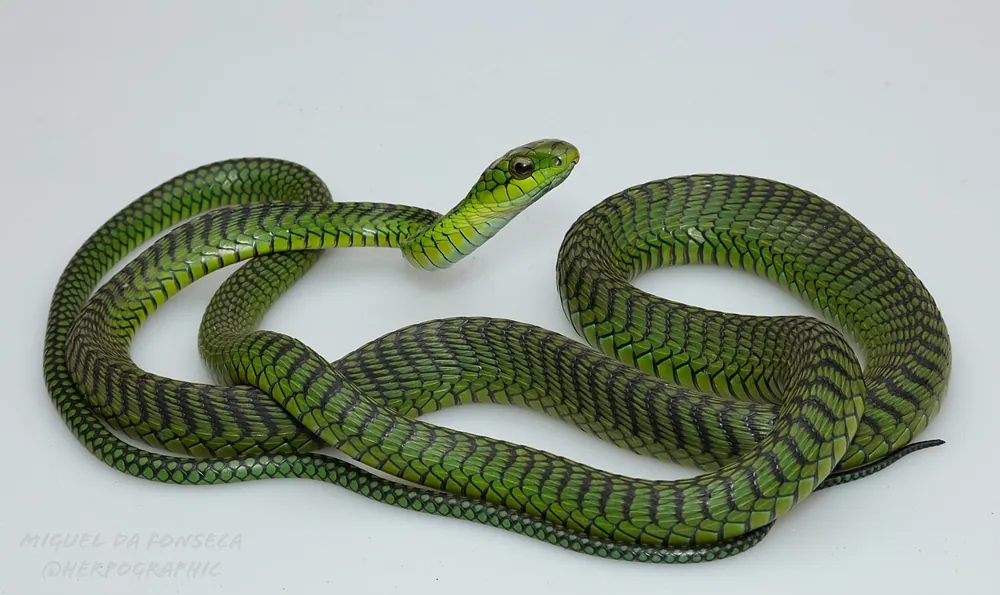
 Nola ezagutu
Pozoi-ahalmena
Pozoia letaginetatik edo hortzetatik ateratzen da kosk egiten duenean.
Zer egiten du bere pozoiak?
Its venom is mainly a haemotoxin, a type of venom that disrupts blood clotting. Many tiny clots form in the blood, causing bleeding in tissues such as muscle and the brain, while the small blood vessels become clogged. Symptoms include headache, nausea, sleepiness and confusion, and can lead to cardiac arrest and unconsciousness. Because the venom is slow-acting, symptoms may not appear until many hours after a bite.1
Zein arriskutsua da pertsonentzat?
Arriskua pertsonentzat: Oso arriskutsuaTratamendurik jasotzen ez duen pertsona bat hil dezake.Bites can be fatal. Of eight serious envenomations reported between 1919 and 1962, two were lethal. In 1957, a herpetologist died after being bitten by a juvenile. Hatchlings about 45 cm long are already dangerously venomous. Delayed symptoms can lead victims to wrongly believe a bite was a harmless dry bite.1
 Albiste ona: medikuek badute sendagai bat (antipozoia) edo tratamendu bat honetarako.1
Zer egiten du beldurtzen denean?
It is timid and usually bites only when people try to handle, catch, chase or kill it. When cornered, it inflates its neck and takes an S-shaped striking pose.1
 Kosk egiten badu
- Antivenom is available and treatment is needed after a bite. Complete blood transfusions may also be required, especially if more than 24 to 48 hours pass without antivenom. Do not assume a bite is harmless just because no symptoms have appeared.1
- Garbitu koska, eutsi pertsona lasai eta lortu mediku-laguntza. Espezie batzuk (boomslang-a, adibidez) hilgarriak izan daitezke ordu batzuk geroago.
Deitu beti lehenik zure larrialdi-zenbakira (112, 000, 911). Lehen sorospenei buruzko orientabide orokorra da hau, ez mediku-aholkua. Lehen sorospenen oinarriak
 Egon seguru
- Ez ukitu, ez harrapatu eta ez zirikatu inoiz animalia basati bat, txikia izan arren, eta lo edo hilda dagoela badirudi ere.
- Utzi tartea. Bat aurkitzen baduzu, egon lasai, egin atzera poliki eta utzi bere bidetik joaten.
- Batek kosk egiten badizu: egon lasai, egon geldi, deitu zure larrialdi-zenbakira (112, 000, 911) edo joan ospitalera azkar. Gogoratu nolakoa zen, argazki batek laguntzen du.
Ez dabil zure atzetik. Pozoia janaria harrapatzeko edo bere burua babesteko erabiltzen du, eta askoz nahiago du ezkutatu. Seguru egoteari buruz gehiago
Munduko zein tokitan?
Zein handia da?
Zein luzea da?
Zein astuna da?
 4 etxeko katu muturretik buztanera jarrita bezain luzea
 10 banana bata bestearen atzetik jarrita bezain luzea
 100 metro 60 segundotan egin litzake (gizakirik azkarrenak 9,6 behar ditu)
Zein handia da Boomslang ZUREKIN alderatuta?
Matematika hutsa zure nabigatzailean. Ez da ezer gordetzen, ezta inora bidaltzen ere.
Zein azkarra da?


Datuak
An adult has only 1.6 to 8 mg of venom, but it is thought that 2 to 3 mg could be enough to kill a healthy adult human.1
It can open its jaws up to 170 degrees when biting.1
Its head is distinctly egg-shaped, and its eyes are exceptionally large.1
It often moves its head from side to side to get a better view of objects directly in front of it.1
When it is pursued by something too large to eat, it escapes by moving from branch to branch.1
Mito-hauslea
Mitoa: Rear-fanged snakes cannot produce a lethal bite.
Egia: For a long time many herpetologists believed this, but boomslang bites have caused deaths.1
Pozoi-adituentzat
- Izen zientifikoa
- Dispholidus typus
- Taldea
- Atzeko letagineko sugeak
- Familia
- Colubridae2
- Ordena
- Squamata
- Kontinenteak
- Afrika
- Kumeak
- It lays eggs, on average 8 to 14 (up to 27 have been observed), in a hollow tree trunk or rotting log. The eggs take about 3 months to hatch.1
- Arriskua pertsonentzat
- 4 / 5: Oso arriskutsua3
Datuak nondik datozen
- Boomslang (Wikipedia (CC BY-SA 4.0))
- Dispholidus typus (iNaturalist): izenak eta sailkapena.
- Venom Wiki: arrisku-maila, ohiko tamaina eta abiadura-kalkulua geureak dira. Ikusi nola kalkulatzen ditugun: Nola baloratzen dugun arriskua.
Orrialde honetako datu bakoitzak zenbaki bat du, bere iturrira eramaten zaituena. Zerbait gaizki badugu, barkatu, animalien zaleak gara, ez zientzia-aldizkari bat. Esaiguzu [email protected] helbidean eta konponduko dugu.
 Eskorpioia gose da! Venom Wiki pertsona bakar baten proiektua da: doakoa, iragarkirik eta jarraitzailerik gabe. Eskupeko txiki batek sarean mantentzen laguntzen du.Elikatu eskorpioia
Talde bereko gehiago: Atzeko letagineko sugeak
 Cape twig snakeAtzeko letagineko sugeakHil dezake
 Forest twig snakeAtzeko letagineko sugeakHil dezake
 Bibron's stiletto snakeAtzeko letagineko sugeakMedikua behar du
 Madagascar leaf-nosed snakeAtzeko letagineko sugeakMin ematen du, besterik ez
 Montpellier snakeAtzeko letagineko sugeakMin ematen du, besterik ez
 Eastern twig snakeAtzeko letagineko sugeakHil dezake
 Black mamba
 Deathstalker
 Egyptian cobra
 Puff adder
 Fat-tailed scorpion
 Gaboon viper