
 Afrika
 Asia
Asia Europa
 Hego Amerika
 Australia eta Ozeania
 Antartika
 Ozeano Barea
 Ozeano Atlantikoa
 Ozeano Indikoa
 Ozeano Artikoa
 Mediterraneo itsasoa
 Itsaso Gorria
 Karibe itsasoa
 Koralen itsasoa
 Hego Txinako itsasoa
 Filipinetako itsasoa
 Andaman itsasoa
 Ipar itsasoa
 Timor eta Arafura itsasoak
 Bengalako golkoa
 Kaliforniako golkoa
Montpellier snake
 Koska
KoskaThe Montpellier snake is a rear-fanged snake found in southern Europe and North Africa. It is mildly venomous, and it is active during the day, mainly hunting lizards. It is one of the most common snakes across its range, even in areas where people live.1

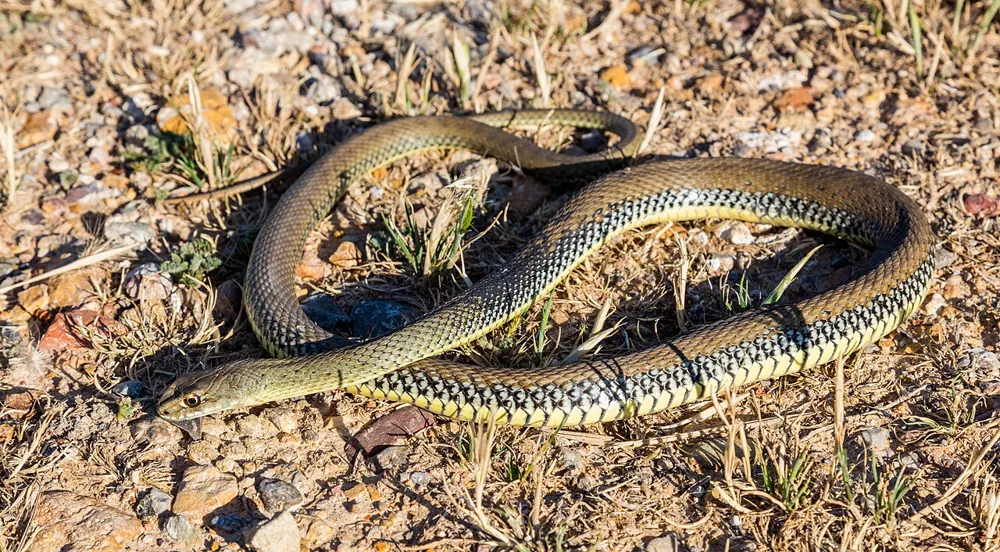
 Nola ezagutu
Pozoi-ahalmena
Pozoia letaginetatik edo hortzetatik ateratzen da kosk egiten duenean.
Zer egiten du bere pozoiak?
It is mildly venomous. Its rear fangs, which sit towards the back of the mouth, make it less likely to inject venom, and the venom is of low toxicity. Venom can still be injected by bites from large individuals.1
Zein arriskutsua da pertsonentzat?
Arriskua pertsonentzat: MingarriaBenetan min handia eman dezake, baina ia inoiz ez da larria.The Montpellier snake is not dangerous to humans. Only a few cases of envenomation of people are known, and one of these happened when a finger was put into the snake's mouth. The venom is not very dangerous.1
 Kosk egiten badu
- Symptomatic treatment, which means treating the symptoms as they appear, is enough to deal with an envenomation.1
- Garbitu koska, eutsi pertsona lasai eta lortu mediku-laguntza. Espezie batzuk (boomslang-a, adibidez) hilgarriak izan daitezke ordu batzuk geroago.
Deitu beti lehenik zure larrialdi-zenbakira (112, 000, 911). Lehen sorospenei buruzko orientabide orokorra da hau, ez mediku-aholkua. Lehen sorospenen oinarriak
 Egon seguru
- Ez ukitu, ez harrapatu eta ez zirikatu inoiz animalia basati bat, txikia izan arren, eta lo edo hilda dagoela badirudi ere.
- Utzi tartea. Bat aurkitzen baduzu, egon lasai, egin atzera poliki eta utzi bere bidetik joaten.
- Batek kosk egiten badizu: egon lasai, egon geldi, deitu zure larrialdi-zenbakira (112, 000, 911) edo joan ospitalera azkar. Gogoratu nolakoa zen, argazki batek laguntzen du.
Ez dabil zure atzetik. Pozoia janaria harrapatzeko edo bere burua babesteko erabiltzen du, eta askoz nahiago du ezkutatu. Seguru egoteari buruz gehiago
Munduko zein tokitan?
Zein handia da?
Zein luzea da?
Zein astuna da?
 2,5 txakur muturretik buztanera jarrita bezain luzea
 14 banana bata bestearen atzetik jarrita bezain luzea
 etxeko katu bat bezain astuna, gutxi gorabehera
 100 metro 59 segundotan egin litzake (gizakirik azkarrenak 9,6 behar ditu)
Zein handia da Montpellier snake ZUREKIN alderatuta?
Matematika hutsa zure nabigatzailean. Ez da ezer gordetzen, ezta inora bidaltzen ere.
Zein azkarra da?


,_Nig%C3%BCella,_Zaragoza,_Espa%C3%B1a,_2017-05-24,_DD_07.jpg)
Datuak
Genetic evidence suggests it originated in the Maghreb and migrated into southwestern Europe between 83,000 and 168,000 years ago.1
It is often killed by cars and farmers, and it is sometimes used by snake charmers and sold as a curio.1
Its common, relatively mild persecution by people has helped it become one of the most common snakes across its range.1
Mito-hauslea
Mitoa: That the Montpellier snake is a dangerous snake for humans.
Egia: It is not dangerous to humans. Its rear fangs and low-toxicity venom mean serious harm is very unlikely.1
Datuak nondik datozen
- Malpolon monspessulanus (Wikipedia (CC BY-SA 4.0))
- Malpolon monspessulanus (iNaturalist): izenak eta sailkapena.
- Venom Wiki: arrisku-maila, ohiko tamaina eta abiadura-kalkulua geureak dira. Ikusi nola kalkulatzen ditugun: Nola baloratzen dugun arriskua.
Orrialde honetako datu bakoitzak zenbaki bat du, bere iturrira eramaten zaituena. Zerbait gaizki badugu, barkatu, animalien zaleak gara, ez zientzia-aldizkari bat. Esaiguzu [email protected] helbidean eta konponduko dugu.
 Eskorpioia gose da! Venom Wiki pertsona bakar baten proiektua da: doakoa, iragarkirik eta jarraitzailerik gabe. Eskupeko txiki batek sarean mantentzen laguntzen du.Elikatu eskorpioia
Talde bereko gehiago: Atzeko letagineko sugeak
 BoomslangAtzeko letagineko sugeakHil dezake
 Cape twig snakeAtzeko letagineko sugeakHil dezake
 Forest twig snakeAtzeko letagineko sugeakHil dezake
 Bibron's stiletto snakeAtzeko letagineko sugeakMedikua behar du
 Madagascar leaf-nosed snakeAtzeko letagineko sugeakMin ematen du, besterik ez
 Eastern twig snakeAtzeko letagineko sugeakHil dezake
Hemen ere bizi da: Europa
 Common European adderSugegorriak eta biperakMedikua behar du
 Spanish flyBeste animalia toxiko batzukMedikua behar duEz ukitu
 Common waspErleak, liztorrak eta erlastarrakMin ematen du, besterik ez
 European hornetErleak, liztorrak eta erlastarrakMin ematen du, besterik ez
 Fire salamanderIgel toxikoak, apoak eta uhandreakMin ematen du, besterik ezEz ukitu
 Western honey beeErleak, liztorrak eta erlastarrakMin ematen du, besterik ez