
 Afrika
 Asia
Asia Europa
 Hego Amerika
 Australia eta Ozeania
 Antartika
 Ozeano Barea
 Ozeano Atlantikoa
 Ozeano Indikoa
 Ozeano Artikoa
 Mediterraneo itsasoa
 Itsaso Gorria
 Karibe itsasoa
 Koralen itsasoa
 Hego Txinako itsasoa
 Filipinetako itsasoa
 Andaman itsasoa
 Ipar itsasoa
 Timor eta Arafura itsasoak
 Bengalako golkoa
 Kaliforniako golkoa
Buff-tailed bumblebee
 Ziztadak
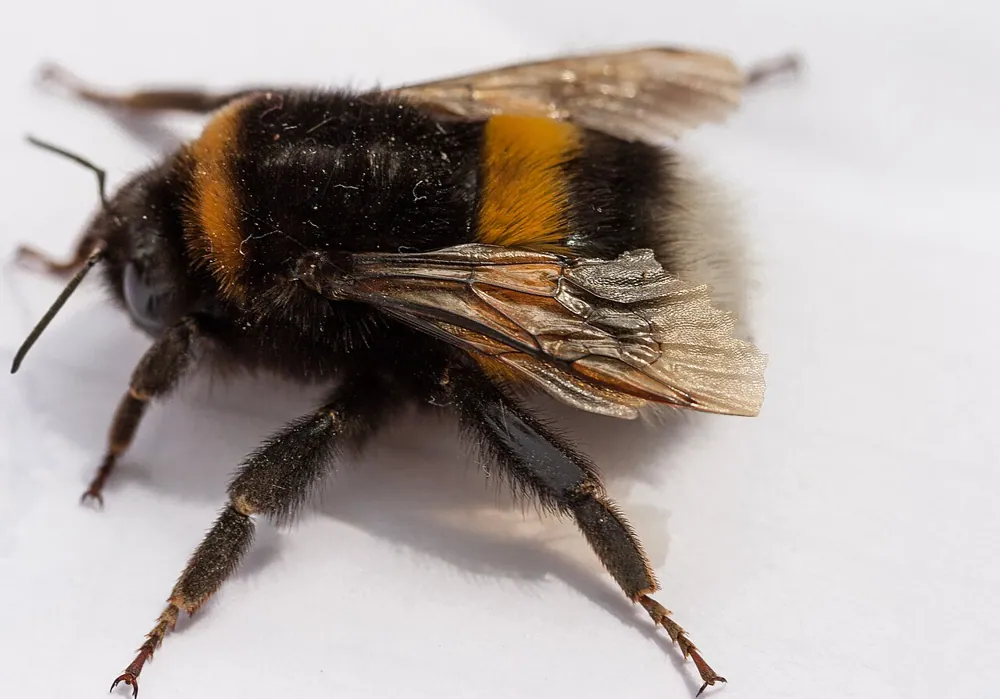
The buff-tailed bumblebee is a fuzzy, striped bee and one of the most common bumblebees in Europe. It lives in colonies and is one of the main bees used to pollinate greenhouse crops. It can also be found in many places outside its home range, where it has spread after escaping from greenhouses.1


 Nola ezagutu
- Workers have white-ended abdomens.1
- The queen has a buff-white abdomen tip, which gives the bee its name.1
- Yellowish bands that are darker than those of the white-tailed bumblebee when the two are compared side by side.1
- Queens are 20 to 22 mm long, males 14 to 16 mm and workers 11 to 17 mm.1
Askotan honekin nahasten da: The white-tailed bumblebee (Bombus lucorum), a close relative, looks almost identical. When the two are compared side by side, the yellowish bands of the buff-tailed bumblebee look darker.1
Pozoi-ahalmena
Pozoia ezten batetik ateratzen da.
Zein arriskutsua da pertsonentzat?
Arriskua pertsonentzat: ArinaErle-ziztada bat bezala edo gutxiago. Ia kaltegabea pertsonentzat.Zer egiten du beldurtzen denean?
Workers defend the colony.1
 Ziztatzen badu
- Atera erlearen eztena karrakatuz eta hoztu lekua.
- Pertsonak arnasa hartzeko zailtasunak baditu, aurpegia edo eztarria hanpatuta baditu, edo zorabiatzen ari dela sentitzen badu, larrialdi alergikoa da: deitu zure larrialdi-zenbakira eta erabili bere adrenalina-autoinjektagailua, baldin badu.
Deitu beti lehenik zure larrialdi-zenbakira (112, 000, 911). Lehen sorospenei buruzko orientabide orokorra da hau, ez mediku-aholkua. Lehen sorospenen oinarriak
 Egon seguru
- Ez ukitu, ez harrapatu eta ez zirikatu inoiz animalia basati bat, txikia izan arren, eta lo edo hilda dagoela badirudi ere.
- Utzi tartea. Bat aurkitzen baduzu, egon lasai, egin atzera poliki eta utzi bere bidetik joaten.
- Batek ziztatzen bazaitu: egon lasai, egon geldi, deitu zure larrialdi-zenbakira (112, 000, 911) edo joan ospitalera azkar. Gogoratu nolakoa zen, argazki batek laguntzen du.
Ez dabil zure atzetik. Pozoia janaria harrapatzeko edo bere burua babesteko erabiltzen du, eta askoz nahiago du ezkutatu. Seguru egoteari buruz gehiago
Munduko zein tokitan?
Zein handia da?
Zein luzea da?
Zein astuna da?
 klip bat bezain luzea, gutxi gorabehera
 hain arina, ez zenuke eskuan sentituko
 futbol-zelai oso bat hegan zeharka lezake 14 segundotan
Zein handia da Buff-tailed bumblebee ZUREKIN alderatuta?
Matematika hutsa zure nabigatzailean. Ez da ezer gordetzen, ezta inora bidaltzen ere.
Zein azkarra da?


Datuak
Worker bees vary unusually widely in size, with thorax lengths from 2.3 to 6.9 mm. This is unusual among bees.1
It has escaped from captivity and is now considered an invasive species in places such as Japan, Chile, Argentina and Tasmania.1
It is one of the main species used for greenhouse pollination, which is why it is found in many countries where it is not native.1
The queen usually mates with only one male, unlike many social insects.1
The colony works as a team. It has three social castes, with the queen laying eggs, workers foraging and defending the nest, and males leaving to find mates.1
Pozoi-adituentzat
- Izen zientifikoa
- Bombus terrestris
- Taldea
- Erleak, liztorrak eta erlastarrak
- Familia
- Apidae2
- Ordena
- Hymenoptera
- Kontinenteak
- Europa, Afrika, Asia
- Kumeak
- The queen lays eggs in spring in comb-like egg cells, each holding several eggs. Colonies produce 300 to 400 bees on average.1
- Arriskua pertsonentzat
- 1 / 5: Arina3
Datuak nondik datozen
- Bombus terrestris (Wikipedia (CC BY-SA 4.0))
- Bombus terrestris (iNaturalist): izenak eta sailkapena.
- Venom Wiki: arrisku-maila, ohiko tamaina eta abiadura-kalkulua geureak dira. Ikusi nola kalkulatzen ditugun: Nola baloratzen dugun arriskua.
Orrialde honetako datu bakoitzak zenbaki bat du, bere iturrira eramaten zaituena. Zerbait gaizki badugu, barkatu, animalien zaleak gara, ez zientzia-aldizkari bat. Esaiguzu [email protected] helbidean eta konponduko dugu.
 Eskorpioia gose da! Venom Wiki pertsona bakar baten proiektua da: doakoa, iragarkirik eta jarraitzailerik gabe. Eskupeko txiki batek sarean mantentzen laguntzen du.Elikatu eskorpioia
Talde bereko gehiago: Erleak, liztorrak eta erlastarrak
 Asian giant hornetErleak, liztorrak eta erlastarrakHil dezake
 Common waspErleak, liztorrak eta erlastarrakMin ematen du, besterik ez
 European hornetErleak, liztorrak eta erlastarrakMin ematen du, besterik ez
 Western honey beeErleak, liztorrak eta erlastarrakMin ematen du, besterik ez
 Giant honey beeErleak, liztorrak eta erlastarrakMedikua behar du
 Asian hornetErleak, liztorrak eta erlastarrakMin ematen du, besterik ez
Hemen ere bizi da: Europa
 Common European adderSugegorriak eta biperakMedikua behar du
 Spanish flyBeste animalia toxiko batzukMedikua behar duEz ukitu
 Fire salamanderIgel toxikoak, apoak eta uhandreakMin ematen du, besterik ezEz ukitu
 Blunt-nosed viperSugegorriak eta biperakHil dezake
 Nose-horned viperSugegorriak eta biperakHil dezake
 Ottoman viperSugegorriak eta biperakHil dezake