
 Afrika
 Asia
Asia Europa
 Hego Amerika
 Australia eta Ozeania
 Antartika
 Ozeano Barea
 Ozeano Atlantikoa
 Ozeano Indikoa
 Ozeano Artikoa
 Mediterraneo itsasoa
 Itsaso Gorria
 Karibe itsasoa
 Koralen itsasoa
 Hego Txinako itsasoa
 Filipinetako itsasoa
 Andaman itsasoa
 Ipar itsasoa
 Timor eta Arafura itsasoak
 Bengalako golkoa
 Kaliforniako golkoa
Giant honey bee
 Ziztadak
The giant honey bee is a large honey bee that lives in South and Southeast Asia. It builds its nests in open, high places, such as tree branches, cliff overhangs and buildings. It is known for fierce defence when its nest is disturbed.1


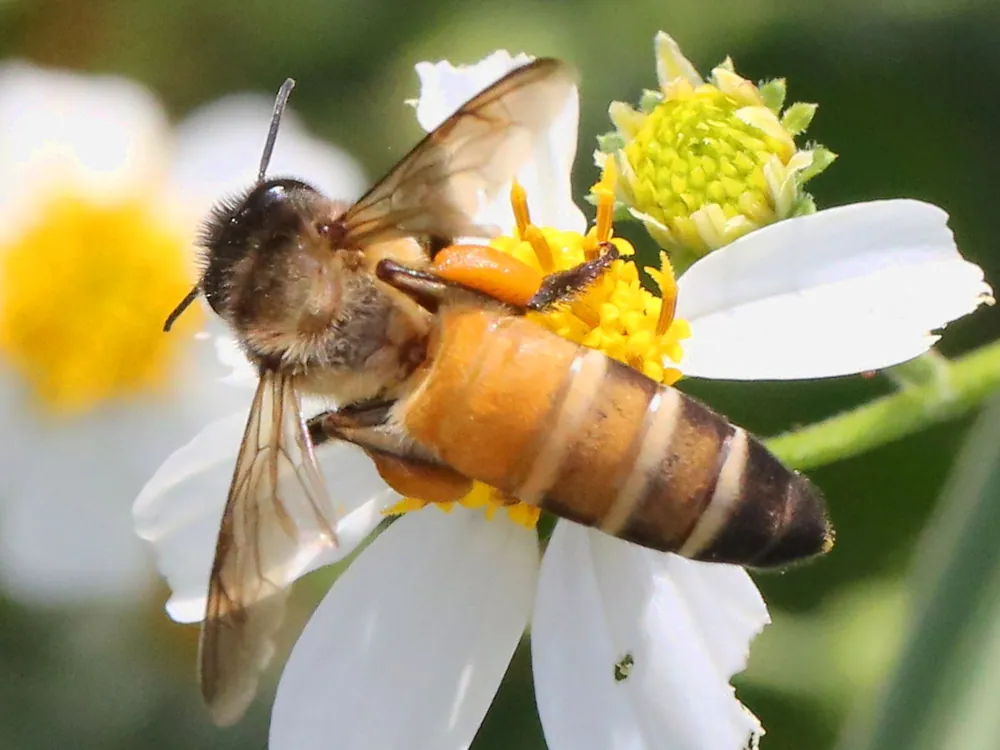
 Nola ezagutu
- Typically 17 to 20 mm long1
- Builds a single vertical comb of wax, hanging from above1
- The comb is covered by a dense mass of bees in several layers1
- Nests can reach up to 1 metre across and are often grouped, with up to 200 colonies in one tree1
- Aggressive when its nest is disturbed1
Askotan honekin nahasten da: The Himalayan giant honey bee (A. laboriosa) is very similar in shape. It has a darker abdomen and longer thoracic hair, and is now treated as a separate species from the giant honey bee.1
Pozoi-ahalmena
Pozoia ezten batetik ateratzen da.
Zein arriskutsua da pertsonentzat?
Arriskua pertsonentzat: LarriaZiztada batek medikua behar du. Heriotzak oso arraroak dira.This bee is known for aggressive defensive behaviour and vicious attacks when disturbed. Workers also attack bees from other colonies, so it is wise to keep well away from nests.1
Zer egiten du beldurtzen denean?
When disturbed, colonies defend their nest aggressively, and they attack intruders from other colonies.1
 Ziztatzen badu
- Atera erlearen eztena karrakatuz eta hoztu lekua.
- Pertsonak arnasa hartzeko zailtasunak baditu, aurpegia edo eztarria hanpatuta baditu, edo zorabiatzen ari dela sentitzen badu, larrialdi alergikoa da: deitu zure larrialdi-zenbakira eta erabili bere adrenalina-autoinjektagailua, baldin badu.
Deitu beti lehenik zure larrialdi-zenbakira (112, 000, 911). Lehen sorospenei buruzko orientabide orokorra da hau, ez mediku-aholkua. Lehen sorospenen oinarriak
 Egon seguru
- Ez ukitu, ez harrapatu eta ez zirikatu inoiz animalia basati bat, txikia izan arren, eta lo edo hilda dagoela badirudi ere.
- Utzi tartea. Bat aurkitzen baduzu, egon lasai, egin atzera poliki eta utzi bere bidetik joaten.
- Batek ziztatzen bazaitu: egon lasai, egon geldi, deitu zure larrialdi-zenbakira (112, 000, 911) edo joan ospitalera azkar. Gogoratu nolakoa zen, argazki batek laguntzen du.
Ez dabil zure atzetik. Pozoia janaria harrapatzeko edo bere burua babesteko erabiltzen du, eta askoz nahiago du ezkutatu. Seguru egoteari buruz gehiago
Munduko zein tokitan?
Zein handia da?
Zein luzea da?
 klip bat bezain luzea, gutxi gorabehera
 futbol-zelai oso bat hegan zeharka lezake 15 segundotan
Zein handia da Giant honey bee ZUREKIN alderatuta?
Matematika hutsa zure nabigatzailean. Ez da ezer gordetzen, ezta inora bidaltzen ere.
Zein azkarra da?


Datuak
Unlike most honey bees, this species forages at night, and it is the only bee of its genus known to do so.1
The queen mates with many drones, and the Himalayan subspecies has the highest levels of polyandry of any social insect.1
Each colony can have up to 100,000 bees, and colonies are only a few centimetres apart in large groups.1
Colonies migrate between nesting sites with the seasons, usually staying about 3 to 4 months at each site.1
Bees use a waggle dance to show other bees the distance, direction and value of a food source.1
Indigenous peoples have traditionally harvested the honey and beeswax of this bee, a practice known as honey hunting.1
Pozoi-adituentzat
Datuak nondik datozen
- Apis dorsata (Wikipedia (CC BY-SA 4.0))
- Apis dorsata (iNaturalist): izenak eta sailkapena.
- Venom Wiki: arrisku-maila, ohiko tamaina eta abiadura-kalkulua geureak dira. Ikusi nola kalkulatzen ditugun: Nola baloratzen dugun arriskua.
Orrialde honetako datu bakoitzak zenbaki bat du, bere iturrira eramaten zaituena. Zerbait gaizki badugu, barkatu, animalien zaleak gara, ez zientzia-aldizkari bat. Esaiguzu [email protected] helbidean eta konponduko dugu.
 Eskorpioia gose da! Venom Wiki pertsona bakar baten proiektua da: doakoa, iragarkirik eta jarraitzailerik gabe. Eskupeko txiki batek sarean mantentzen laguntzen du.Elikatu eskorpioia
Talde bereko gehiago: Erleak, liztorrak eta erlastarrak
 Asian giant hornetErleak, liztorrak eta erlastarrakHil dezake
 Common waspErleak, liztorrak eta erlastarrakMin ematen du, besterik ez
 European hornetErleak, liztorrak eta erlastarrakMin ematen du, besterik ez
 Western honey beeErleak, liztorrak eta erlastarrakMin ematen du, besterik ez
 Asian hornetErleak, liztorrak eta erlastarrakMin ematen du, besterik ez
 European paper waspErleak, liztorrak eta erlastarrakMin ematen du, besterik ez
 Deathstalker
 Indian cobra
 Indian saw-scaled viper
 King cobra
 Puff adder
 Russell's viper