
 Afrika
 Asia
Asia Europa
 Hego Amerika
 Australia eta Ozeania
 Antartika
 Ozeano Barea
 Ozeano Atlantikoa
 Ozeano Indikoa
 Ozeano Artikoa
 Mediterraneo itsasoa
 Itsaso Gorria
 Karibe itsasoa
 Koralen itsasoa
 Hego Txinako itsasoa
 Filipinetako itsasoa
 Andaman itsasoa
 Ipar itsasoa
 Timor eta Arafura itsasoak
 Bengalako golkoa
 Kaliforniako golkoa
Cupboard spider
 Koska
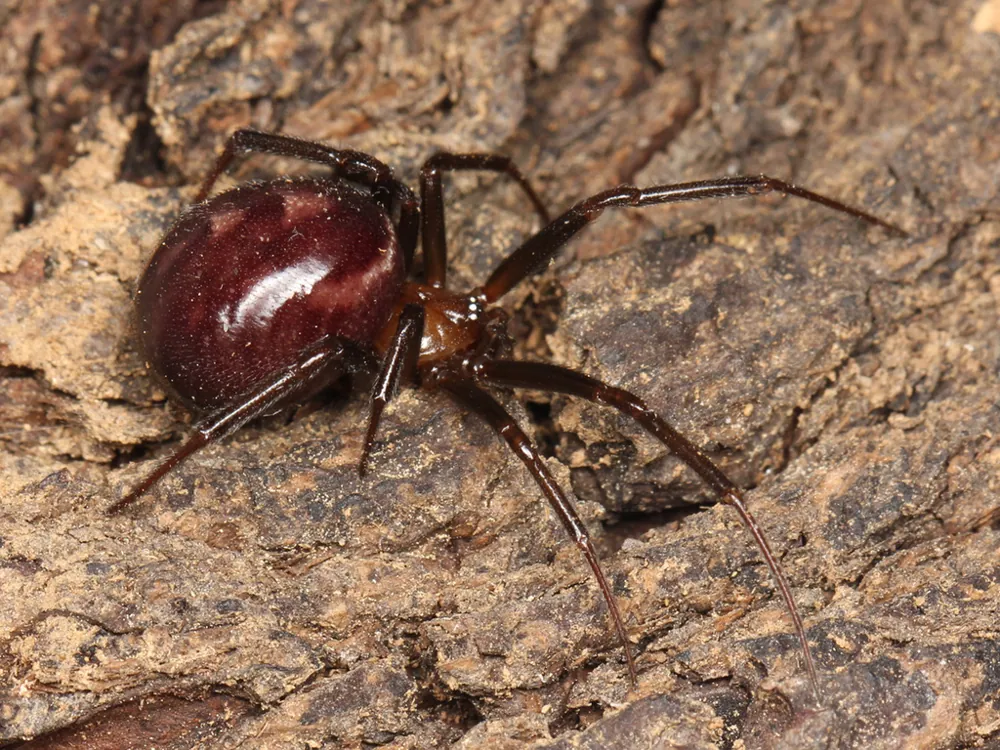
KoskaThe cupboard spider is a common house spider that lives in dark corners and builds messy, three-dimensional webs. It is often mistaken for the dangerous black widow, but its bite is usually minor. Its name shows that it is found in many parts of the world, including Europe, temperate Asia and areas where it has been introduced.1

 Nola ezagutu
- Adult females are 6 to 10.5 mm long, dark coloured and round-bodied, with a bulbous abdomen.1
- Typical colour ranges from purplish brown to black, with light-coloured markings.1
- It has no bright red hourglass pattern or other bright, distinctive markings.1
- Males are thinner and can be nearly as long as females, at 4.1 to 10 mm.1
- Sexually mature males have lighter, more reddish legs than females.1
Askotan honekin nahasten da: It is often confused with black widows and redbacks (Latrodectus species), which have a bright red hourglass pattern that this spider lacks. Steatoda borealis is similar in shape but slightly smaller and found in colder climates. It has coloured markings on the top of the abdomen rather than the underside.1
Pozoi-ahalmena
Pozoia letaginetatik edo hortzetatik ateratzen da kosk egiten duenean.
Zer egiten du bere pozoiak?
The bite is minor in humans and has no long-lasting effects. Symptoms can include blistering at the bite site and pain. A few cases have included fever, nausea, sweating and a general feeling of being unwell that lasted several days.1
Zein arriskutsua da pertsonentzat?
Arriskua pertsonentzat: ArinaErle-ziztada bat bezala edo gutxiago. Ia kaltegabea pertsonentzat.The spider is not aggressive. Most injuries to people happen when a spider is accidentally squeezed or pinched and bites in defence. It is possible that a spider may bite a finger pushed into its web by mistake.1
 Albiste ona: medikuek badute sendagai bat (antipozoia) edo tratamendu bat honetarako.1
Zer egiten du beldurtzen denean?
It usually flees when a large creature comes near, and it bites when it is squeezed or pinched.1
 Kosk egiten badu
- Garbitu koska eta jarri izotz-poltsa bat gainean minerako. Lortu mediku-laguntza mina handia bada, zabaltzen bada edo pertsona gaizki sentitzen bada.
Deitu beti lehenik zure larrialdi-zenbakira (112, 000, 911). Lehen sorospenei buruzko orientabide orokorra da hau, ez mediku-aholkua. Lehen sorospenen oinarriak
 Egon seguru
- Ez ukitu, ez harrapatu eta ez zirikatu inoiz animalia basati bat, txikia izan arren, eta lo edo hilda dagoela badirudi ere.
- Utzi tartea. Bat aurkitzen baduzu, egon lasai, egin atzera poliki eta utzi bere bidetik joaten.
- Batek kosk egiten badizu: egon lasai, egon geldi, deitu zure larrialdi-zenbakira (112, 000, 911) edo joan ospitalera azkar. Gogoratu nolakoa zen, argazki batek laguntzen du.
Ez dabil zure atzetik. Pozoia janaria harrapatzeko edo bere burua babesteko erabiltzen du, eta askoz nahiago du ezkutatu. Seguru egoteari buruz gehiago
Munduko zein tokitan?
Zein handia da?
Zein luzea da?
 zure azazkalaren gainean esertzeko bezain txikia
Zein handia da Cupboard spider ZUREKIN alderatuta?
Matematika hutsa zure nabigatzailean. Ez da ezer gordetzen, ezta inora bidaltzen ere.
Zein azkarra da?


Datuak
Director Sam Raimi chose this spider to play the radioactive spider that bites Peter Parker in the 2002 film Spider-Man. The filming spider was painted with red and blue makeup.1
The spider reportedly preys on black widows, which can make it useful to have around.1
It can go several months without feeding, as long as it has access to water.1
Females can live up to six years, while males typically live 1 to 1.5 years and often die shortly after mating.1
Mito-hauslea
Mitoa: It is a dangerous widow spider, just like the black widow.
Egia: Its bite is minor in humans and has no long-lasting effects, although it can cause pain, blistering and, in a few cases, several days of feeling unwell.1
Pozoi-adituentzat
- Izen zientifikoa
- Steatoda grossa
- Taldea
- Armiarmak
- Familia
- Theridiidae2
- Ordena
- Araneae
- Kontinenteak
- Europa
- Kumeak
- A well-fed female can lay three or more egg sacs each year, with 40 to 100 eggs in each sac. The eggs usually hatch within a month at normal household temperature and humidity, and the spiderlings are independent from the moment they hatch.1
- Bizi-iraupena
- 6 urte inguru1
- Arriskua pertsonentzat
- 1 / 5: Arina3
Datuak nondik datozen
- Steatoda grossa (Wikipedia (CC BY-SA 4.0))
- Steatoda grossa (iNaturalist): izenak eta sailkapena.
- Venom Wiki: arrisku-maila, ohiko tamaina eta abiadura-kalkulua geureak dira. Ikusi nola kalkulatzen ditugun: Nola baloratzen dugun arriskua.
Orrialde honetako datu bakoitzak zenbaki bat du, bere iturrira eramaten zaituena. Zerbait gaizki badugu, barkatu, animalien zaleak gara, ez zientzia-aldizkari bat. Esaiguzu [email protected] helbidean eta konponduko dugu.
 Eskorpioia gose da! Venom Wiki pertsona bakar baten proiektua da: doakoa, iragarkirik eta jarraitzailerik gabe. Eskupeko txiki batek sarean mantentzen laguntzen du.Elikatu eskorpioia
Talde bereko gehiago: Armiarmak
 Mediterranean black widowArmiarmakMedikua behar du
 Diving bell spiderArmiarmakMin ematen du, besterik ez
 European yellow sac spiderArmiarmakMin ematen du, besterik ez
 Noble false widowArmiarmakMin ematen du, besterik ez
 Tarantula wolf spiderArmiarmakMin ematen du, besterik ez
 Daddy long-legs spiderArmiarmakKaltegabea
Hemen ere bizi da: Europa
 Common European adderSugegorriak eta biperakMedikua behar du
 Spanish flyBeste animalia toxiko batzukMedikua behar duEz ukitu
 Common waspErleak, liztorrak eta erlastarrakMin ematen du, besterik ez
 European hornetErleak, liztorrak eta erlastarrakMin ematen du, besterik ez
 Fire salamanderIgel toxikoak, apoak eta uhandreakMin ematen du, besterik ezEz ukitu
 Western honey beeErleak, liztorrak eta erlastarrakMin ematen du, besterik ez