
 Afrika
 Asia
Asia Europa
 Hego Amerika
 Australia eta Ozeania
 Antartika
 Ozeano Barea
 Ozeano Atlantikoa
 Ozeano Indikoa
 Ozeano Artikoa
 Mediterraneo itsasoa
 Itsaso Gorria
 Karibe itsasoa
 Koralen itsasoa
 Hego Txinako itsasoa
 Filipinetako itsasoa
 Andaman itsasoa
 Ipar itsasoa
 Timor eta Arafura itsasoak
 Bengalako golkoa
 Kaliforniako golkoa
Katipo
 Koska
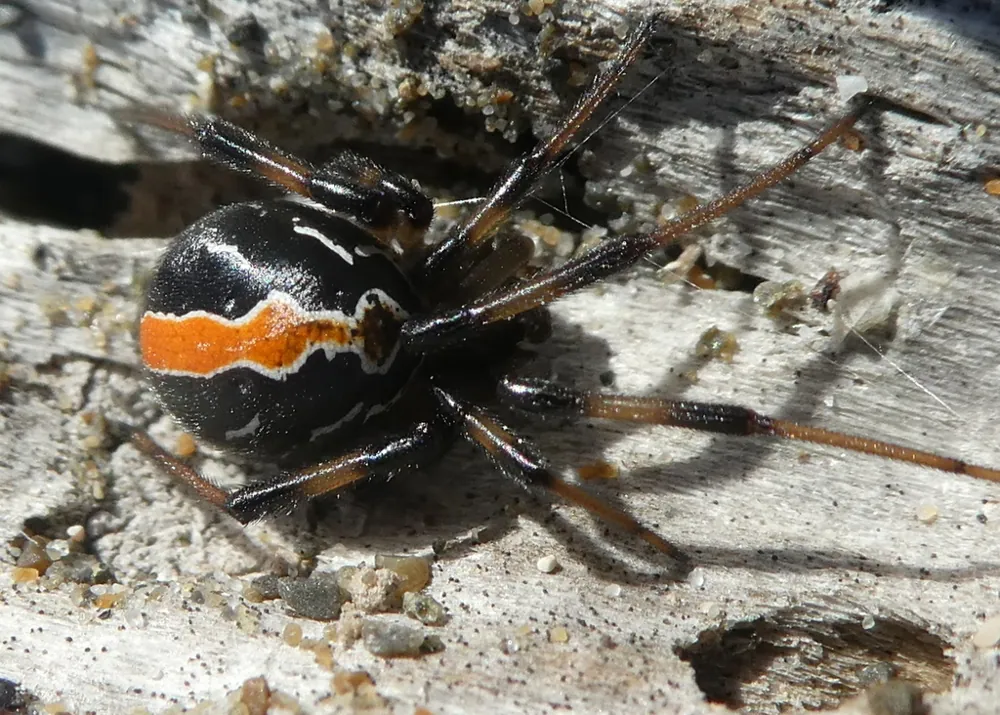
KoskaThe katipō is a cobweb spider found only in New Zealand, where it lives in coastal sand dunes. It is closely related to the Australian redback spider. Its bite is venomous to people, but bites are rare.1
 Nola ezagutu
- Adult females have a body length of 8–10 mm (about 0.3–0.4 in).1
- The red katipō, found in the South Island and lower North Island, has a large black, shiny abdomen with a white-bordered orange or red stripe on top, and a red hourglass-shaped marking underneath.1
- The black katipō, found in the upper North Island, has no upper red or orange stripe and is somewhat lighter in colour.1
- Males are 4–5 mm long, white with black stripes and red hourglass-shaped markings.1
Askotan honekin nahasten da: Steatoda species, which share the same habitat, are very similar and are called "false katipō" in New Zealand. The katipō has a less shiny, more tapered abdomen, and its side eyes are further apart. It is also similar to the redback, but the katipō has only short hair-like spines on its abdomen, while the redback has a mix of long and short ones.1
Pozoi-ahalmena
Pozoia letaginetatik edo hortzetatik ateratzen da kosk egiten duenean.
Zer egiten du bere pozoiak?
The bite can cause latrodectism, a toxic syndrome that affects the nerves and body. Symptoms include extreme pain and, potentially, high blood pressure (hypertension) or seizures.1
Zein arriskutsua da pertsonentzat?
Arriskua pertsonentzat: LarriaKoska batek medikua behar du. Heriotzak oso arraroak dira.Katipō are venomous to humans, but bites are described as rare. Serious symptoms are possible, including extreme pain, high blood pressure and seizures.1
 Albiste ona: medikuek badute sendagai bat (antipozoia) edo tratamendu bat honetarako.1
 Kosk egiten badu
- Garbitu koska eta jarri izotz-poltsa bat gainean minerako. Lortu mediku-laguntza mina handia bada, zabaltzen bada edo pertsona gaizki sentitzen bada.
Deitu beti lehenik zure larrialdi-zenbakira (112, 000, 911). Lehen sorospenei buruzko orientabide orokorra da hau, ez mediku-aholkua. Lehen sorospenen oinarriak
 Egon seguru
- Ez ukitu, ez harrapatu eta ez zirikatu inoiz animalia basati bat, txikia izan arren, eta lo edo hilda dagoela badirudi ere.
- Utzi tartea. Bat aurkitzen baduzu, egon lasai, egin atzera poliki eta utzi bere bidetik joaten.
- Batek kosk egiten badizu: egon lasai, egon geldi, deitu zure larrialdi-zenbakira (112, 000, 911) edo joan ospitalera azkar. Gogoratu nolakoa zen, argazki batek laguntzen du.
Ez dabil zure atzetik. Pozoia janaria harrapatzeko edo bere burua babesteko erabiltzen du, eta askoz nahiago du ezkutatu. Seguru egoteari buruz gehiago
Munduko zein tokitan?
Zein handia da?
Zein luzea da?
 zure azazkalaren gainean esertzeko bezain txikia
Zein handia da Katipo ZUREKIN alderatuta?
Matematika hutsa zure nabigatzailean. Ez da ezer gordetzen, ezta inora bidaltzen ere.
Zein azkarra da?


Datuak
In one 24-hour study of young spiders, 28% left the web by ballooning, carried by air currents.1
Katipō is one of the few Māori words that refers to a specific species of spider.1
The female does not usually eat the male after mating, unlike some other widow spiders.1
Females cover their egg sacs with silk and sand, which partly hides them in the web.1
The katipō is found only in New Zealand.1
Mito-hauslea
Mitoa: The katipō is just a form of the redback spider.
Egia: The katipō is genetically and physically distinct from the redback, even though the two are closely related. It was once thought to be a subspecies of the redback.1
Pozoi-adituentzat
- Izen zientifikoa
- Latrodectus katipo
- Taldea
- Armiarmak
- Familia
- Theridiidae2
- Ordena
- Araneae
- Kontinenteak
- Australia eta Ozeania
- Kumeak
- The female lays five or six egg sacs in November or December, with about 70 to 90 eggs in each. The young hatch after 20–25 days and leave the egg sac in January and February.1
- Nola dagoen naturan
- In serious decline (New Zealand Threat Classification System)1
- Arriskua pertsonentzat
- 3 / 5: Larria3
Datuak nondik datozen
- Katipō (Wikipedia (CC BY-SA 4.0))
- Latrodectus katipo (iNaturalist): izenak eta sailkapena.
- Venom Wiki: arrisku-maila, ohiko tamaina eta abiadura-kalkulua geureak dira. Ikusi nola kalkulatzen ditugun: Nola baloratzen dugun arriskua.
Orrialde honetako datu bakoitzak zenbaki bat du, bere iturrira eramaten zaituena. Zerbait gaizki badugu, barkatu, animalien zaleak gara, ez zientzia-aldizkari bat. Esaiguzu [email protected] helbidean eta konponduko dugu.
 Eskorpioia gose da! Venom Wiki pertsona bakar baten proiektua da: doakoa, iragarkirik eta jarraitzailerik gabe. Eskupeko txiki batek sarean mantentzen laguntzen du.Elikatu eskorpioia
 Redback spider
 White-tailed spider
 Peacock spider
 Badge huntsman spider
 Black house spider
 Eastern white-tailed spider
 Coastal taipan
 Common death adder
 Eastern brown snake
 Inland taipan
 Sydney funnel-web spider
 Tiger snake