
 Afrika
 Asia
Asia Europa
 Hego Amerika
 Australia eta Ozeania
 Antartika
 Ozeano Barea
 Ozeano Atlantikoa
 Ozeano Indikoa
 Ozeano Artikoa
 Mediterraneo itsasoa
 Itsaso Gorria
 Karibe itsasoa
 Koralen itsasoa
 Hego Txinako itsasoa
 Filipinetako itsasoa
 Andaman itsasoa
 Ipar itsasoa
 Timor eta Arafura itsasoak
 Bengalako golkoa
 Kaliforniako golkoa
Northern tree-dwelling funnel-web spider
 Koska
KoskaThe northern tree-dwelling funnel-web spider is a large spider from eastern Australia. It lives mostly in trees, from South East Queensland to the Hunter River in New South Wales. Its venom can be deadly to people, so it is important to know what it looks like.1

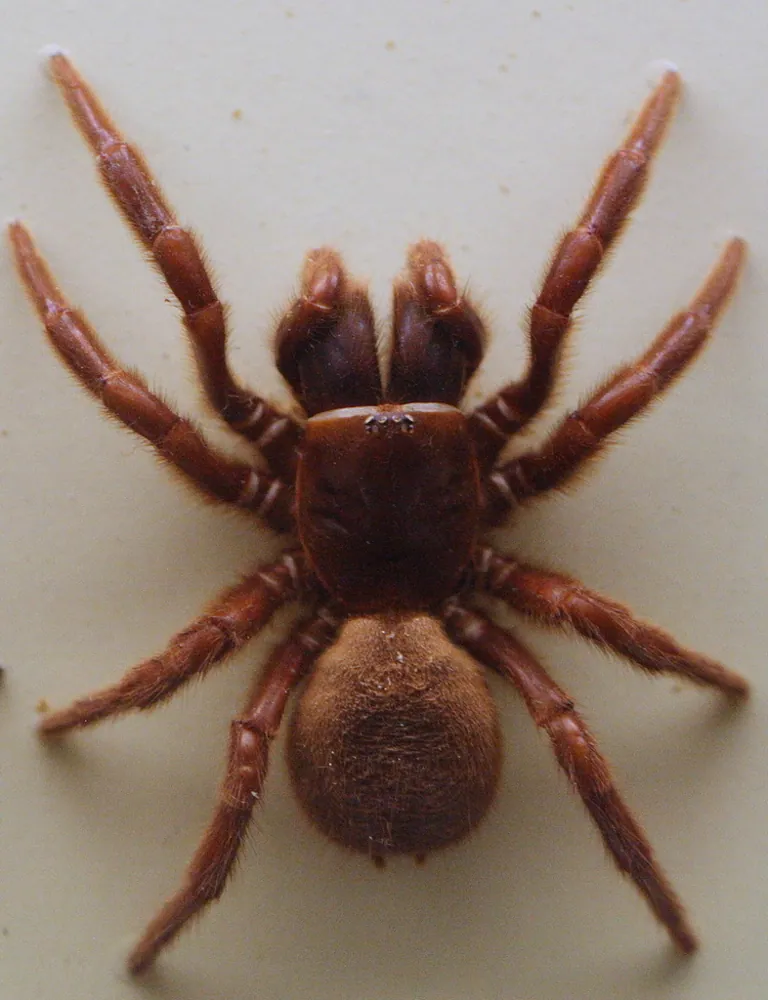
 Nola ezagutu
- Has a glossy black carapace (the hard upper shell of the body).1
- Chelicerae (fang-bearing parts), legs and abdomen are matte black or dark brown.1
- The top of the abdomen may have a plum or purplish tinge.1
- Body length is 40-50 mm, the largest of the funnel-web subfamily Atracinae.1
- Cannot jump.1
Askotan honekin nahasten da: The ground-dwelling Darling Downs funnel-web spider (Hadronyche infensa) is very similar. Male northern tree-dwelling funnel-web spiders have a knobby spur on the tibia (a leg segment) of the second pair of legs, which male Darling Downs funnel-web spiders lack. Trapdoor spiders are browner overall.1
Pozoi-ahalmena
Pozoia letaginetatik edo hortzetatik ateratzen da kosk egiten duenean.
Zer egiten du bere pozoiak?
The venom is potentially deadly to humans and is regarded as the most toxic of the venoms in the family Atracidae. Symptoms can start within 15 to 20 minutes. Common symptoms include sweating, high blood pressure, a fast heart rate, muscle spasms, nausea, vomiting, changes in consciousness and pain at the bite site. Fluid in the lungs (pulmonary oedema) is frequent and comes on early.1
Zein arriskutsua da pertsonentzat?
Arriskua pertsonentzat: HilgarriaMunduko animaliarik arriskutsuenetako bat.The venom is potentially deadly. Of eight recorded bites, five caused severe symptoms of envenomation. Because the spider is larger than the Sydney funnel-web, it may inject more venom, which could make it possibly the deadliest venomous spider in the world per volume of venom.1
 Albiste ona: medikuek badute sendagai bat (antipozoia) edo tratamendu bat honetarako.1
Zer egiten du beldurtzen denean?
When threatened, it rears up, displays its fangs, and drops of venom appear on the fang tips.1
 Kosk egiten badu
- Pressure bandages and immobilising the patient can significantly delay the onset of symptoms. This remains a critical part of managing a bite from an Australian funnel-web spider.1
- Garbitu koska eta hoztu. Lortu mediku-laguntza mina handia bada edo pertsona gaizki sentitzen bada.
- Australian, armiarma beltz handi baten edozein koska inbutu-sareko armiarmaren koska balitz bezala tratatu: Presio-immobilizazioa: bildu benda elastiko sendo bat koskaren gainean eta gero gorputz-adar osoan gora, immobilizatu ferula batekin, eta eutsi pertsona guztiz geldi laguntza iritsi arte.
Deitu beti lehenik zure larrialdi-zenbakira (112, 000, 911). Lehen sorospenei buruzko orientabide orokorra da hau, ez mediku-aholkua. Lehen sorospenen oinarriak
 Egon seguru
- Ez ukitu, ez harrapatu eta ez zirikatu inoiz animalia basati bat, txikia izan arren, eta lo edo hilda dagoela badirudi ere.
- Utzi tartea. Bat aurkitzen baduzu, egon lasai, egin atzera poliki eta utzi bere bidetik joaten.
- Batek kosk egiten badizu: egon lasai, egon geldi, deitu zure larrialdi-zenbakira (112, 000, 911) edo joan ospitalera azkar. Gogoratu nolakoa zen, argazki batek laguntzen du.
Ez dabil zure atzetik. Pozoia janaria harrapatzeko edo bere burua babesteko erabiltzen du, eta askoz nahiago du ezkutatu. Seguru egoteari buruz gehiago
Munduko zein tokitan?
Zein handia da?
Zein luzea da?
 zure hatz txikia baino laburragoa
 100 metro 260 segundotan egin litzake (gizakirik azkarrenak 9,6 behar ditu)
Zein handia da Northern tree-dwelling funnel-web spider ZUREKIN alderatuta?
Matematika hutsa zure nabigatzailean. Ez da ezer gordetzen, ezta inora bidaltzen ere.
Zein azkarra da?


Datuak
It may be possibly the deadliest venomous spider in the world per volume of venom, because it is larger than the Sydney funnel-web and may inject more venom.1
It is the largest member of the funnel-web subfamily Atracinae, with a body length of 40-50 mm.1
It has been recorded living in trees 30 m above the ground.1
It is one of only two Australian funnel-web species that live mostly in trees. The other is the southern tree-dwelling funnel-web.1
It cannot jump.1
Datuak nondik datozen
- Hadronyche formidabilis (Wikipedia (CC BY-SA 4.0))
- Hadronyche formidabilis (iNaturalist): izenak eta sailkapena.
- Venom Wiki: arrisku-maila, ohiko tamaina eta abiadura-kalkulua geureak dira. Ikusi nola kalkulatzen ditugun: Nola baloratzen dugun arriskua.
Orrialde honetako datu bakoitzak zenbaki bat du, bere iturrira eramaten zaituena. Zerbait gaizki badugu, barkatu, animalien zaleak gara, ez zientzia-aldizkari bat. Esaiguzu [email protected] helbidean eta konponduko dugu.
 Eskorpioia gose da! Venom Wiki pertsona bakar baten proiektua da: doakoa, iragarkirik eta jarraitzailerik gabe. Eskupeko txiki batek sarean mantentzen laguntzen du.Elikatu eskorpioia
Talde bereko gehiago: Tarantulak eta inbutu-sareko armiarmak
 Sydney funnel-web spiderTarantulak eta inbutu-sareko armiarmakHilgarria
 Red-headed mouse spiderTarantulak eta inbutu-sareko armiarmakMedikua behar du
 Queensland whistling tarantulaTarantulak eta inbutu-sareko armiarmakMin ematen du, besterik ez
 Blue Mountains funnel-web spiderTarantulak eta inbutu-sareko armiarmakHil dezake
 Darling Downs funnel-web spiderTarantulak eta inbutu-sareko armiarmakHil dezake
 Illawarra funnel-web spiderTarantulak eta inbutu-sareko armiarmakHil dezake
 Coastal taipan
 Common death adder
 Eastern brown snake
 Inland taipan
 Tiger snake
 Redback spider