
 Afirik
 Aazi
Aazi Orop
Orop Amerik Sud
 Ostarali e Oseyani
 Antarktik
 Geeci Pasifik
 Geeci Atlantik
 Geeci Enndo
 Geeci Arktik
 Geeci Mediteraane
 Geeci Boɗeewi
 Geeci Karayib
 Geeci Korayl
 Geeci Siin Sud
 Geeci Filipiin
 Geeci Andaman
 Geeci Nord
 Geeci Timor e Arafura
 Gulf Bengal
 Gulf Kaliforni
Banded water cobra
 Ŋatgol
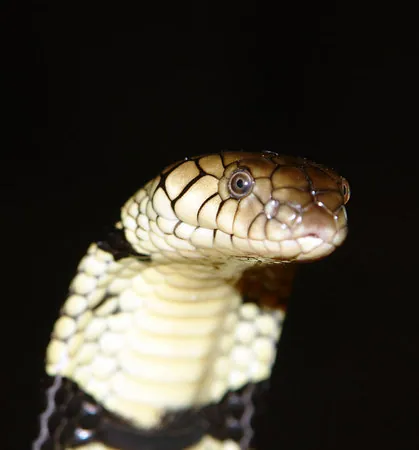
The banded water cobra is a large, heavy snake that lives mostly in the water. It is found in parts of central and western Africa, along lakes, rivers and streams. It is one of only two water cobra species in the world.1


 Hono anndirtee ngal
Doole tooke ŋatgol
Tooke no yaltira ñiiƴe mum tuma ngal ŋatata.
Ko honɗun tooke mum waɗata (ŋatgol walla jukkugol)?
Its venom has not been well studied, but it is believed to be dangerously neurotoxic, meaning it attacks the nerves, as most elapids' venoms do. Laboratory tests on mice showed that its venom is very potent, with some of the lowest lethal doses recorded for any African cobra studied so far.1
Hono musiiba mum heewiri e yimɓe?
Musiiba e yimɓe: Musiiba sanneNo waawi warugol neɗɗo mo safraaka.It is secretive and seldom met by people. It is generally not aggressive and bites only when provoked.1
 Kabaaru moƴƴo: doktoroɓe no njogii lekki (sérum antivenimeux) walla safaara ngam ɗum.1
Ko honɗun ngal waɗata si ngal hulii?
On land, when threatened, it rears up, spreads its hood and may hiss loudly, but it tends not to lunge forward. In water, it swims away quickly.1
 Si no ŋata
- Haɗu neɗɗo on dillagol, deeƴnu mo, ittu baagiiji e ko tiiɗi fow, yahra mo lopitaan law: sérum antivenimeux ko safaara.
Adii fow noddu nimero ballal (112, 000, 911). Ɗum ko anndinal ballal adiingal, wanaa saaraangal doktoro. Ko adii nder ballal adiingal
 Reen hoore maa
- Wota a meem, wota a nanngu, wota a jalnu kullal ladde haa abada, hay si ko tokooso, hay si no yi'ee no ɗaanii walla maayii.
- Accu ngal nokku. Si a fotti e ngal, deeƴu, ruttu ɓaawo seeɗa seeɗa, accu ngal yaha laawol mum.
- Si gooto e majji ŋatii ma: deeƴu, wota a dillu, noddu nimero ballal (112, 000, 911) walla yahu lopitaan law. Jogo e hakkille no ngal nanndi, natal no walla.
Ngal faalaaka gaañugol ma. Ngal no huutora tooke mum ngam nanngugol ñaamdu walla reenugol hoore mum, ngal ɓuri yiɗugol suuɗaade. Ko ɓeydi fii reenugol hoore maa
Hoto nder aduna?
Hono mawniri?
Hono juutiri?
 juuti no rawaandi 3, hinere haa lawol
 juuti no banaanaaji 16 jokkondirɗi
 no waawi taccugol meeteruuji 100 nder segonde 43 (neɗɗo ɓurɗo yaawugol sokli 9,6)
Hono Banded water cobra mawniri, si fooɗondiraama e AN?
Ko limoore tun nder navigateur maa. Alaa ko danndetee walla ko neldetee ka nokku woo.
Hono yaawiri?


Humpito
It is an excellent swimmer and can stay underwater for up to 10 minutes.1
It can dive to depths of 25 m.1
It is one of only two water cobra species in the world; the other is the Congo water cobra (Naja christyi).1
It is a slow mover on land, so it usually heads for water to escape.1
A polyvalent antivenom made by the South African Institute of Medical Research neutralised its venom in laboratory tests.1
Ɗo humpitooji ɗin iwri
- Naja annulata (Wikipedia (CC BY-SA 4.0))
- Naja annulata (iNaturalist): inɗe e ŋoordingol (classification).
- Venom Wiki: tolno musiiba, mawnugol aadaajo e miijo yaawugol ko amen. Ndaar no min ƴeewtirta ɗum: Hono min tolnirta musiiba.
Kala humpito nder ngoo hello no jogii limoore hollirnde iwdi mum. Si min juumii, yaafo, min ko yiɗɓe kulle, wanaa jaaynde ganndal. Haalan min e [email protected], min feewnitan.
 Yaare nden no weelaa! Venom Wiki ko golle neɗɗo gooto: ko yoɓetaake, alaa piiblisite, alaa reweteeɓe. Kopporde tokooso no walla heddingol ɗum e enternet.Ñaamnu yaare nden
 Mamba ɓaleeri
 Kobra Misra
 Cape cobra
 Eastern green mamba
 Jameson's mamba
 Western green mamba
 Yaare oolnde maayde
 Wipeeri fuufoowndi
 Boomslang
 Fat-tailed scorpion
 Gaboon viper
 Western honey bee