
 Afirik
 Aazi
Aazi Orop
Orop Amerik Sud
 Ostarali e Oseyani
 Antarktik
 Geeci Pasifik
 Geeci Atlantik
 Geeci Enndo
 Geeci Arktik
 Geeci Mediteraane
 Geeci Boɗeewi
 Geeci Karayib
 Geeci Korayl
 Geeci Siin Sud
 Geeci Filipiin
 Geeci Andaman
 Geeci Nord
 Geeci Timor e Arafura
 Gulf Bengal
 Gulf Kaliforni
Matabele ant
 Jukkugol
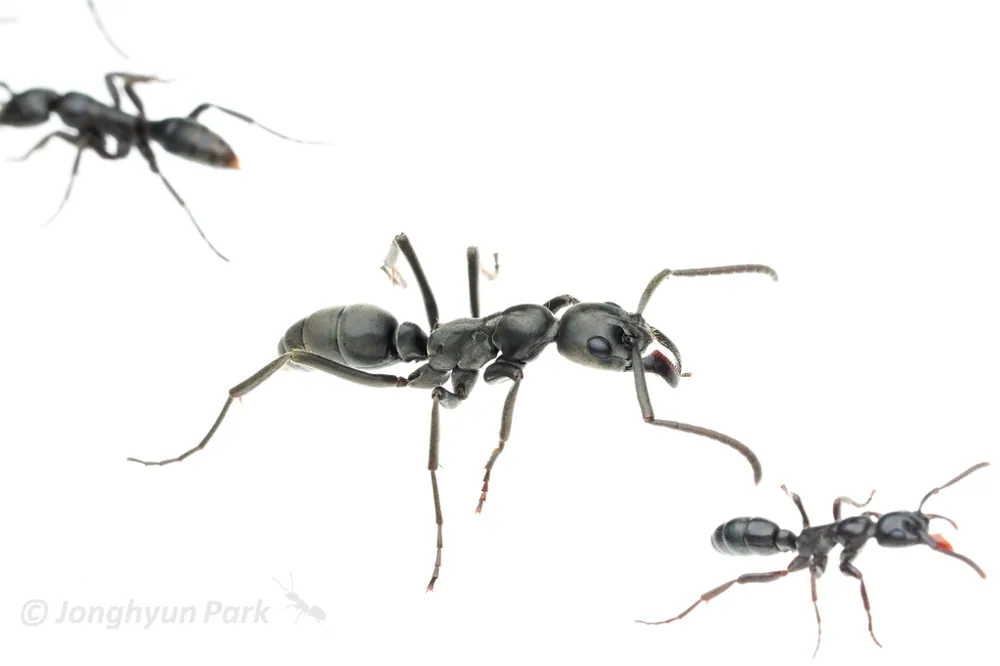
The Matabele ant is one of the largest ants in the world, and it hunts termites in raiding columns. It lives across much of sub-Saharan Africa. It is known for its teamwork, including rescuing and caring for injured nestmates.1

 Hono anndirtee ngal
- Worker ants are 5 to 18 millimetres long, and some individuals reach up to 25 millimetres.1
- Larger workers make up to half of the colony.1
- Minor workers have less hair and smoother jaws (mandibles) than major workers.1
- They move in a column-like line when raiding termite sites.1
- Their glands release chemicals that smell like human faeces.1
Doole tooke ŋatgol
Tooke no yaltira jukkere.
Hono musiiba mum heewiri e yimɓe?
Musiiba e yimɓe: MuusɗoNo waawi muusugol sanne, kono ko ɓadii kala tuma ɗum wonataa musiiba mawɗo.Ko honɗun ngal waɗata si ngal hulii?
When attacked by driver ants outside the nest, they check each other's legs and antennae and remove any enemy ants clinging to them.1
 Si no jukka
- Loot nokkuuje jukkaaɗe, ɓuuɓnu ɗe.
- Si neɗɗo on no caɗɗa foofagol, yeeso walla daande mum no ufi, walla no yi'a o no ɓadii majjugol hakkille, ɗum ko musiiba allergie: noddu nimero ballal.
Adii fow noddu nimero ballal (112, 000, 911). Ɗum ko anndinal ballal adiingal, wanaa saaraangal doktoro. Ko adii nder ballal adiingal
 Reen hoore maa
- Wota a meem, wota a nanngu, wota a jalnu kullal ladde haa abada, hay si ko tokooso, hay si no yi'ee no ɗaanii walla maayii.
- Accu ngal nokku. Si a fotti e ngal, deeƴu, ruttu ɓaawo seeɗa seeɗa, accu ngal yaha laawol mum.
- Si gooto e majji jukkii ma: deeƴu, wota a dillu, noddu nimero ballal (112, 000, 911) walla yahu lopitaan law. Jogo e hakkille no ngal nanndi, natal no walla.
Ngal faalaaka gaañugol ma. Ngal no huutora tooke mum ngam nanngugol ñaamdu walla reenugol hoore mum, ngal ɓuri yiɗugol suuɗaade. Ko ɓeydi fii reenugol hoore maa
Hoto nder aduna?
Hono mawniri?
Hono juutiri?
 juuti no ñippirde kayitaaje
Hono Matabele ant mawniri, si fooɗondiraama e AN?
Ko limoore tun nder navigateur maa. Alaa ko danndetee walla ko neldetee ka nokku woo.
Hono yaawiri?


Humpito
They are the first recorded non-human species to treat the wounds of other individuals consistently, by licking them for several minutes.1
Injured ants send out a chemical call for help, and nestmates carry them back to the nest. This reduces the mortality rate of injured ants from 32% to close to zero.1
Injured ants that have lost one or two legs adapt to walking on four or five legs and can reach running speeds similar to healthy ants.1
Some individuals reach up to 25 millimetres, which makes this one of the world's largest ants.1
Frogs of the species Phrynomantis microps are sometimes found in their nests, and these frogs produce a skin secretion that calms the ants' aggression.1
Scout ants lead raids from the front and lay pheromone trails, so the other ants can find their way back to the nest.1
Ngam ganduɓe tooke
- Innde ganndal
- Megaponera analis
- Fedde
- Furmiiji
- Ɓesngu
- Formicidae2
- Ordre
- Hymenoptera
- Leyɗe mawɗe
- Afirik
- Ɓiɓɓe tokosɓe
- The nest chamber holds the eggs, larvae, cocoons and the queen. New colonies are thought to form when a new queen leaves with some workers from an established colony.1
- Musiiba e yimɓe
- 2 / 5: Muusɗo3
Ɗo humpitooji ɗin iwri
- Megaponera (Wikipedia (CC BY-SA 4.0))
- Megaponera analis (iNaturalist): inɗe e ŋoordingol (classification).
- Venom Wiki: tolno musiiba, mawnugol aadaajo e miijo yaawugol ko amen. Ndaar no min ƴeewtirta ɗum: Hono min tolnirta musiiba.
Kala humpito nder ngoo hello no jogii limoore hollirnde iwdi mum. Si min juumii, yaafo, min ko yiɗɓe kulle, wanaa jaaynde ganndal. Haalan min e [email protected], min feewnitan.
 Yaare nden no weelaa! Venom Wiki ko golle neɗɗo gooto: ko yoɓetaake, alaa piiblisite, alaa reweteeɓe. Kopporde tokooso no walla heddingol ɗum e enternet.Ñaamnu yaare nden
 Siafu driver ant
 African stink ant
 Samsum ant
 Bullet ant
 Red imported fire ant
 Bulldog ant
 Mamba ɓaleeri
 Yaare oolnde maayde
 Kobra Misra
 Wipeeri fuufoowndi
 Boomslang
 Fat-tailed scorpion