
 Afrik
Afrik Aazi
Aazi Orop
Orop Amerik Worgo
 Ostaraali e Oseyaani
 Antarktik
 Geec Pasifik
 Geec Atlantik
 Geec Enndo
 Geec Arktik
 Geec Mediteraane
 Geec Boɗeejo
 Geec Karayib
 Geec Korayl
 Geec Siin Worgo
 Geec Filipiin
 Geec Andaman
 Geec Rewo
 Geec Timor e Arafura
 Gulf Bengal
 Gulf Kaliforni
Moon jellyfish
 Tiimbe jukkooje
The moon jellyfish is a see-through jelly that drifts with the ocean currents. It lives in the north Atlantic, Argentina and parts of the northeastern United States. It is one of the best-known jellyfish, and it is not dangerous to people.1



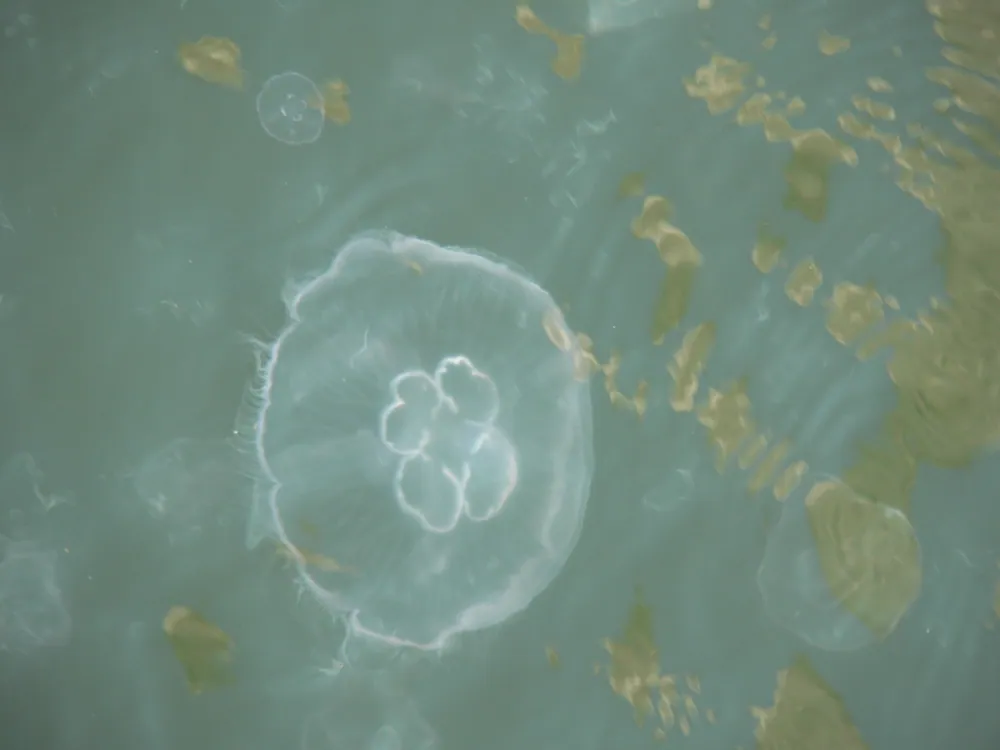
 No anndirte ngal
- Almost entirely translucent, so it looks nearly see-through1
- Usually about 25 to 40 cm across1
- Four horseshoe-shaped gonads (reproductive organs) are easy to see through the top of the bell1
- Short, fine tentacles1
Ina heewi waylondireede e: Most species in the genus Aurelia look very similar, and it is hard to tell them apart without genetic testing. Many older records of this jellyfish may actually describe one of its related species.1
Doole tooke
Jukkirɗe tokoose guluuje ina ŋata so huunde meemii ɗe.
Hol ko tooke ŋatgol mum waɗata?
Its sting has a mild effect on humans. Most people have little or no reaction to it.1
Hol no bone mum heewiri e yimɓe?
Bone e yimɓe: HoyɗoNo jukkugol ñaaki walla ko ɓuri famɗude. Ko ɓuri heewde alaa bone e yimɓe.It is not dangerous to humans. Its sting is mild, and most people feel little or nothing.1
 So ina jukka
- Yaltin neɗɗo oo e ndiyam, ittu kala tiimbe meduus (e gaŋte walla taƴre leppi).
- Ngam meduus kaaɗe tulnde: wuj winegar e nokkuuje jukkaaɗe, ko famɗi fof segonde 30, noddu ballal, heblo waɗde réanimation (RCP). Ngam bluebottles e ko heewi e goɗɗe: loot e ndiyam geec, refti ndiyam guleeɗam ngam muusu.
Adii fof noddu nimero urgence (112, 000, 911). Ɗum ko anndinal ballal adiingal, wonaa saaraangal doktoor. Ko adii e ballal adiingal
 Reen hoore maa
- Wota a meem, wota a nanngu, wota a ñiŋŋu kullal ladde haa abada, hay so ngal ina famɗi, hay so ina nanndi e ɗaaniingal walla maayngal.
- Accu ngal nokku. So a fotti e ngal, deƴƴu, ruttu ɓaawo seeɗa seeɗa, accu ngal yaha laawol mum.
- So gooto jukkii ma: deƴƴu, wota a dillu, noddu nimero urgence (112, 000, 911) walla yahu opitaal law. Jogo e hakkille no ngal nanndi, natal ina walla.
Ngal faalaaka gaañde ma. Ina huutoroo tooke mum ngam nanngude ñaamdu walla reenaade, ina ɓuri yiɗde suuɗaade. Ɓeydu anndude no reentortoo
Hol to e aduna?
Hol no mawniri?
Hol no juutiri?
 juutde no banaanaaji 2 sammondiraaɗi
 juutde no kaaɗe mahirɗe 12 ɗaɓɓondiraaɗe
Hol no Moon jellyfish mawniri, so fooɗondiraama e AN?
Limgal tan e navigatoor maa. Alaa ko danndetee walla ko neldetee.
Hol no yaawiri?


Humpito
The moon jellyfish is almost entirely translucent, so it is hard to see in the water.1
Its polyp stage can survive for months without food.1
Its reproduction changes with food supply: plenty of food means many small young, while little food means fewer, larger young that are more likely to survive.1
Before the 2020s, the species was thought to live almost everywhere in the world, but it has since been split into at least 28 species.1
Ngam ganduɓe tooke
- Innde ganndal
- Aurelia aurita
- Fedde
- Meduusaaji e kulle geec jukkooje
- Ɓesngu
- Ulmaridae2
- Ordre
- Semaeostomeae
- Leyɗe mawɗe
- Geec Arktik, Geec Atlantik, Geec Pasifik, Geec Enndo, Geec Worgo, Geec Mediteraane, Geec Boɗeejo, Geec Karayib, Gulf Meksik, Geec Siin Worgo, Antarktik, Geec Rewo, Geec Timor e Arafura, Gulf Bengal, Gulf Kaliforni, Geece mawɗe
- Ɓiɓɓe tokooso
- It reproduces sexually as a free-swimming medusa, while the polyp stage reproduces asexually. When food is plentiful, it produces many small offspring, and when food is scarce, it produces fewer, larger offspring that survive better.1
- Bone e yimɓe
- 1 / 5: Hoyɗo3
Ɗo humpito iwri
- Aurelia aurita (Wikipedia (CC BY-SA 4.0))
- Aurelia aurita (iNaturalist): inɗe e ceergal.
- Venom Wiki: tolno bone, mawnude heewnde e miijo yaawde ko amen. Yiy no men keɓirta ɗum: No men tolnirta bone.
Kala humpito e ngoo hello ina jogii limoore hollirnde iwdi mum. So men juumii, yaafo, men ko yiɗɓe kulle, wonaa jaaynde ganndal. Wiy men e [email protected], men feewnita.
 Yaare nden ina weelaa! Venom Wiki ko golle neɗɗo gooto: yoɓetaake, alaa ko jeeyetee, alaa rewɓe. Ndokkal seeɗa ina walla ngam heddude e enternet.Ñaam yaare nden
Goɗɗe e nder fedde wootere: Meduusaaji e kulle geec jukkooje
 Meduus kaaɗe OstaraaliMeduusaaji e kulle geec jukkoojeBareejoWota a meem
 Irukandji jellyfishMeduusaaji e kulle geec jukkoojeIna waawi wardeWota a meem
 Portuguese man o' warMeduusaaji e kulle geec jukkoojeIna sokli doktoorWota a meem
 Lion's mane jellyfishMeduusaaji e kulle geec jukkoojeIna muusi tanWota a meem
 Common kingslayerMeduusaaji e kulle geec jukkoojeIna waawi wardeWota a meem
 Hell's fire anemoneMeduusaaji e kulle geec jukkoojeIna sokli doktoorWota a meem
 Greenland shark
 Spiny dogfish
 Bootlace worm