
 Afrikka
 Aasia
Aasia Eurooppa
 Etelä-Amerikka
 Australia ja Oseania
 Etelämanner
 Tyynimeri
 Atlantti
 Intian valtameri
 Pohjoinen jäämeri
 Välimeri
 Punainenmeri
 Karibianmeri
 Korallimeri
 Etelä-Kiinan meri
 Filippiinienmeri
 Andamaanienmeri
 Pohjanmeri
 Timorinmeri ja Arafuranmeri
 Bengalinlahti
 Kalifornianlahti
Arizona blond tarantula
 Puremat
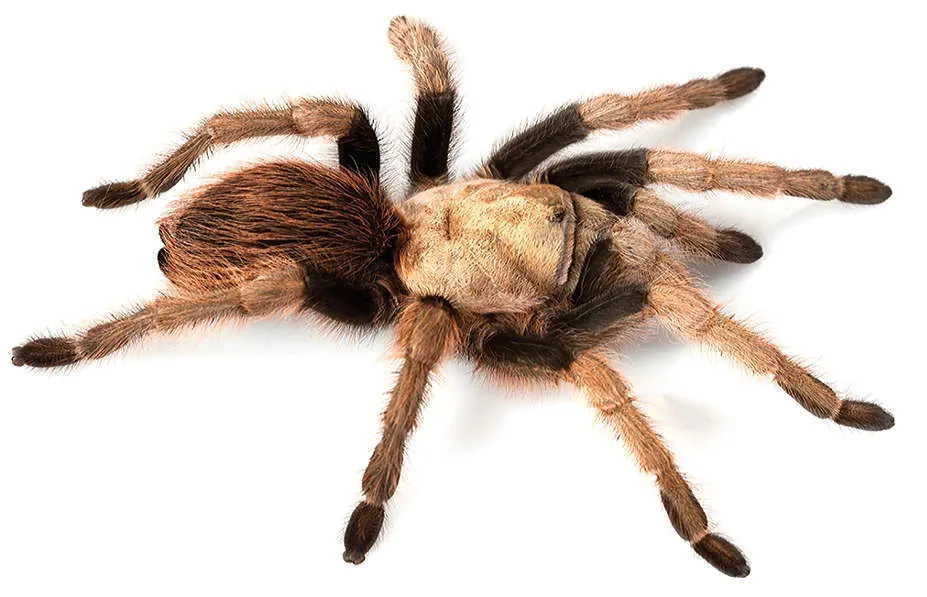
The Arizona blond tarantula is a large, burrowing spider with pale, golden-looking hairs on its front body. It lives in the deserts of Arizona and New Mexico and nearby parts of Mexico. Its venom is considered low in toxicity, so it is not highly dangerous to people.1

 Näin tunnistat sen
- Front body (carapace) covered in dense pale hairs, which gives it the blonde name.1
- Females are usually a uniform tan colour.1
- Males have black legs, a copper-coloured front body and a reddish abdomen.1
- Burrows can be 2.5 to 5.1 cm across, with some strands of silk over the opening.1
- Body length is up to 5.6 cm in females and up to 4.4 cm in males.1
Myrkkyvoima
Myrkky tulee ulos myrkkyhampaista tai hampaista, kun se puree.
Mitä sen myrkky tekee, kun se puree tai pistää?
The venom contains neurotoxins, which attack the nerves. The two named compounds are Apc600 and Apc728. These toxins have not been studied in depth, and the venom is considered low in toxicity for humans.1
Kuinka vaarallinen se on ihmisille?
Vaara ihmisille: LieväKuin mehiläisen pisto tai vähemmän. Käytännössä vaaraton ihmisille.The venom is not highly dangerous to humans. Compared with a bee sting, its venom level is not significantly higher. It is one of the least dangerous spiders in its family, Theraphosidae.1
 Jos se puree
- Pese purema ja viilennä se. Hae lääkärin apua, jos kipu on kova tai henkilö voi huonosti.
Soita aina ensin hätänumeroon (112, 000, 911). Nämä ovat yleisiä ensiapuohjeita, eivät lääketieteellisiä neuvoja. Ensiavun perusteet
 Pysy turvassa
- Älä koskaan koske villieläimeen, pyydystä sitä tai kiusaa sitä, ei edes pientä, eikä silloinkaan, kun se näyttää nukkuvan tai olevan kuollut.
- Anna sille tilaa. Jos kohtaat sellaisen, pysy rauhallisena, peräänny hitaasti ja anna sen mennä omaa tietään.
- Jos sellainen puree sinua: pysy rauhallisena, pysy paikallasi, soita hätänumeroon (112, 000, 911) tai mene nopeasti sairaalaan. Muista, miltä se näytti, valokuva auttaa.
Se ei ole sinun perässäsi. Se käyttää myrkkyään saadakseen ruokaa tai suojellakseen itseään, ja se piiloutuu paljon mieluummin. Lisää turvallisuudesta
Missä päin maailmaa?
Kuinka iso se on?
Kuinka pitkä se on?
 lyhyempi kuin pikkusormesi
 voisi juosta 100 metriä 220 sekunnissa (nopein ihminen tarvitsee 9,6)
Kuinka iso Arizona blond tarantula on SINUUN verrattuna?
Pelkkää matematiikkaa selaimessasi. Mitään ei tallenneta eikä lähetetä minnekään.
Kuinka nopea se on?


Faktat
Females can live about 24 to 30 years, while males live about 5 to 10 years.1
Each spider molts about 25 times over two years, going through ten main stages.1
Newborns look like females, and males only show male features after several years of development.1
Its popularity among beginner tarantula keepers is linked to its long lifespan and calm nature.1
Molting is seasonal, and is especially common in March and April, even though tarantulas can molt at any time of day.1
Myrkkyasiantuntijoille
Mistä tiedot ovat peräisin
- Aphonopelma chalcodes (Wikipedia (CC BY-SA 4.0))
- Aphonopelma chalcodes (iNaturalist): nimet ja luokittelu.
- Venom Wiki: vaarataso, tyypillinen koko ja nopeusarvio ovat omia arvioitamme. Katso, miten laskemme ne: Näin arvioimme vaaran.
Jokaisella tämän sivun tiedolla on numero, joka viittaa sen lähteeseen. Jos jokin meni pieleen, anteeksi, olemme eläinfaneja emmekä tiedelehti. Kerro meille osoitteeseen [email protected], niin korjaamme sen.
 Skorpionilla on nälkä! Venom Wiki on yhden miehen projekti: ilmainen, ilman mainoksia ja ilman seurantaa. Pieni tippi auttaa pitämään sen verkossa.Ruoki skorpioni
Lisää samasta ryhmästä: Lintuhämähäkit ja suppiloverkkohämähäkit
 Mexican redknee tarantulaLintuhämähäkit ja suppiloverkkohämähäkitVaaraton
 Ravine trapdoor spiderLintuhämähäkit ja suppiloverkkohämähäkitVaaraton
 Trinidad chevron tarantulaLintuhämähäkit ja suppiloverkkohämähäkitSattuu vain
 Antilles pinktoe tarantulaLintuhämähäkit ja suppiloverkkohämähäkitVaaraton
 California trapdoor spiderLintuhämähäkit ja suppiloverkkohämähäkitVaaraton
 Costa Rican zebra tarantulaLintuhämähäkit ja suppiloverkkohämähäkitVaaraton
 Terciopelo
 Eastern coral snake
 Eastern diamondback rattlesnake
 Eyelash viper
 Timber rattlesnake
 Western diamondback rattlesnake