
 Afrikka
 Aasia
Aasia Eurooppa
 Etelä-Amerikka
 Australia ja Oseania
 Etelämanner
 Tyynimeri
 Atlantti
 Intian valtameri
 Pohjoinen jäämeri
 Välimeri
 Punainenmeri
 Karibianmeri
 Korallimeri
 Etelä-Kiinan meri
 Filippiinienmeri
 Andamaanienmeri
 Pohjanmeri
 Timorinmeri ja Arafuranmeri
 Bengalinlahti
 Kalifornianlahti
German wasp
 Pistot
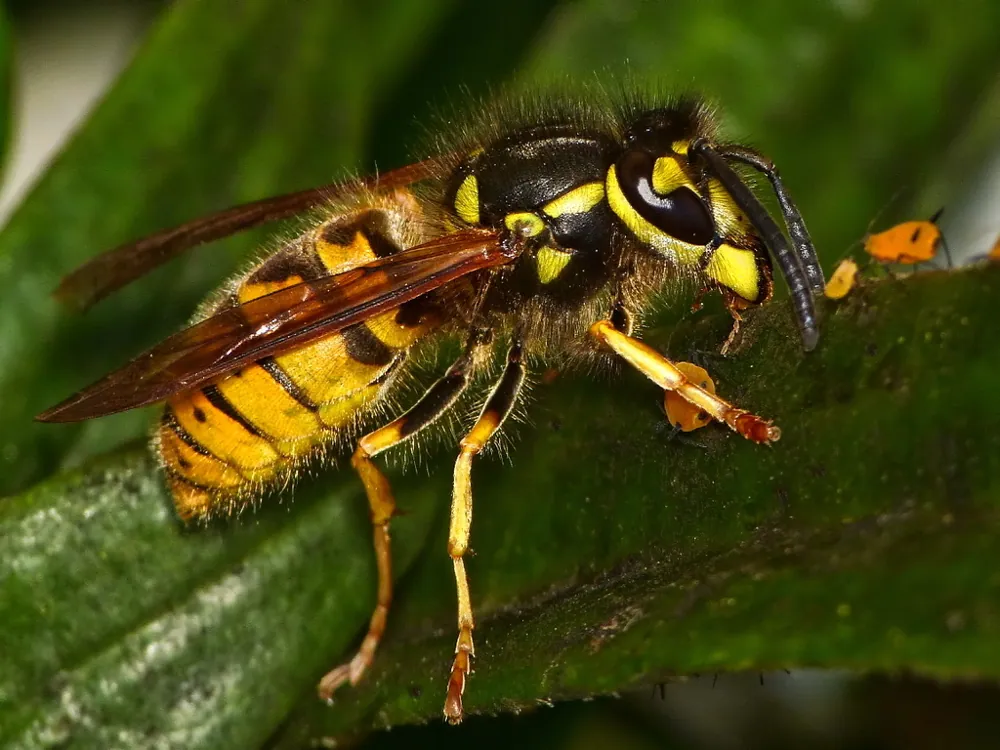
The German wasp is a black and yellow social wasp that lives in colonies. It is native to Europe, Northern Africa and temperate Asia, but it has spread to many other parts of the world. Because it competes with local wildlife, it is treated as a pest in most areas outside its native range.1


 Näin tunnistat sen
- About 13 mm long, with typical wasp colours of black and yellow1
- Workers have three tiny black dots on the clypeus (the front part of the head, between the eyes and mouthparts)1
- Black marks on the abdomen are highly variable, so they are not a reliable way to identify it1
- Grey paper nests, often in the soil or in attics1
Sekoitetaan usein: The German wasp is very similar to the common wasp (Vespula vulgaris). Unlike the common wasp, it has three tiny black dots on the clypeus, but this only applies to workers. In males, the normally unbroken black mark on the common wasp's clypeus can look broken, which makes it hard to tell the two apart. Members of Vespula are also often confused with the paper wasp Polistes dominula.1
Myrkkyvoima
Myrkky tulee ulos pistimestä.
Kuinka vaarallinen se on ihmisille?
Vaara ihmisille: KivuliasSe voi sattua tosi paljon, mutta se ei ole juuri koskaan vakavaa. Jos se pistää
- Raaputa mehiläisen pistin pois ja viilennä kohta.
- Jos henkilöllä on hengitysvaikeuksia, kasvojen tai kurkun turvotusta tai hän tuntee olevansa pyörtymäisillään, kyse on allergisesta hätätilanteesta: soita hätänumeroon ja käytä hänen adrenaliinikynäänsä, jos hänellä on sellainen.
Soita aina ensin hätänumeroon (112, 000, 911). Nämä ovat yleisiä ensiapuohjeita, eivät lääketieteellisiä neuvoja. Ensiavun perusteet
 Pysy turvassa
- Älä koskaan koske villieläimeen, pyydystä sitä tai kiusaa sitä, ei edes pientä, eikä silloinkaan, kun se näyttää nukkuvan tai olevan kuollut.
- Anna sille tilaa. Jos kohtaat sellaisen, pysy rauhallisena, peräänny hitaasti ja anna sen mennä omaa tietään.
- Jos sellainen pistää sinua: pysy rauhallisena, pysy paikallasi, soita hätänumeroon (112, 000, 911) tai mene nopeasti sairaalaan. Muista, miltä se näytti, valokuva auttaa.
Se ei ole sinun perässäsi. Se käyttää myrkkyään saadakseen ruokaa tai suojellakseen itseään, ja se piiloutuu paljon mieluummin. Lisää turvallisuudesta
Missä päin maailmaa?
Kuinka iso se on?
Kuinka pitkä se on?
Kuinka painava se on?
 niin pieni, että mahtuu kynnellesi
 niin kevyt, ettet tuntisi sitä kädelläsi
 voisi lentää kokonaisen jalkapallokentän yli 16 sekunnissa
Kuinka iso German wasp on SINUUN verrattuna?
Pelkkää matematiikkaa selaimessasi. Mitään ei tallenneta eikä lähetetä minnekään.
Kuinka nopea se on?


Faktat
German wasps are invasive. They have spread to many continents and are especially successful at colonising new areas.1
They can outcompete many other animals for food, which has caused considerable harm to native wildlife where they have invaded.1
Female bee moths (Aphomia sociella) sometimes lay eggs in German wasp nests. Their larvae feed on the eggs, larvae and pupae, and can destroy large parts of the nest.1
In Australia, nests can grow very large and some survive the winter. In England, none of the nests in the study survive the winter.1
Queens mate with between one and seven males, and workers can lay eggs, although worker policing keeps most of their sons from reaching adulthood.1
Colonies grow rapidly over summer, with a large increase in worker numbers and nest size. In late summer, the colony focuses on producing new queens and males.1
Myyttien murtaja
Myytti: German wasps are paper wasps because they build grey paper nests.
Totuus: The name is used by mistake. Strictly speaking, paper wasps belong to the subfamily Polistinae, while German wasps belong to the genus Vespula.1
Myrkkyasiantuntijoille
- Tieteellinen nimi
- Vespula germanica
- Ryhmä
- Mehiläiset, ampiaiset ja herhiläiset
- Perhe
- Vespidae2
- Järjestys
- Hymenoptera
- Maanosat
- Eurooppa, Aasia, Afrikka
- Vauvat
- A single queen starts a nest in spring and lays eggs in hexagonal cells, with one wasp developing in each cell through the egg, larva and pupa stages.1
- Vaara ihmisille
- 2 / 5: Kivulias3
Mistä tiedot ovat peräisin
- Vespula germanica (Wikipedia (CC BY-SA 4.0))
- Vespula germanica (iNaturalist): nimet ja luokittelu.
- Venom Wiki: vaarataso, tyypillinen koko ja nopeusarvio ovat omia arvioitamme. Katso, miten laskemme ne: Näin arvioimme vaaran.
Jokaisella tämän sivun tiedolla on numero, joka viittaa sen lähteeseen. Jos jokin meni pieleen, anteeksi, olemme eläinfaneja emmekä tiedelehti. Kerro meille osoitteeseen [email protected], niin korjaamme sen.
 Skorpionilla on nälkä! Venom Wiki on yhden miehen projekti: ilmainen, ilman mainoksia ja ilman seurantaa. Pieni tippi auttaa pitämään sen verkossa.Ruoki skorpioni
Lisää samasta ryhmästä: Mehiläiset, ampiaiset ja herhiläiset
 Asian giant hornetMehiläiset, ampiaiset ja herhiläisetVoi tappaa
 Common waspMehiläiset, ampiaiset ja herhiläisetSattuu vain
 European hornetMehiläiset, ampiaiset ja herhiläisetSattuu vain
 Western honey beeMehiläiset, ampiaiset ja herhiläisetSattuu vain
 Giant honey beeMehiläiset, ampiaiset ja herhiläisetVaatii lääkäriä
 Asian hornetMehiläiset, ampiaiset ja herhiläisetSattuu vain
Elää myös: Eurooppa
 Common European adderKyyt ja kyykäärmeetVaatii lääkäriä
 Spanish flyMuut passiivisesti myrkylliset eläimetVaatii lääkäriäÄlä koske
 Fire salamanderNuolimyrkkysammakot, konnat ja vesiliskotSattuu vainÄlä koske
 Blunt-nosed viperKyyt ja kyykäärmeetVoi tappaa
 Nose-horned viperKyyt ja kyykäärmeetVoi tappaa
 Ottoman viperKyyt ja kyykäärmeetVoi tappaa