
 Afrikka
 Aasia
Aasia Eurooppa
 Etelä-Amerikka
 Australia ja Oseania
 Etelämanner
 Tyynimeri
 Atlantti
 Intian valtameri
 Pohjoinen jäämeri
 Välimeri
 Punainenmeri
 Karibianmeri
 Korallimeri
 Etelä-Kiinan meri
 Filippiinienmeri
 Andamaanienmeri
 Pohjanmeri
 Timorinmeri ja Arafuranmeri
 Bengalinlahti
 Kalifornianlahti
Rough-skinned newt
 Myrkkyä ihossaPassiivisesti myrkyllinen, ei aktiivisesti myrkyllinen
The rough-skinned newt is a small, stocky amphibian from the Pacific Northwest of North America. Its skin gives off one of the strongest toxins of any newt, so it is a creature to admire from a distance and never handle. Its toxin is also linked to a famous fight between newts and garter snakes.1
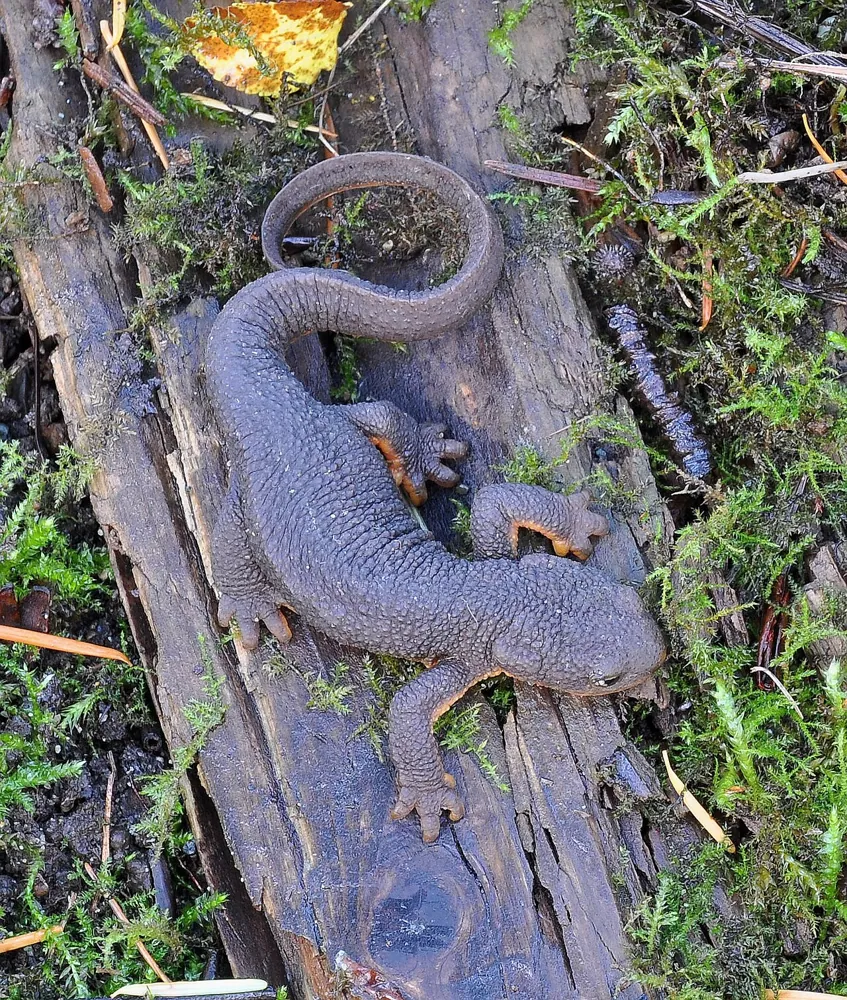
 Näin tunnistat sen
- Stocky body with a rounded snout.1
- Top ranges from light brown to olive or brownish-black.1
- Underside, including the head, legs and tail, is orange to yellow.1
- Skin is granular, but males are smooth-skinned during the breeding season.1
- Adults are 11 to 18 cm long overall, including the tail.1
Sekoitetaan usein: The California newt (Taricha torosa) looks similar. The rough-skinned newt has smaller eyes, yellow irises, V-shaped tooth patterns and uniformly dark eyelids. During breeding season, males have large swollen vent lobes and cornified toe pads, which separate them from females.1
Myrkkyvoima
Sen iho on myrkyllinen. Siihen on vaarallista koskea, sitä on vaarallista nuolla tai syödä.
Mitä sen myrkky tekee, jos siihen koskee tai sen syö?
This animal is poisonous rather than venomous, so it does not bite or sting. Its skin produces tetrodotoxin (TTX), a neurotoxin that attacks the nerves. It blocks the sodium channels that nerves need to send signals. This can cause paralysis and death by asphyxiation, which means the person cannot breathe.1
Kuinka vaarallinen se on ihmisille?
Vaara ihmisille: Hyvin vaarallinenSe voi tappaa ihmisen, joka ei saa hoitoa.The toxin is mainly dangerous if the newt is eaten. Some people have had skin irritation after handling the newt, especially if they touch their eyes without washing their hands first. In 1979, a 29-year-old man from Oregon died after eating one. Some newts make enough toxin to kill several adult humans.1
Mitä se tekee, kun se pelästyy?
It gives off an acrid smell that warns animals to stay away.1
 Jos joku koski siihen tai söi sitä
- Jos joku on koskenut sellaiseen: pese kädet hyvin äläkä koske silmiin tai suuhun. Jos lapsi tai lemmikki on nuollut tai syönyt sellaisen: soita Myrkytystietokeskukseen tai hätänumeroon.
Soita aina ensin hätänumeroon (112, 000, 911). Nämä ovat yleisiä ensiapuohjeita, eivät lääketieteellisiä neuvoja. Ensiavun perusteet
 Pysy turvassa
- Älä koskaan koske villieläimeen, pyydystä sitä tai kiusaa sitä, ei edes pientä, eikä silloinkaan, kun se näyttää nukkuvan tai olevan kuollut.
- Anna sille tilaa. Jos kohtaat sellaisen, pysy rauhallisena, peräänny hitaasti ja anna sen mennä omaa tietään.
- Jos kosketit sitä tai söit sitä: älä hiero silmiäsi tai suutasi, pese kätesi ja hae lääkärin apua.
Se ei ole sinun perässäsi. Sen myrkky on olemassa vain siksi, ettei kukaan söisi sitä. Lisää turvallisuudesta
Missä päin maailmaa?
Kuinka iso se on?
Kuinka pitkä se on?
 yhtä pitkä kuin 6 rakennuspalikkaa rivissä
Kuinka iso Rough-skinned newt on SINUUN verrattuna?
Pelkkää matematiikkaa selaimessasi. Mitään ei tallenneta eikä lähetetä minnekään.
Kuinka nopea se on?


Faktat
Some common garter snakes can eat rough-skinned newts and survive. They are the only known animals today able to do this.1
A garter snake tests a newt's toxin level by partly swallowing it, then either swallows it fully or lets it go.1
Newts can detect the chemical signature of a snake that has digested one of their kind, and they move away from it.1
The toxin is made by the newt's skin microbiome, meaning the bacteria living on its skin.1
The newt and the garter snake are an example of an evolutionary arms race. Each change in one species drives change in the other.1
The toxin also appears in pufferfish and other marine animals, which share the same nerve-blocking effect.1
Myrkkyasiantuntijoille
Mistä tiedot ovat peräisin
- Rough-skinned newt (Wikipedia (CC BY-SA 4.0))
- Taricha granulosa (iNaturalist): nimet ja luokittelu.
- Venom Wiki: vaarataso, tyypillinen koko ja nopeusarvio ovat omia arvioitamme. Katso, miten laskemme ne: Näin arvioimme vaaran.
Jokaisella tämän sivun tiedolla on numero, joka viittaa sen lähteeseen. Jos jokin meni pieleen, anteeksi, olemme eläinfaneja emmekä tiedelehti. Kerro meille osoitteeseen [email protected], niin korjaamme sen.
 Skorpionilla on nälkä! Venom Wiki on yhden miehen projekti: ilmainen, ilman mainoksia ja ilman seurantaa. Pieni tippi auttaa pitämään sen verkossa.Ruoki skorpioni
Lisää samasta ryhmästä: Nuolimyrkkysammakot, konnat ja vesiliskot
 Cane toadNuolimyrkkysammakot, konnat ja vesiliskotVaatii lääkäriäÄlä koske
 Strawberry poison-dart frogNuolimyrkkysammakot, konnat ja vesiliskotSattuu vainÄlä koske
 California newtNuolimyrkkysammakot, konnat ja vesiliskotVoi tappaaÄlä koske
 Colorado River toadNuolimyrkkysammakot, konnat ja vesiliskotVaatii lääkäriäÄlä koske
 Panamanian golden frogNuolimyrkkysammakot, konnat ja vesiliskotVaatii lääkäriäÄlä koske
 Eastern newtNuolimyrkkysammakot, konnat ja vesiliskotSattuu vainÄlä koske
 Terciopelo
 Eastern coral snake
 Eastern diamondback rattlesnake
 Eyelash viper
 Timber rattlesnake
 Western diamondback rattlesnake
.JPG)