
 Afrique
 Asie
Asie Europe
 Amérique du Sud
 Australie et Océanie
 Antarctique
 Océan Pacifique
 Océan Atlantique
 Océan Indien
 Océan Arctique
 Mer Méditerranée
 Mer Rouge
 Mer des Caraïbes
 Mer de Corail
 Mer de Chine méridionale
 Mer des Philippines
 Mer d'Andaman
 Mer du Nord
 Mer de Timor et d'Arafura
 Golfe du Bengale
 Golfe de Californie
Giant silkworm moth caterpillar
 Poils urticants
This is the caterpillar of a large moth from South America, the giant silk moth. The caterpillar is famous for its venom, which is one of the most dangerous of any caterpillar. It lives in southern Brazil and nearby countries, and it has caused many deaths.1
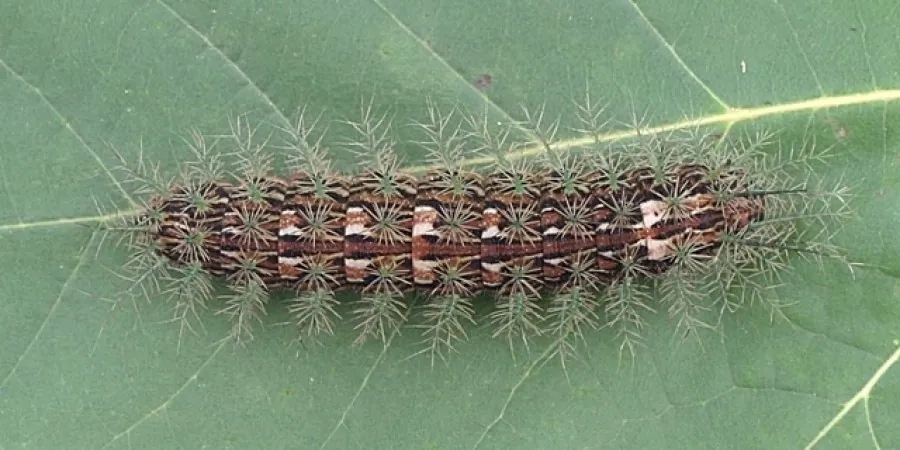
 Comment le reconnaître
Puissance du venin
De minuscules poils se cassent dans la peau et piquent.
Que fait son venin ?
The venom is held in sacs at the base of each spine and flows through the hollow spines into the wound. It causes disseminated intravascular coagulation, which stops the blood from clotting and leads to bleeding into the tissues and internal organs. After an initial phase of headache, fever, vomiting and malaise, a severe bleeding disorder can develop after about 24 hours.1
À quel point est-il dangereux pour l'homme ?
Danger pour l'homme: Très dangereuxIl peut tuer une personne qui n'est pas soignée.The caterpillar has been responsible for at least 500 deaths. In Brazil, 42,264 accidents were recorded between 2007 and 2017, of which 248 were severe and five were fatal. The reported death rate is 2.5%. Most victims were male (63%), and 45% were between 0 and 21 years old.1
 Bonne nouvelle : les médecins ont un médicament (antivenin) ou un traitement pour ça.1
Que fait-il quand il a peur ?
Its body is covered in hairs and spines that break off easily and inject venom into anything that touches them.1
 Si tu touches ses poils
- A study by Dr Robert Norris states that stings and abrasions should be treated with antifibrinolytics. If blood products are needed, they must be given with care so they do not worsen the bleeding. An antiserum made by the Butantan Institute in São Paulo reverses the clotting problems, and patients treated with it recover quickly.1
- Pour les poils urticants de chenille : enlève-les avec du ruban adhésif, puis lave la peau. Ne frotte pas.
- Pour les morsures : lave et refroidis. Va voir un médecin si la personne se sent mal ou saigne facilement.
Appelle toujours d'abord ton numéro d'urgence (112, 000, 911). Ce sont des conseils généraux de premiers secours, pas un avis médical. Les bases des premiers secours
 Reste en sécurité
- Ne touche, n'attrape et n'embête jamais un animal sauvage, même petit, et même s'il a l'air endormi ou mort.
- Laisse-lui de la place. Si tu en croises un, reste calme, recule doucement et laisse-le passer son chemin.
- Si tu touches ses poils : reste calme, ne bouge pas, appelle ton numéro d'urgence (112, 000, 911) ou va vite à l'hôpital. Souviens-toi de quoi il avait l'air, une photo aide.
Il ne t'en veut pas. Il utilise son venin pour attraper sa nourriture ou se protéger, et il préfère de loin se cacher. Plus d'infos pour rester en sécurité
Où dans le monde ?
Quelle taille fait-il ?
Quelle longueur fait-il ?
 aussi long que 2 briques de construction en ligne
 plus lent qu'un escargot de jardin
Quelle taille fait Giant silkworm moth caterpillar comparé à TOI ?
Juste des calculs dans ton navigateur. Rien n'est enregistré ni envoyé nulle part.
À quelle vitesse va-t-il ?

Faits
Guinness World Records lists it as the most venomous caterpillar in the world.1
Before studies of Lonomia caterpillars, it was not known that caterpillars could produce enough toxin to kill a person.1
Its venom contains anti-clotting agents that have been studied for possible medical uses, including a component called Lopap.1
The first known epidemic happened in an farming community in Rio Grande do Sul, where victims had only handled leafy branches before their symptoms began.1
Only two of the 26 Lonomia species found in the Americas, L. obliqua and L. achelous, have caused severe reactions.1
Démêle le vrai du faux
Idée reçue : Caterpillars cannot produce toxins strong enough to kill a person.
Vérité : This caterpillar's venom can kill. At least 500 deaths have been linked to it.1
D'où viennent les faits
- Lonomia obliqua (Wikipedia (CC BY-SA 4.0))
- Lonomia obliqua (iNaturalist): noms et classification.
- Venom Wiki: le niveau de danger, la taille typique et la vitesse estimée sont les nôtres. Regarde comment on les calcule : Comment on évalue le danger.
Chaque fait sur cette page a un numéro qui renvoie à sa source. Si on s'est trompés, désolés, on est des fans d'animaux, pas une revue scientifique. Dis-le-nous à [email protected] et on corrigera.
 Le scorpion a faim ! Venom Wiki est le projet d'une seule personne : gratuit, sans pub et sans traceurs. Un petit pourboire aide à le garder en ligne.Nourris le scorpion
Plus du même groupe: Chenilles et insectes
 Vinchuca kissing bugChenilles et insectesNécessite un médecin
 Venezuelan fire caterpillarChenilles et insectesPeut tuerNe pas toucher
 Pararama caterpillarChenilles et insectesNécessite un médecinNe pas toucher
 Rhodnius kissing bugChenilles et insectesNécessite un médecin
 Yellowtail moth of the mangrovesChenilles et insectesFait juste malNe pas toucher
 Milkweed assassin bugChenilles et insectesInoffensif
Vit aussi en: Amérique du Sud
 Phyllobate terribleGrenouilles toxiques, crapauds et tritonsMortelNe pas toucher
 Fer-de-lance d'Amérique centraleVipères à fossettesMortel
 Brazilian wandering spiderAraignéesPeut tuer
 Eyelash viperVipères à fossettesPeut tuer
 Golden lanceheadVipères à fossettesPeut tuer
 South American bushmasterVipères à fossettesPeut tuer