
 África
 Asia
Asia Europa
 América do Sur
 Australia e Oceanía
 Antártida
 Océano Pacífico
 Océano Atlántico
 Océano Índico
 Océano Glacial Ártico
 Mar Mediterráneo
 Mar Vermello
 Mar Caribe
 Mar do Coral
 Mar da China Meridional
 Mar de Filipinas
 Mar de Andamán
 Mar do Norte
 Mar de Timor e de Arafura
 Golfo de Bengala
 Golfo de California
Australian box jellyfish
 Tentáculos que pican
The Australian box jellyfish is one of the most venomous animals in the world. It lives in the warm coastal waters of northern Australia and nearby parts of Southeast Asia. Its sting can cause extreme pain and can be deadly, so it is important to know how to recognise it and what to do.1



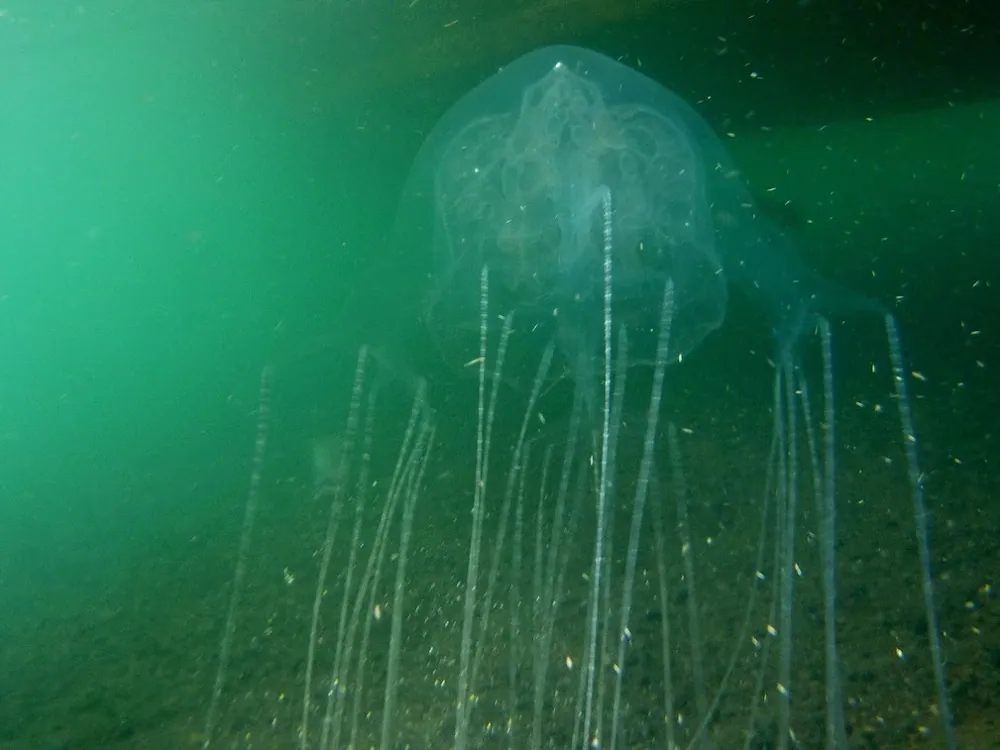
 Como recoñecelo
- The bell is box-shaped and pale blue, with faint markings.1
- The bell is usually about 16 cm across and can reach 35 cm.1
- A cluster of 15 tentacles hangs from each of the four corners of the bell.1
- It is almost completely transparent, so it is very hard to see in the water.1
- When hunting, its tentacles can stretch to about 3 m long.1
Poder da pezoña
Miles de pequenas células urticantes disparan cando algo as toca.
Que fai a súa pezoña?
Its venom makes cells porous, so potassium leaks out of them. This causes hyperkalemia, a dangerous build-up of potassium in the blood, which can lead to heart and circulation failure. Stings cause excruciating pain and a burning feeling, and an untreated victim can die within two to five minutes.1
Que perigoso é para as persoas?
Perigo para as persoas: MortalUn dos animais máis perigosos do mundo.At least 64 deaths have been recorded in Australia. Most deaths in recent decades have been children, because their smaller bodies are at higher risk. Most stings are mild, but one animal's venom is said to be enough to kill 60 adults.1
 Boas novas: os médicos teñen un medicamento (antiveleno) ou un tratamento para isto.1
 Se pica
- Diluted acetic acid, such as vinegar, is the recommended treatment, because it deactivates stinging cells that have not yet fired. Some North American toxicologists advise applying it for around 30 seconds. Pressure bandages are no longer recommended, because they can cause more stinging cells to fire.1
- Sae da auga e quita os tentáculos que queden (con luvas ou cun pano).
- Para as cubomedusas tropicais: bota vinagre nas picaduras durante polo menos 30 segundos, pide axuda e prepárate para facer a RCP. Para as carabelas portuguesas e a maioría das outras: aclara con auga de mar e despois con auga quente para a dor.
Chama sempre primeiro ao teu número de emerxencias (112, 000, 911). Isto son consellos xerais de primeiros auxilios, non consello médico. Primeiros auxilios básicos
 Mantente a salvo
- Nunca toques, collas nin molestes un animal salvaxe, aínda que sexa pequeno e aínda que pareza durmido ou morto.
- Déixalle espazo. Se atopas un, mantén a calma, recúa amodo e déixao ir polo seu camiño.
- Se un te pica: mantén a calma, non te movas, chama ao teu número de emerxencias (112, 000, 911) ou vai rápido a un hospital. Lembra como era, unha foto axuda.
Non vai a por ti. Usa a súa pezoña para cazar comida ou para defenderse, e prefire con moito agocharse. Máis sobre como estar a salvo
En que lugar do mundo?
Que tamaño ten?
Canto mide?
 mide coma 11 pezas de construción de xoguete en fila
 podería nadar o longo dunha piscina grande (50 m) en 26 segundos
Que tamaño ten Australian box jellyfish comparado CONTIGO?
Só son contas no teu navegador. Non se garda nin se envía nada a ningures.
Que rápido é?
Datos
It has four clusters of eyes with 24 eyes in total, even though it has no central nervous system.1
Its tentacles are covered with millions of stinging cells that fire microscopic darts carrying venom.1
Its only known predators are green sea turtles and leatherback turtles, whose thick skin protects them from its stings.1
It is attracted to blue light, which makes it stream out its tentacles, while black objects make it move away.1
From certain angles, its pale blue bell looks like a human head or skull.1
Its name, 'hand of death', comes from its four appendages, which look like hands.1
Desmontamitos
Mito: Pressure bandages are the best first aid for a box jellyfish sting.
Verdade: Pressure bandages were used until 2005, but health authorities no longer recommend them because they can trigger more venom release. Diluted vinegar is the recommended treatment.1
Para expertos en pezoñas
- Nome científico
- Chironex fleckeri
- Grupo
- Medusas e outros picadores do mar
- Familia
- Chirodropidae2
- Orde
- Chirodropida
- Continentes
- Océano Índico, Océano Pacífico, Mar do Coral, Mar da China Meridional, Mar de Filipinas, Mar de Timor e de Arafura, Os océanos
- Crías
- It lays eggs, and fertilised eggs develop into tiny polyps that bud into new young jellyfish, which return to the ocean.1
- Perigo para as persoas
- 5 / 5: Mortal3
De onde veñen os datos
- Chironex fleckeri (Wikipedia (CC BY-SA 4.0))
- Chironex fleckeri (iNaturalist): nomes e clasificación.
- Venom Wiki: o nivel de perigo, o tamaño típico e a velocidade estimada son nosos. Mira como os calculamos: Como valoramos o perigo.
Cada dato desta páxina ten un número que leva á súa fonte. Se nos equivocamos nalgo, sentímolo, somos fans dos animais, non unha revista científica. Dínolo en [email protected] e arranxarémolo.
 O escorpión ten fame! Venom Wiki é un proxecto dunha soa persoa: gratis, sen anuncios e sen rastrexadores. Unha pequena propina axuda a mantelo en liña.Dálle de comer ao escorpión
Máis do mesmo grupo: Medusas e outros picadores do mar
 Irukandji jellyfishMedusas e outros picadores do marPode matarNon tocar
 Portuguese man o' warMedusas e outros picadores do marPrecisa un médicoNon tocar
 Lion's mane jellyfishMedusas e outros picadores do marSó doeNon tocar
 Moon jellyfishMedusas e outros picadores do marInofensivo
 Common kingslayerMedusas e outros picadores do marPode matarNon tocar
 Hell's fire anemoneMedusas e outros picadores do marPrecisa un médicoNon tocar
Tamén vive en: Océano Índico
 Geography coneCaracois cono e polbosMortal
 Greater blue-ringed octopusCaracois cono e polbosMortal
 Southern blue-ringed octopusCaracois cono e polbosMortal
 Hawksbill sea turtleOutros animais velenososPode matar
 Reef stonefishPeixes pezoñentosPode matarNon tocar
 Crown-of-thorns starfishOurizos, estrelas e vermesPrecisa un médicoNon tocar