
 África
 Asia
Asia Europa
 América do Sur
 Australia e Oceanía
 Antártida
 Océano Pacífico
 Océano Atlántico
 Océano Índico
 Océano Glacial Ártico
 Mar Mediterráneo
 Mar Vermello
 Mar Caribe
 Mar do Coral
 Mar da China Meridional
 Mar de Filipinas
 Mar de Andamán
 Mar do Norte
 Mar de Timor e de Arafura
 Golfo de Bengala
 Golfo de California
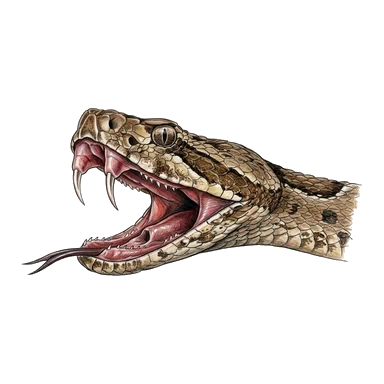
Brown tree snake
 Morde
MordeThe brown tree snake is a slender, night-active snake that climbs well and hunts in trees and on the ground. It lives in coastal northern and eastern Australia, eastern Indonesia, Papua New Guinea and nearby islands. It is famous for harming wildlife on the island of Guam, where it was introduced by accident.1
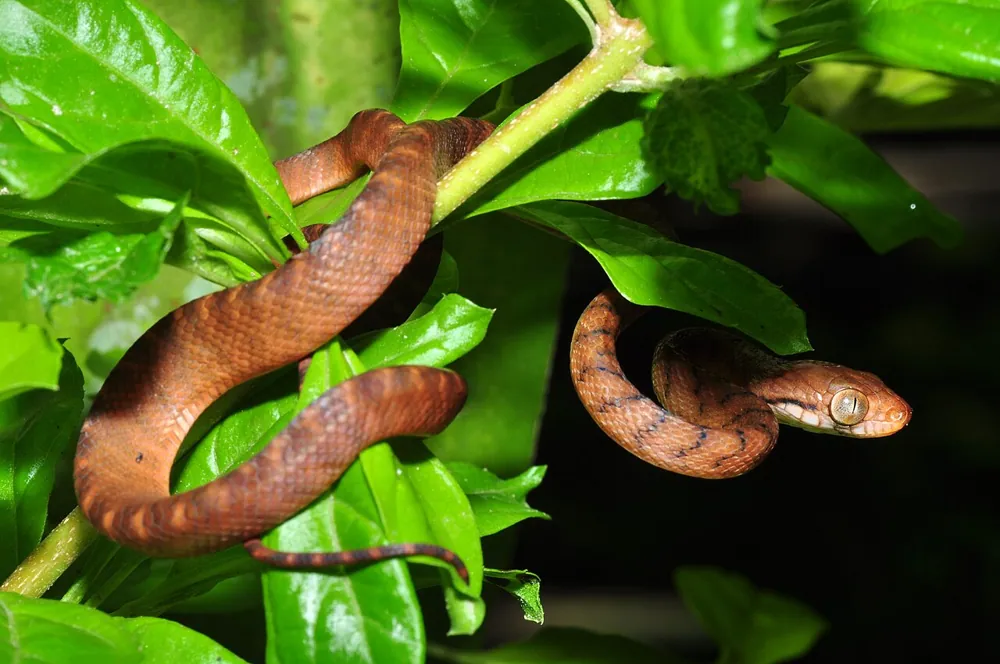
 Como recoñecelo
Poder da pezoña
A pezoña sae polos seus cairos ou dentes cando morde.
Que fai a súa pezoña?
It has two small, grooved fangs at the back of the mouth, so venom flows into the bite slowly rather than being injected in one go. The venom is weakly neurotoxic, meaning it affects the nerves, and may also damage cells locally. Its effects are trivial for adults, and it is mainly used to subdue lizards.1
Que perigoso é para as persoas?
Perigo para as persoas: DolorosoPode doer moito, pero case nunca é grave.The snake is considered aggressive when threatened but not dangerous to adult humans. Serious medical consequences have been limited to children, who are more affected because of their low body mass. On Guam, it has caused widespread power outages, pet losses and emotional distress to residents.1
Que fai cando ten medo?
When threatened it is highly aggressive, lunging and striking at the attacker repeatedly.1
 Se morde
- Lava a mordedura, mantén a persoa tranquila e busca axuda médica. Algunhas especies (como a boomslang) poden ser mortais horas despois.
Chama sempre primeiro ao teu número de emerxencias (112, 000, 911). Isto son consellos xerais de primeiros auxilios, non consello médico. Primeiros auxilios básicos
 Mantente a salvo
- Nunca toques, collas nin molestes un animal salvaxe, aínda que sexa pequeno e aínda que pareza durmido ou morto.
- Déixalle espazo. Se atopas un, mantén a calma, recúa amodo e déixao ir polo seu camiño.
- Se un te morde: mantén a calma, non te movas, chama ao teu número de emerxencias (112, 000, 911) ou vai rápido a un hospital. Lembra como era, unha foto axuda.
Non vai a por ti. Usa a súa pezoña para cazar comida ou para defenderse, e prefire con moito agocharse. Máis sobre como estar a salvo
En que lugar do mundo?
Que tamaño ten?
Canto mide?
 mide coma 4 gatos domésticos do fociño á cola
 mide coma 11 bananas postas en fila
 podería percorrer 100 metros en 60 segundos (o humano máis rápido precisa 9,6)
Que tamaño ten Brown tree snake comparado CONTIGO?
Só son contas no teu navegador. Non se garda nin se envía nada a ningures.
Que rápido é?


Datos
Snakes on Guam have been seen moving up large smooth cylinders using a method called 'lasso locomotion', which had not been recorded in snakes before. It is tiring, so they move slowly and stop often.1
On Guam, where prey is plentiful and there are few predators, the snakes have grown to 3 m, much longer than their typical 1 to 2 m in their native range.1
Shortly after World War II, the snake reached Guam by accident, probably as a stowaway in ship cargo or in aircraft landing gear. Its numbers then grew to unprecedented levels.1
Trained dogs are used on Guam to find and remove snakes before cargo and transport vessels leave the island.1
Female brown tree snakes have been seen performing courtship behaviours normally used by males, such as tongue-flicking and head-jerking.1
Brown tree snakes can survive for long periods without food.1
Desmontamitos
Mito: The brown tree snake is a deadly snake that is dangerous to adults.
Verdade: It is not considered dangerous to adult humans. Its venom is weak and serious effects have mainly been seen in young children.1
Para expertos en pezoñas
- Nome científico
- Boiga irregularis
- Grupo
- Serpes con cairos traseiros
- Familia
- Colubridae2
- Orde
- Squamata
- Continentes
- Asia, Australia e Oceanía
- Crías
- The female lays 4 to 12 oblong eggs with leathery shells and may lay up to two clutches a year. The eggs hatch about 90 days later.1
- Perigo para as persoas
- 2 / 5: Doloroso3
De onde veñen os datos
- Brown tree snake (Wikipedia (CC BY-SA 4.0))
- Boiga irregularis (iNaturalist): nomes e clasificación.
- Venom Wiki: o nivel de perigo, o tamaño típico e a velocidade estimada son nosos. Mira como os calculamos: Como valoramos o perigo.
Cada dato desta páxina ten un número que leva á súa fonte. Se nos equivocamos nalgo, sentímolo, somos fans dos animais, non unha revista científica. Dínolo en [email protected] e arranxarémolo.
 O escorpión ten fame! Venom Wiki é un proxecto dunha soa persoa: gratis, sen anuncios e sen rastrexadores. Unha pequena propina axuda a mantelo en liña.Dálle de comer ao escorpión
Máis do mesmo grupo: Serpes con cairos traseiros
 Tiger keelbackSerpes con cairos traseirosPode matar
 Red-necked keelbackSerpes con cairos traseirosPrecisa un médico
 Green cat snakeSerpes con cairos traseirosSó doe
 Mangrove snakeSerpes con cairos traseirosSó doe
 Asian vine snakeSerpes con cairos traseirosInofensivo
 Golden tree snakeSerpes con cairos traseirosInofensivo
 Deathstalker
 Indian cobra
 Indian saw-scaled viper
 King cobra
 Puff adder
 Russell's viper
_(8387580552).jpg)