
 Afirka
 Asiya
Asiya Turai
Turai Kudancin Amurka
 Ostareliya da Oceania
 Antatika
 Tekun Pasifik
 Tekun Atlantika
 Tekun Indiya
 Tekun Arctic
 Bahar Rum
 Bahar Maliya
 Tekun Caribbean
 Tekun Coral
 Tekun Kudancin China
 Tekun Philippines
 Tekun Andaman
 Tekun Arewa
 Tekun Timor da Arafura
 Gaɓar Tekun Bengal
 Gaɓar Tekun California
Giant silkworm moth caterpillar
 Gashi masu harbi
This is the caterpillar of a large moth from South America, the giant silk moth. The caterpillar is famous for its venom, which is one of the most dangerous of any caterpillar. It lives in southern Brazil and nearby countries, and it has caused many deaths.1
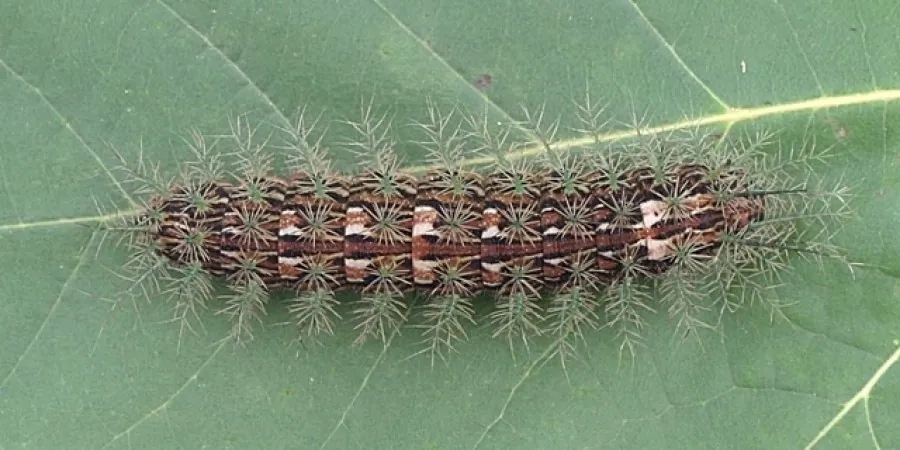
 Yadda za ka gane shi
Ƙarfin dafi
Ƙananan gashi ko ƙaya suna karyewa a cikin fata kuma suna harbi.
Me dafinsa yake yi?
The venom is held in sacs at the base of each spine and flows through the hollow spines into the wound. It causes disseminated intravascular coagulation, which stops the blood from clotting and leads to bleeding into the tissues and internal organs. After an initial phase of headache, fever, vomiting and malaise, a severe bleeding disorder can develop after about 24 hours.1
Yaya haɗarinsa yake ga mutane?
Haɗari ga mutane: Mai haɗari sosaiYana iya kashe mutumin da bai samu magani ba.The caterpillar has been responsible for at least 500 deaths. In Brazil, 42,264 accidents were recorded between 2007 and 2017, of which 248 were severe and five were fatal. The reported death rate is 2.5%. Most victims were male (63%), and 45% were between 0 and 21 years old.1
 Labari mai daɗi: likitoci suna da magani (antivenom) ko jinya don wannan.1
Me yake yi idan ya ji tsoro?
Its body is covered in hairs and spines that break off easily and inject venom into anything that touches them.1
 Idan ka taɓa gashinsa
- A study by Dr Robert Norris states that stings and abrasions should be treated with antifibrinolytics. If blood products are needed, they must be given with care so they do not worsen the bleeding. An antiserum made by the Butantan Institute in São Paulo reverses the clotting problems, and patients treated with it recover quickly.1
- Don gashin tsutsa mai harbi: ka cire su da tef mai liƙi, sannan ka wanke fatar. Kada ka goga.
- Don cizo: ka wanke kuma ka sanyaya. Ka nemi taimakon likita idan mutumin bai ji daɗi ba ko yana zubar da jini cikin sauƙi.
Kullum ka fara kiran lambar gaggawa (112, 000, 911). Wannan jagorar agajin gaggawa ce ta gaba ɗaya, ba shawarar likita ba. Muhimman abubuwan agajin gaggawa
 Kiyaye lafiya
- Kada ka taɓa, kada ka kama, kada ka tsokani dabbar daji, ko da ƙarama ce, kuma ko da tana kama da tana barci ko ta mutu.
- Ka ba shi sarari. Idan ka haɗu da ɗaya, ka natsu, ka koma baya a hankali kuma ka bar shi ya bi hanyarsa.
- Idan ka taɓa gashinsa: ka natsu, ka zauna ba motsi, ka kira lambar gaggawarka (112, 000, 911) ko ka je asibiti da sauri. Ka tuna yadda yake, hoto yana taimakawa.
Ba ya neman cutar da kai. Yana amfani da dafinsa don kama abinci ko don kare kansa, kuma ya fi son ya ɓuya. Ƙarin bayani game da kiyaye lafiya
Yaya girmansa yake?
Yaya tsawonsa yake?
 tsawon tubalan gini na wasa 2 a jere
 ya fi katantanwar lambu jinkiri
Yaya girman Giant silkworm moth caterpillar yake idan aka kwatanta da KAI?
Lissafi ne kawai a cikin burauzarka. Ba a adana komai ko a aika ko'ina.
Yaya saurinsa yake?

Bayanai
Guinness World Records lists it as the most venomous caterpillar in the world.1
Before studies of Lonomia caterpillars, it was not known that caterpillars could produce enough toxin to kill a person.1
Its venom contains anti-clotting agents that have been studied for possible medical uses, including a component called Lopap.1
The first known epidemic happened in an farming community in Rio Grande do Sul, where victims had only handled leafy branches before their symptoms began.1
Only two of the 26 Lonomia species found in the Americas, L. obliqua and L. achelous, have caused severe reactions.1
Mai karya tatsuniya
Tatsuniya: Caterpillars cannot produce toxins strong enough to kill a person.
Gaskiya: This caterpillar's venom can kill. At least 500 deaths have been linked to it.1
Inda bayanan suka fito
- Lonomia obliqua (Wikipedia (CC BY-SA 4.0))
- Lonomia obliqua (iNaturalist): sunaye da rarrabuwa.
- Venom Wiki: matakin haɗari, girman al'ada da ƙiyasin sauri namu ne. Ga yadda muke lissafa su: Yadda muke auna haɗari.
Kowane bayani a wannan shafi yana da lamba da ke nuna tushensa. Idan mun yi kuskure, ka yi haƙuri, mu masoya dabbobi ne, ba mujallar kimiyya ba. Ka gaya mana a [email protected] kuma za mu gyara.
 Kunama tana jin yunwa! Venom Wiki aikin mutum ɗaya ne: kyauta, ba talla kuma ba masu bin diddigi. Ɗan ƙaramin kyauta yana taimakawa wajen ci gaba da kasancewarsa a intanet.Ciyar da kunama
Ƙari daga rukuni ɗaya: Tsutsotsi da ƙwari
 Vinchuca kissing bugTsutsotsi da ƙwariYana buƙatar likita
 Venezuelan fire caterpillarTsutsotsi da ƙwariNa iya kisaKada ka taɓa
 Pararama caterpillarTsutsotsi da ƙwariYana buƙatar likitaKada ka taɓa
 Rhodnius kissing bugTsutsotsi da ƙwariYana buƙatar likita
 Yellowtail moth of the mangrovesTsutsotsi da ƙwariCiwo kawaiKada ka taɓa
 Milkweed assassin bugTsutsotsi da ƙwariMarar lahani
 Golden poison frog
 Terciopelo
 Brazilian wandering spider
 Eyelash viper
 Golden lancehead
 South American bushmaster