
 Afrika
 Ázsia
Ázsia Európa
 Dél-Amerika
 Ausztrália és Óceánia
 Antarktisz
 Csendes-óceán
 Atlanti-óceán
 Indiai-óceán
 Északi-sarki-óceán
 Földközi-tenger
 Vörös-tenger
 Karib-tenger
 Korall-tenger
 Dél-kínai-tenger
 Fülöp-tenger
 Andamán-tenger
 Északi-tenger
 Timor-tenger és Arafura-tenger
 Bengáli-öböl
 Kaliforniai-öböl
Black long-spined urchin
 Mérges tüskék
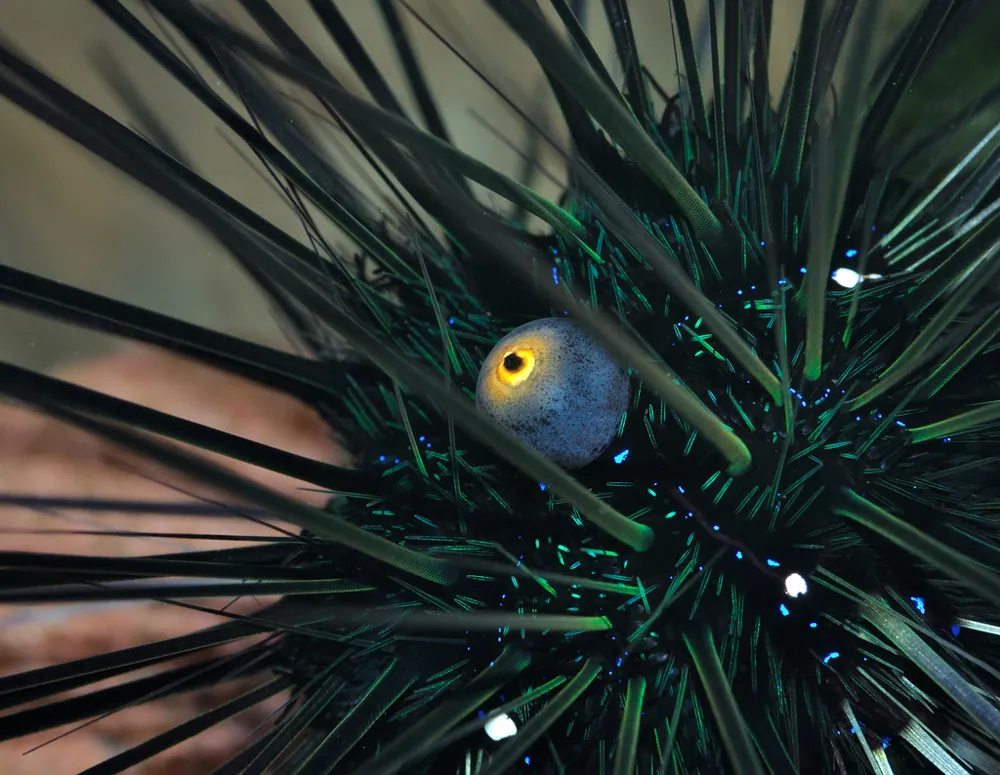
The black long-spined urchin is a sea urchin with very long, hollow spines. It lives on coral reefs, sand flats and seagrass beds across the Indo-Pacific, and it is one of the most widespread sea urchins in that region. Its spines can deliver a mild venom, so it is best to watch where you put your feet.1


 Hogyan ismerd fel
- Black, near-spherical body (test) with extremely long, narrow, hollow spines, often black but sometimes brown-banded1
- Five white spots on the body, which separate it from other Diadema species1
- A bright orange ring around the periproctal cone (the 'anal cone'), which is often mistaken for an eye1
- Bluish spots on the genital plates and a line of blue spots along the body1
- Adults are no more than 70 mm across the body and about 40 mm high1
Gyakran összetévesztik ezzel: Other Diadema species are similar in shape and spines, but they lack the five white spots that mark this species. Its orange ring and blue spots also help to tell it apart.1
Méregerő
A méreg az éles tüskékben van. Ha rálépsz vagy megfogod, fáj.
Mit tesz a mérge?
The spines are hollow and contain a mild venom. The toxin mostly causes swelling and pain, which spreads gradually over several hours. The venom is not fatal to humans. The spines themselves are a bigger problem, because they are brittle and needle-like, break off in flesh and are difficult to remove.1
Mennyire veszélyes az emberre?
Veszély az emberre: FájdalmasNagyon tud fájni, de szinte soha nem súlyos.The venom is only mild, and the species is not considered a serious threat to humans. Stepping on it can cause painful stings.1
Mit csinál, ha megijed?
When threatened by a sudden impact or by spines snapping, it rapidly flips its body over and 'runs' on the tips of its longest spines.1
 Ha a tüskéi megszúrnak
- Tedd a sebet forró vízbe, olyan forróba, amilyet a sérült égési sérülés nélkül kibír, és kérj orvosi segítséget a tüskék eltávolításához. Ne próbáld magad kiszedni őket.
Mindig először a segélyhívó számot hívd (112, 000, 911). Ez általános elsősegély-tájékoztató, nem orvosi tanács. Elsősegély alapjai
 Maradj biztonságban
- Soha ne érints meg, ne fogj meg és ne bosszants vadállatot, még ha kicsi is, és még ha alszik vagy döglöttnek tűnik is.
- Hagyj neki helyet. Ha találkozol eggyel, maradj nyugodt, lassan lépj hátra, és hagyd, hogy menjen a maga útján.
- Ha a tüskéi megszúrnak: maradj nyugodt, ne mozogj, hívd a segélyhívó számot (112, 000, 911), vagy juss el gyorsan kórházba. Jegyezd meg, hogyan nézett ki, egy fotó sokat segít.
Nem akar elkapni téged. A mérgét arra használja, hogy élelmet fogjon vagy megvédje magát, és sokkal szívesebben elbújik. Még több a biztonságról
Hol él a világban?
Mekkora?
Milyen hosszú?
Milyen nehéz?

 olyan hosszú, mint 2 játék építőkocka egy sorban
 lassabb egy éticsigánál
Mekkora Black long-spined urchin hozzád képest?
Csak matek a böngésződben. Semmit nem mentünk és nem küldünk el sehova.
Milyen gyors?

Tények
It can move 760 mm in just 7 seconds by rolling and walking on the tips of its spines.1
It has no eye, but it has a diffuse light-sensing system that lets it detect light levels and the size and colour of objects.1
In 2006, living specimens were found off Turkey, making it the first invasive Erythrean sea urchin recorded in the Mediterranean.1
Goose barnacles of the genus Microlepas are known to live on it as parasites.1
It is considered one of the oldest living species in its genus, Diadema.1
Tévhitromboló
Tévhit: Black long-spined urchins are deadly and their stings can kill people.
Az igazság: Their venom is mild and is not fatal to humans. The main problems are pain, swelling and spines that break off in the skin.1
Méregszakértőknek
- Tudományos név
- Diadema setosum
- Csoport
- Tengeri sünök, tengeri csillagok és férgek
- Család
- Diadematidae2
- Rend
- Diadematoida
- Kontinensek
- Indiai-óceán, Csendes-óceán, Vörös-tenger, Korall-tenger, Fülöp-tenger, Arab-tenger és Perzsa-öböl, Timor-tenger és Arafura-tenger, Bengáli-öböl, Az óceánok
- Kicsinyek
- It is a broadcast spawner, releasing eggs and sperm into the water. Spawning happens seasonally or year-round depending on the location, and in some places it follows the full moon.1
- Veszély az emberre
- 2 / 5: Fájdalmas3
Honnan származnak a tények
- Diadema setosum (Wikipedia (CC BY-SA 4.0))
- Diadema setosum (iNaturalist): nevek és rendszertan.
- Venom Wiki: a veszélyszint, a tipikus méret és a sebességbecslés a saját értékelésünk. Nézd meg, hogyan számoljuk ki: Hogyan értékeljük a veszélyt.
Ezen az oldalon minden tény mellett van egy szám, amely a forrására mutat. Ha valamit elrontottunk, bocsi, mi állatrajongók vagyunk, nem tudományos folyóirat. Írj nekünk ide: [email protected], és kijavítjuk.
 A skorpió éhes! A Venom Wiki egyszemélyes projekt: ingyenes, reklámok és nyomkövetés nélkül. Egy kis borravaló segít, hogy online maradjon.Etesd meg a skorpiót
Még több ugyanebből a csoportból: Tengeri sünök, tengeri csillagok és férgek
 Crown-of-thorns starfishTengeri sünök, tengeri csillagok és férgekOrvos kellNe nyúlj hozzá
 Flower urchinTengeri sünök, tengeri csillagok és férgekÖlni is tud
 Fire urchinTengeri sünök, tengeri csillagok és férgekOrvos kellNe nyúlj hozzá
 Bearded firewormTengeri sünök, tengeri csillagok és férgekCsak fájNe nyúlj hozzá
 BloodwormTengeri sünök, tengeri csillagok és férgekCsak fáj
 Bobbit wormTengeri sünök, tengeri csillagok és férgekCsak fáj
Itt is él:: Indiai-óceán
 Ausztrál kockamedúzaMedúzák és tengeri csalánozókHalálosNe nyúlj hozzá
 Földrajzi kúpcsigaKúpcsigák és polipokHalálos
 Nagy kékgyűrűs polipKúpcsigák és polipokHalálos
 Déli kékgyűrűs polipKúpcsigák és polipokHalálos
 Hawksbill sea turtleMás mérgező állatokÖlni is tud
 Irukandji jellyfishMedúzák és tengeri csalánozókÖlni is tudNe nyúlj hozzá