
 Afrika
 Ázsia
Ázsia Európa
 Dél-Amerika
 Ausztrália és Óceánia
 Antarktisz
 Csendes-óceán
 Atlanti-óceán
 Indiai-óceán
 Északi-sarki-óceán
 Földközi-tenger
 Vörös-tenger
 Karib-tenger
 Korall-tenger
 Dél-kínai-tenger
 Fülöp-tenger
 Andamán-tenger
 Északi-tenger
 Timor-tenger és Arafura-tenger
 Bengáli-öböl
 Kaliforniai-öböl
Chinese cobra
 Harapások
The Chinese cobra is a venomous snake from southern China and a few neighbouring countries and islands. It is one of the most common venomous snakes in China, and it has caused many snakebites there.1
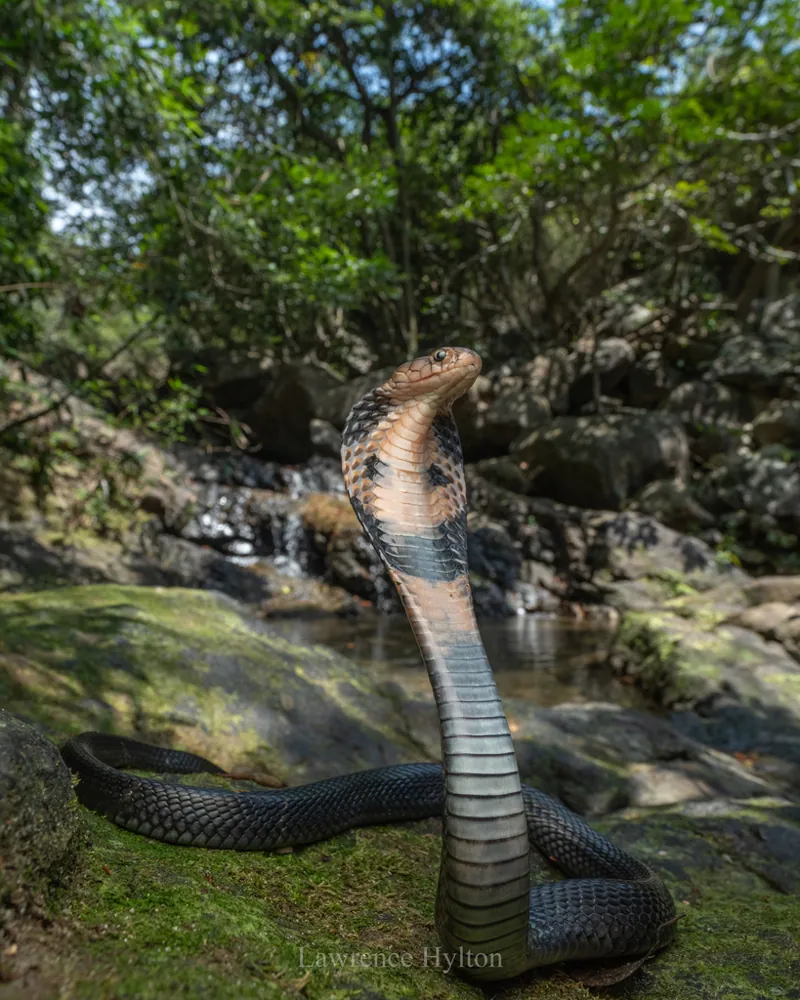
 Hogyan ismerd fel
- The hood marking varies. It can look like spectacles, a mask, a horseshoe or the letter O, and it is often linked to a pale throat area on at least one side.1
- The body is iridescent black, with widely spaced yellow double lines running across it.1
- The underside is pearl or slate-coloured. The upper colour is usually brown, grey or black, sometimes with narrow pale lines, which are especially clear in young snakes.1
- Typical adults are 1.2 to 1.5 metres long.1
Gyakran összetévesztik ezzel: It is sometimes confused with the monocled cobra (Naja kaouthia). The Chinese cobra has lower counts of ventral and subcaudal scales, which are the belly and tail scales. Sex should be taken into account when comparing these counts.1
Méregerő
Harapáskor a méreg a méregfogain vagy a fogain keresztül jut ki.
Mit tesz a mérge?
The Chinese cobra is a highly venomous member of the true cobras. Local symptoms at the bite include darkening of the wound, redness, swelling, pain and numbness, and blisters and necrosis (death of tissue) almost always follow. Necrosis can last for years after the person has otherwise recovered. Whole-body symptoms can include chest discomfort, fever, sore throat, difficulty swallowing, loss of voice, weak limbs, unsteady walking, lockjaw and difficulty breathing.1
Mennyire veszélyes az emberre?
Veszély az emberre: Nagyon veszélyesHa valaki nem kap kezelést, megölheti.It is one of the most common venomous snakes in China and has caused many snakebite incidents there. Deaths occasionally occur, but they are much rarer than they used to be.1
 Jó hír: az orvosoknak van rá gyógyszerük (ellenméreg) vagy kezelésük.1
Mit csinál, ha megijed?
Adults can be aggressive, and young snakes are more nervous and more likely to be aggressive, but it usually escapes to avoid a confrontation.1
 Ha harap
- Tartsd a sérültet mozdulatlanul és nyugodtan, vedd le a gyűrűket és a szoros dolgokat, és gyorsan juss el kórházba: a kezelés az ellenméreg.
- Ha méreg került a szembe, azonnal öblítsd ki sok tiszta vízzel.
Mindig először a segélyhívó számot hívd (112, 000, 911). Ez általános elsősegély-tájékoztató, nem orvosi tanács. Elsősegély alapjai
 Maradj biztonságban
- Soha ne érints meg, ne fogj meg és ne bosszants vadállatot, még ha kicsi is, és még ha alszik vagy döglöttnek tűnik is.
- Hagyj neki helyet. Ha találkozol eggyel, maradj nyugodt, lassan lépj hátra, és hagyd, hogy menjen a maga útján.
- Ha megharap: maradj nyugodt, ne mozogj, hívd a segélyhívó számot (112, 000, 911), vagy juss el gyorsan kórházba. Jegyezd meg, hogyan nézett ki, egy fotó sokat segít.
Nem akar elkapni téged. A mérgét arra használja, hogy élelmet fogjon vagy megvédje magát, és sokkal szívesebben elbújik. Még több a biztonságról
Hol él a világban?
Mekkora?
Milyen hosszú?
 olyan hosszú, mint 4 házimacska orrtól farokig
 olyan hosszú, mint 11 banán egymás után
 48 másodperc alatt futná le a 100 métert (a leggyorsabb embernek 9,6 kell)
Mekkora Chinese cobra hozzád képest?
Csak matek a böngésződben. Semmit nem mentünk és nem küldünk el sehova.
Milyen gyors?


Tények
Necrosis from a bite can continue for many years after the victim has recovered in general.1
A snake kept at a snake farm gave an average venom yield of about 250.8 mg, of which about 80 mg was dry weight.1
Its fangs are always erect and sit at the front of the upper jaw, as in other elapid snakes.1
Honnan származnak a tények
- Chinese cobra (Wikipedia (CC BY-SA 4.0))
- Naja atra (iNaturalist): nevek és rendszertan.
- Venom Wiki: a veszélyszint, a tipikus méret és a sebességbecslés a saját értékelésünk. Nézd meg, hogyan számoljuk ki: Hogyan értékeljük a veszélyt.
Ezen az oldalon minden tény mellett van egy szám, amely a forrására mutat. Ha valamit elrontottunk, bocsi, mi állatrajongók vagyunk, nem tudományos folyóirat. Írj nekünk ide: [email protected], és kijavítjuk.
 A skorpió éhes! A Venom Wiki egyszemélyes projekt: ingyenes, reklámok és nyomkövetés nélkül. Egy kis borravaló segít, hogy online maradjon.Etesd meg a skorpiót
 Pápaszemes kobra
 Királykobra
 Caspian cobra
 Common krait
 Malayan krait
 Many-banded krait
 Sárga skorpió
 Fűrészes vipera
 Puffogó vipera
 Láncos vipera
 Asian giant hornet
 Komodo dragon