
 Afrika
 Ázsia
Ázsia Európa
 Dél-Amerika
 Ausztrália és Óceánia
 Antarktisz
 Csendes-óceán
 Atlanti-óceán
 Indiai-óceán
 Északi-sarki-óceán
 Földközi-tenger
 Vörös-tenger
 Karib-tenger
 Korall-tenger
 Dél-kínai-tenger
 Fülöp-tenger
 Andamán-tenger
 Északi-tenger
 Timor-tenger és Arafura-tenger
 Bengáli-öböl
 Kaliforniai-öböl
Horn shark
 Mérges tüskék
The horn shark is a small shark with a blunt head and two tall fins, each with a large spine at the front. It lives along the western coast of North America, from California to the Gulf of California. It spends its days hidden in caves and crevices and hunts at night.1



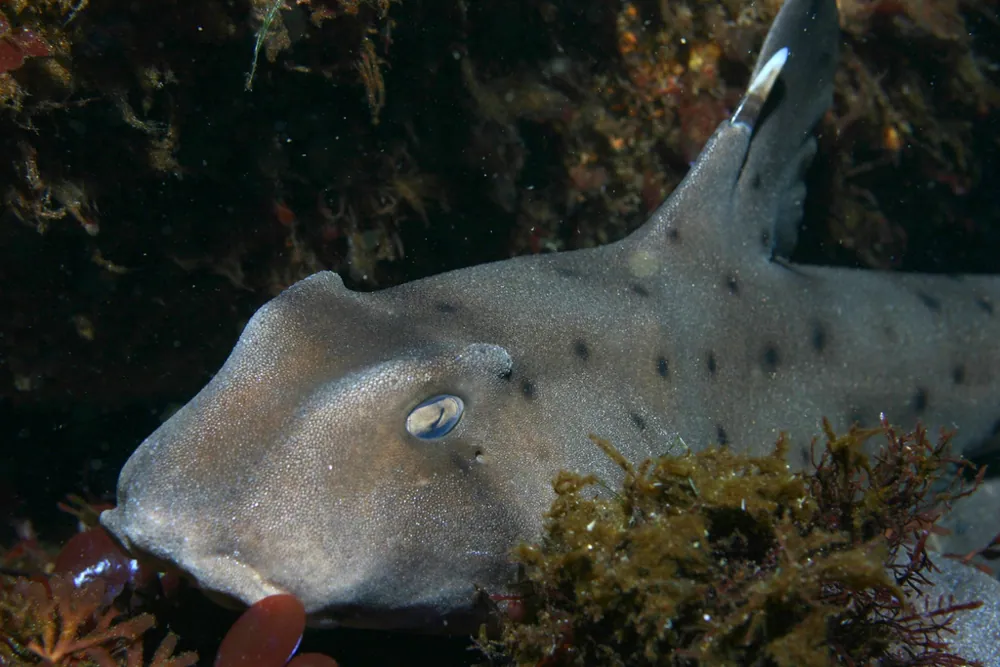
 Hogyan ismerd fel
Méregerő
A méreg az éles tüskékben van. Ha rálépsz vagy megfogod, fáj.
Mennyire veszélyes az emberre?
Veszély az emberre: EnyheOlyan, mint egy méhcsípés, vagy enyhébb. Az emberre gyakorlatilag ártalmatlan.Horn sharks are harmless unless they are harassed. They are not targeted by commercial or recreational fisheries, though small numbers are caught by accident.1
Mit csinál, ha megijed?
During the day they stay still in hiding places, but they swim away quickly if disturbed.1
 Ha a tüskéi megszúrnak
- Tedd a sebet forró vízbe, olyan forróba, amilyet a sérült égési sérülés nélkül kibír (próbáld ki a saját kezeddel), 30-90 percig. Kérj orvosi segítséget, főleg kőhalnál és tüskésrájánál.
Mindig először a segélyhívó számot hívd (112, 000, 911). Ez általános elsősegély-tájékoztató, nem orvosi tanács. Elsősegély alapjai
 Maradj biztonságban
- Soha ne érints meg, ne fogj meg és ne bosszants vadállatot, még ha kicsi is, és még ha alszik vagy döglöttnek tűnik is.
- Hagyj neki helyet. Ha találkozol eggyel, maradj nyugodt, lassan lépj hátra, és hagyd, hogy menjen a maga útján.
- Ha a tüskéi megszúrnak: maradj nyugodt, ne mozogj, hívd a segélyhívó számot (112, 000, 911), vagy juss el gyorsan kórházba. Jegyezd meg, hogyan nézett ki, egy fotó sokat segít.
Nem akar elkapni téged. A mérgét arra használja, hogy élelmet fogjon vagy megvédje magát, és sokkal szívesebben elbújik. Még több a biztonságról
Hol él a világban?
Mekkora?
Milyen hosszú?
 olyan hosszú, mint 2,5 házimacska orrtól farokig
 olyan hosszú, mint 7 banán egymás után
 9 másodperc alatt úszná át egy nagy uszoda hosszát (50 m)
Mekkora Horn shark hozzád képest?
Csak matek a böngésződben. Semmit nem mentünk és nem küldünk el sehova.
Milyen gyors?

Tények
For its size, the horn shark has the strongest bite of any shark that has been measured.1
To pull prey loose, the shark pushes its head up with a downward stroke of its tail. No other shark has been seen doing this.1
Large horn sharks that eat many sea urchins can have purple-stained teeth and fin spines.1
A Pacific angelshark was filmed trying to swallow a juvenile horn shark, but spat it out because of the spines.1
Horn sharks have only 148 electroreceptors (ampullae of Lorenzini), far fewer than most sharks, which may have over 2,000. They rely mainly on smell to find food.1
A dropped tooth takes about 4 weeks to be replaced.1
Méregszakértőknek
- Tudományos név
- Heterodontus francisci
- Csoport
- Mérges halak
- Család
- Heterodontidae2
- Rend
- Heterodontiformes
- Kontinensek
- Csendes-óceán, Kaliforniai-öböl, Az óceánok
- Kicsinyek
- They lay eggs. From February to April, females lay up to 24 eggs, two at a time, every 11 to 14 days, and wedge the egg cases into crevices to protect them.1
- Hogy áll a vadonban
- Insufficient data (IUCN); population listed as stable on 10 October 20251
- Veszély az emberre
- 1 / 5: Enyhe3
Honnan származnak a tények
- Horn shark (Wikipedia (CC BY-SA 4.0))
- Heterodontus francisci (iNaturalist): nevek és rendszertan.
- Venom Wiki: a veszélyszint, a tipikus méret és a sebességbecslés a saját értékelésünk. Nézd meg, hogyan számoljuk ki: Hogyan értékeljük a veszélyt.
Ezen az oldalon minden tény mellett van egy szám, amely a forrására mutat. Ha valamit elrontottunk, bocsi, mi állatrajongók vagyunk, nem tudományos folyóirat. Írj nekünk ide: [email protected], és kijavítjuk.
 A skorpió éhes! A Venom Wiki egyszemélyes projekt: ingyenes, reklámok és nyomkövetés nélkül. Egy kis borravaló segít, hogy online maradjon.Etesd meg a skorpiót
Még több ugyanebből a csoportból: Mérges halak
 Reef stonefishMérges halakÖlni is tudNe nyúlj hozzá
 Red lionfishMérges halakOrvos kellNe nyúlj hozzá
 Estuarine stonefishMérges halakÖlni is tudNe nyúlj hozzá
 Short-tail stingrayMérges halakÖlni is tud
 Striped eel catfishMérges halakÖlni is tudNe nyúlj hozzá
 Bluespotted ribbontail rayMérges halakOrvos kell
 Ausztrál kockamedúza
 Földrajzi kúpcsiga
 Nagy kékgyűrűs polip
 Japán gömbhal
 Déli kékgyűrűs polip
 Hawksbill sea turtle