
 Afrịka
 Eshia
Eshia Yurop
Yurop Ndịda Amerika
 Ọstrelia na Oshenia
 Antaktika
 Oké Osimiri Pasifik
 Oké Osimiri Atlantik
 Oké Osimiri India
 Oké Osimiri Arktik
 Osimiri Mediterenian
 Osimiri Uhie
 Osimiri Karibịan
 Osimiri Coral
 Osimiri Ndịda China
 Osimiri Filipin
 Osimiri Andaman
 Osimiri Ugwu (North Sea)
 Osimiri Timor na Arafura
 Ọwara Bengal
 Ọwara California
Blotched palm pitviper
 Ịta
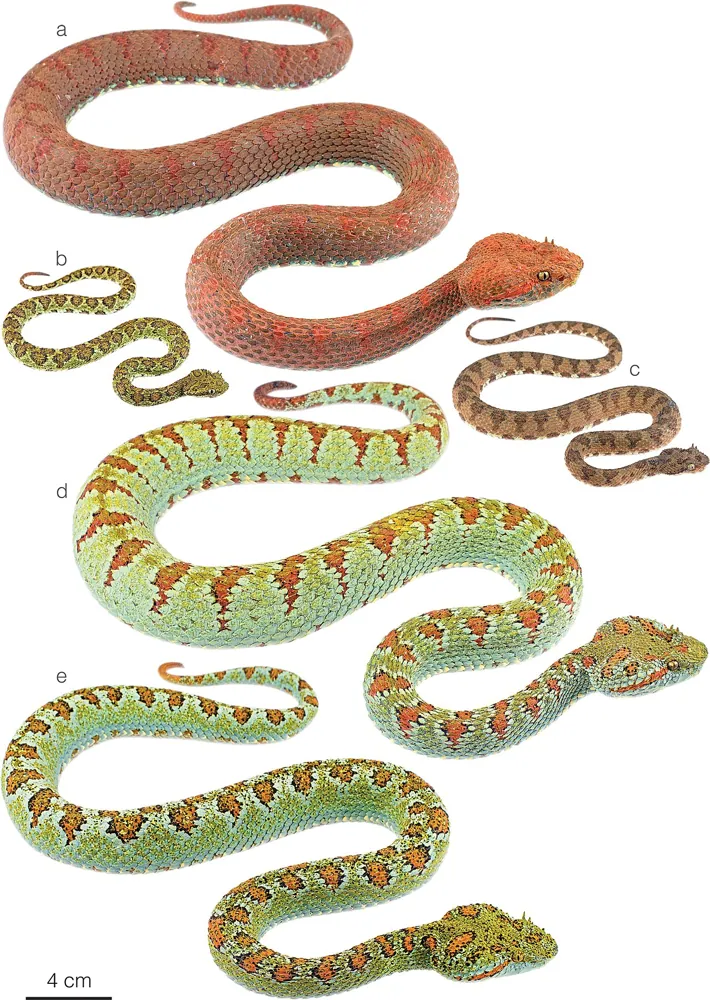
ỊtaThe blotched eyelash-pitviper is a venomous snake that lives in the mountain forests of southern Costa Rica and western Panama. It spends much of its time in trees and is active mainly at dusk or at night. Its bite can cause serious bleeding and muscle damage, so it is important to recognise it and keep well away.1


 Otú ị ga-esi mata ya
- Usually bright green or moss-green, though it can also be bluish-green, reddish-brown or reddish-maroon.1
- Irregular dark blotches run along the back, and these sometimes join to form crossbands.1
- The belly is light in colour.1
- The head has dark stripes and prominent scales above the eyes, which give it the name eyelash-pitviper.1
- Usually 50–60 cm long including the tail, and can reach 80 cm.1
Ike nsị
Nsị na-esi n'eze nsị ya ma ọ bụ eze ya apụta mgbe ọ na-ata.
Gịnị ka nsị ọ na-agba na-eme?
Its venom has a potent haemorrhagic action, which damages blood vessels and causes bleeding. It also has moderate myotoxicity, which destroys muscle tissue, and a very weak procoagulant effect, which can slightly speed up clotting.1
Kedu otú o si dị egwu nye mmadụ?
Ihe ize ndụ nye mmadụ: Ọ dị njọỊta ya chọrọ dọkịta. Ọnwụ anaghị adịkarị ma ọlị. Ozi ọma: ndị dọkịta nwere ọgwụ (antivenom) ma ọ bụ ọgwụgwọ maka nke a.1
 Ọ bụrụ na ọ tara
- Mee ka onye ahụ ghara imegharị ahụ, dịkwa jụụ, debe aka ma ọ bụ ụkwụ ahụ ọ tara n'ogo obi, wepụ mgbanaka na ihe ndị kekọrọ ahụ ike, kpọga ya ụlọ ọgwụ ngwa ngwa.
Na-ebu ụzọ kpọọ nọmba mberede gị mgbe niile (112, 000, 911). Nke a bụ ndụmọdụ enyemaka mbụ n'ozuzu, ọ bụghị ndụmọdụ ọgwụ. Isi ihe enyemaka mbụ
 Nọrọ na nchekwa
- Emetụla anụ ọhịa aka, ejidela ya, emekwala ya ihe ọjọọ, ọbụna obere, ọbụna ma ọ dị ka ọ na-ehi ụra ma ọ bụ nwụọ anwụ.
- Nye ya ohere. Ọ bụrụ na ị zutere otu, dị jụụ, laghachi azụ nwayọ, hapụ ya ka ọ gaa ụzọ ya.
- Ọ bụrụ na otu tara gị: dị jụụ, emegharịla ahụ, kpọọ nọmba mberede gị (112, 000, 911) ma ọ bụ gaa ụlọ ọgwụ ngwa ngwa. Cheta ka o si dị, foto na-enye aka.
Ọ naghị achụ gị. Ọ na-eji nsị ya ejide nri ma ọ bụ chebe onwe ya, ọ ga-akakwa mma n'anya ya ịzo onwe ya. Ihe ndị ọzọ gbasara ịnọ na nchekwa
Ọ hà aṅaa?
Kedu otú o si dị ogologo?
 dị ogologo dị ka nwamba ụlọ 1.5 site n'imi ruo n'ọdụ
 dị ogologo dị ka unere 4 a tọgbọrọ n'ahịrị
 nwere ike ịgba ọsọ mita 100 n'ime sekọnd 110 (mmadụ kacha ọsọ chọrọ 9,6)
Kedu otú Blotched palm pitviper si hà ma e jiri ya tụnyere GỊ?
Naanị mgbakọ na mwepụ n'ime browser gị. Ọ dịghị ihe echekwara ma ọ bụ ezigara ebe ọ bụla.
Kedu otú o si agba ọsọ?


Eziokwu
Unlike most other Bothriechis species, it spends more time on the ground, and it may rest on the ground or at the base of trees and shrubs during the day.1
Its venom has an estimated LD50 of 6.04 mg/kg. LD50 is the dose that is expected to kill half of a test group, so a lower number means a more toxic venom.1
An antivenom made in horses, using venoms from Bothrops asper, Crotalus simus and another snake species, has been reported to neutralise its venom in tests.1
Females are longer and thicker than males, and this is the only difference between the sexes that has been noted.1
Ebe eziokwu ndị a si
- Bothriechis supraciliaris (Wikipedia (CC BY-SA 4.0))
- Bothriechis supraciliaris (iNaturalist): aha na nhazi ọkwa.
- Venom Wiki: ọkwa ihe ize ndụ, nha nkịtị na nchepụta ọsọ bụ nke anyị. Lee otú anyị si achọpụta ha: Otú anyị si atụ ihe ize ndụ.
Eziokwu ọ bụla dị na peeji a nwere nọmba na-egosi ebe o si. Ọ bụrụ na anyị mehiere ihe, ndo, anyị bụ ndị hụrụ anụmanụ n'anya, ọ bụghị akwụkwọ akụkọ sayensị. Gwa anyị na [email protected], anyị ga-edozi ya.
 Akpị agụụ na-agụ! Venom Wiki bụ ọrụ otu onye: n'efu, na-enweghị mgbasa ozi na ndị na-esochi gị. Obere onyinye na-enyere aka idebe ya n'ịntanetị.Nye akpị nri
 Terciopelo
 Eyelash viper
 Cottonmouth
 Eastern copperhead
 Cantil
 Central American bushmaster
 Eastern coral snake
 Eastern diamondback rattlesnake
 Timber rattlesnake
 Western diamondback rattlesnake
 Arizona bark scorpion
 Brown recluse