
 Afrịka
 Eshia
Eshia Yurop
Yurop Ndịda Amerika
 Ọstrelia na Oshenia
 Antaktika
 Oké Osimiri Pasifik
 Oké Osimiri Atlantik
 Oké Osimiri India
 Oké Osimiri Arktik
 Osimiri Mediterenian
 Osimiri Uhie
 Osimiri Karibịan
 Osimiri Coral
 Osimiri Ndịda China
 Osimiri Filipin
 Osimiri Andaman
 Osimiri Ugwu (North Sea)
 Osimiri Timor na Arafura
 Ọwara Bengal
 Ọwara California
Eyelash viper
 Ịta
ỊtaThe eyelash viper is a small, tree-living pitviper that lives mainly in the highlands of Colombia. It is named after the eyelash-like scales above its eyes. Its venom can cause serious harm, so it is important to recognise it and keep well away.1



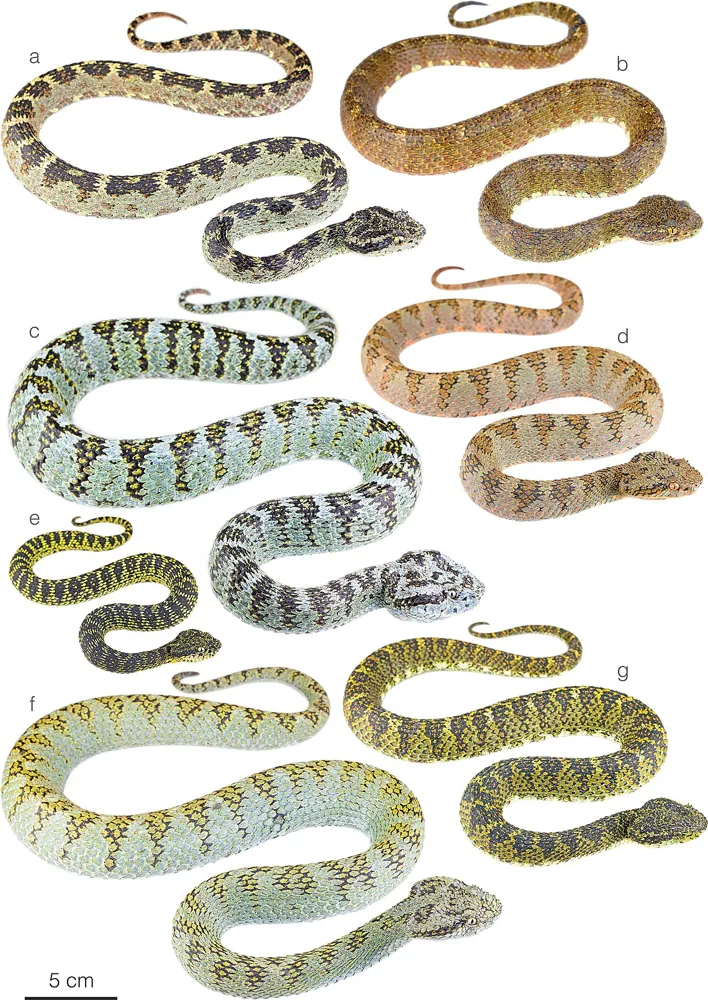
 Otú ị ga-esi mata ya
Ike nsị
Nsị na-esi n'eze nsị ya ma ọ bụ eze ya apụta mgbe ọ na-ata.
Gịnị ka nsị ọ na-agba na-eme?
Its venom contains several components that damage tissue, cause swelling and disturb blood clotting. A bite typically causes pain, swelling and bruising at the bite site, and sometimes blisters or local tissue death. Some reports describe rapid local tissue damage followed by clotting problems and acute kidney failure.1
Kedu otú o si dị egwu nye mmadụ?
Ihe ize ndụ nye mmadụ: Ọ dị egwu nke ukwuuỌ nwere ike igbu onye na-enwetaghị ọgwụgwọ.The snake is not known to be aggressive towards people and tends to avoid creatures larger than itself, but it will strike if repeatedly harassed. Some studies of venom from northern Colombia reported serious effects, including kidney failure.1
Gịnị ka ọ na-eme mgbe ụjọ tụrụ ya?
It is not known to be aggressive and tends to avoid larger creatures, but it will strike if repeatedly harassed.1
 Ọ bụrụ na ọ tara
- Mee ka onye ahụ ghara imegharị ahụ, dịkwa jụụ, debe aka ma ọ bụ ụkwụ ahụ ọ tara n'ogo obi, wepụ mgbanaka na ihe ndị kekọrọ ahụ ike, kpọga ya ụlọ ọgwụ ngwa ngwa.
Na-ebu ụzọ kpọọ nọmba mberede gị mgbe niile (112, 000, 911). Nke a bụ ndụmọdụ enyemaka mbụ n'ozuzu, ọ bụghị ndụmọdụ ọgwụ. Isi ihe enyemaka mbụ
 Nọrọ na nchekwa
- Emetụla anụ ọhịa aka, ejidela ya, emekwala ya ihe ọjọọ, ọbụna obere, ọbụna ma ọ dị ka ọ na-ehi ụra ma ọ bụ nwụọ anwụ.
- Nye ya ohere. Ọ bụrụ na ị zutere otu, dị jụụ, laghachi azụ nwayọ, hapụ ya ka ọ gaa ụzọ ya.
- Ọ bụrụ na otu tara gị: dị jụụ, emegharịla ahụ, kpọọ nọmba mberede gị (112, 000, 911) ma ọ bụ gaa ụlọ ọgwụ ngwa ngwa. Cheta ka o si dị, foto na-enye aka.
Ọ naghị achụ gị. Ọ na-eji nsị ya ejide nri ma ọ bụ chebe onwe ya, ọ ga-akakwa mma n'anya ya ịzo onwe ya. Ihe ndị ọzọ gbasara ịnọ na nchekwa
Ọ hà aṅaa?
Kedu otú o si dị ogologo?
 dị ogologo dị ka nwamba ụlọ 1.5 site n'imi ruo n'ọdụ
 dị ogologo dị ka unere 5 a tọgbọrọ n'ahịrị
 nwere ike ịgba ọsọ mita 100 n'ime sekọnd 110 (mmadụ kacha ọsọ chọrọ 9,6)
Kedu otú Eyelash viper si hà ma e jiri ya tụnyere GỊ?
Naanị mgbakọ na mwepụ n'ime browser gị. Ọ dịghị ihe echekwara ma ọ bụ ezigara ebe ọ bụla.
Kedu otú o si agba ọsọ?


Eziokwu
Males perform a courtship ritual called the 'dance of the adders', in which two males rise up in a cobra-like stance and push against each other until one is pushed away or falls.1
Its strike accuracy improves with practice, according to studies of individuals over time.1
Some individuals return to the same ambush sites each year, timing their visits to the spring bird migration.1
Its eyelash-like scales may help it hide by breaking up its outline among the leaves where it rests.1
Onye na-ekpughe akụkọ ụgha
Akụkọ ụgha: After a bite, the snake winks its eyelashes at the victim, as some local folktales describe.
Eziokwu: No snake can do this. Snakes have no true eyelids and cannot close their eyes. Most reptiles have a thin, membrane-like eyelid that acts as a shield, mainly when resting.1
Maka ndị ọkachamara nsị
- Aha sayensị
- Bothriechis schlegelii
- Otu
- Pit viper
- Ezinụlọ
- Viperidae2
- Usoro
- Squamata
- Kọntinent dị iche iche
- Ugwu Amerika, Ndịda Amerika
- Ụmụ ọhụrụ
- It gives birth to live young rather than laying eggs, with females carrying the eggs for around six months. A typical brood has 2 to 20 young, each 15 to 20 cm long.1
- Otú ọ na-eme n'ọhịa
- Least Concern (IUCN Red List, 2013)1
- Ihe ize ndụ nye mmadụ
- 4 / 5: Ọ dị egwu nke ukwuu3
Ebe eziokwu ndị a si
- Bothriechis schlegelii (Wikipedia (CC BY-SA 4.0))
- Bothriechis schlegelii (iNaturalist): aha na nhazi ọkwa.
- Venom Wiki: ọkwa ihe ize ndụ, nha nkịtị na nchepụta ọsọ bụ nke anyị. Lee otú anyị si achọpụta ha: Otú anyị si atụ ihe ize ndụ.
Eziokwu ọ bụla dị na peeji a nwere nọmba na-egosi ebe o si. Ọ bụrụ na anyị mehiere ihe, ndo, anyị bụ ndị hụrụ anụmanụ n'anya, ọ bụghị akwụkwọ akụkọ sayensị. Gwa anyị na [email protected], anyị ga-edozi ya.
 Akpị agụụ na-agụ! Venom Wiki bụ ọrụ otu onye: n'efu, na-enweghị mgbasa ozi na ndị na-esochi gị. Obere onyinye na-enyere aka idebe ya n'ịntanetị.Nye akpị nri
 Terciopelo
 Golden lancehead
 South American bushmaster
 Cottonmouth
 Eastern copperhead
 Common lancehead
 Eastern coral snake
 Eastern diamondback rattlesnake
 Timber rattlesnake
 Western diamondback rattlesnake
 Arizona bark scorpion
 Brown recluse