
 Afrịka
 Eshia
Eshia Yurop
Yurop Ndịda Amerika
 Ọstrelia na Oshenia
 Antaktika
 Oké Osimiri Pasifik
 Oké Osimiri Atlantik
 Oké Osimiri India
 Oké Osimiri Arktik
 Osimiri Mediterenian
 Osimiri Uhie
 Osimiri Karibịan
 Osimiri Coral
 Osimiri Ndịda China
 Osimiri Filipin
 Osimiri Andaman
 Osimiri Ugwu (North Sea)
 Osimiri Timor na Arafura
 Ọwara Bengal
 Ọwara California
Largespot river stingray
 Ịgba
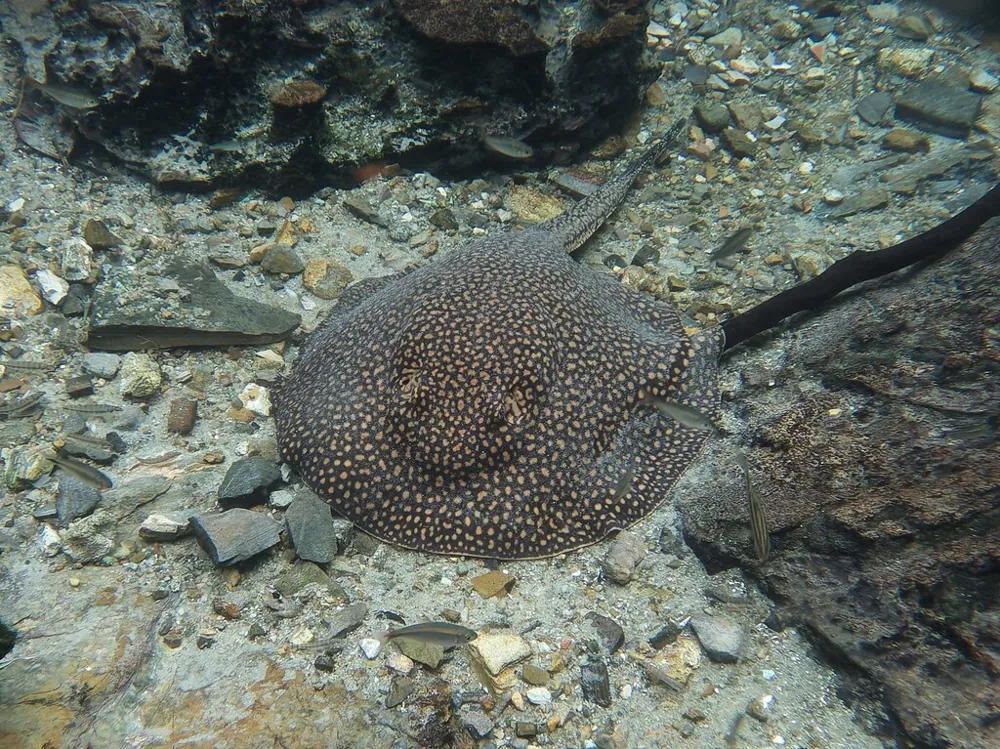
ỊgbaThe largespot river stingray is a freshwater stingray with a flat, round body covered in dense spots. It lives in the rivers of tropical and subtropical South America, mainly the Paraná-Paraguay river basin and parts of the upper Amazon. It is sometimes kept in aquariums, but it needs a very large tank.1
 Otú ị ga-esi mata ya
- It is densely spotted on its upper side.1
- The exact colour and pattern vary a lot between individuals, and many intermediate patterns exist.1
- The disc (the flat body) reaches a width of up to 52 cm.1
- Its total length, including the tail, reaches up to 89 cm.1
A na-agwakọkarị ya na: The so-called 'tiger stingray' has often been mistaken for this species. It is a separate species, P. tigrina, which was only scientifically described in 2011.1
Ike nsị
Nsị na-esi na ndụdụ ya apụta.
Kedu otú o si dị egwu nye mmadụ?
Ihe ize ndụ nye mmadụ: Ọ dị njọỊgba ya chọrọ dọkịta. Ọnwụ anaghị adịkarị ma ọlị. Ọ bụrụ na ọ gbaa
- Tinye ọnya ahụ n'ime mmiri ọkụ, nke ọkụ dị ka onye ahụ nwere ike ịnagide n'ere ya ọkụ (jiri aka gị nwalee ya), ruo nkeji 30 ruo 90. Chọọ enyemaka ọgwụ, karịsịa maka azụ nkume (stonefish) na stingray.
Na-ebu ụzọ kpọọ nọmba mberede gị mgbe niile (112, 000, 911). Nke a bụ ndụmọdụ enyemaka mbụ n'ozuzu, ọ bụghị ndụmọdụ ọgwụ. Isi ihe enyemaka mbụ
 Nọrọ na nchekwa
- Emetụla anụ ọhịa aka, ejidela ya, emekwala ya ihe ọjọọ, ọbụna obere, ọbụna ma ọ dị ka ọ na-ehi ụra ma ọ bụ nwụọ anwụ.
- Nye ya ohere. Ọ bụrụ na ị zutere otu, dị jụụ, laghachi azụ nwayọ, hapụ ya ka ọ gaa ụzọ ya.
- Ọ bụrụ na otu gbaa gị: dị jụụ, emegharịla ahụ, kpọọ nọmba mberede gị (112, 000, 911) ma ọ bụ gaa ụlọ ọgwụ ngwa ngwa. Cheta ka o si dị, foto na-enye aka.
Ọ naghị achụ gị. Ọ na-eji nsị ya ejide nri ma ọ bụ chebe onwe ya, ọ ga-akakwa mma n'anya ya ịzo onwe ya. Ihe ndị ọzọ gbasara ịnọ na nchekwa
Ọ hà aṅaa?
Kedu otú o si dị ogologo?
 dị ogologo dị ka nwamba ụlọ 2 site n'imi ruo n'ọdụ
 dị ogologo dị ka unere 5 a tọgbọrọ n'ahịrị
 nwere ike igwu mmiri ogologo nnukwu ọdọ igwu mmiri (50 m) n'ime sekọnd 11
Kedu otú Largespot river stingray si hà ma e jiri ya tụnyere GỊ?
Naanị mgbakọ na mwepụ n'ime browser gị. Ọ dịghị ihe echekwara ma ọ bụ ezigara ebe ọ bụla.
Kedu otú o si agba ọsọ?

Eziokwu
Its natural range was once cut off from the upper Paraná basin by the Guaíra Falls. After the Itaipu Dam was built, the falls disappeared, which let this species and several others spread into that area.1
Its spotted pattern is so variable that one pattern was once described as a separate species, P. castexi, and another as P. menchacai. All of these are now treated as variants of this species.1
It is sometimes kept in aquariums, but it needs a very large tank because of its size.1
Onye na-ekpughe akụkọ ụgha
Akụkọ ụgha: The 'tiger stingray' is the same animal as the largespot river stingray.
Eziokwu: The tiger stingray is a separate species, P. tigrina, which was only scientifically described in 2011. It was earlier mistaken for P. menchacai, which is a name for this species.1
Ebe eziokwu ndị a si
- Potamotrygon falkneri (Wikipedia (CC BY-SA 4.0))
- Potamotrygon falkneri (iNaturalist): aha na nhazi ọkwa.
- Venom Wiki: ọkwa ihe ize ndụ, nha nkịtị na nchepụta ọsọ bụ nke anyị. Lee otú anyị si achọpụta ha: Otú anyị si atụ ihe ize ndụ.
Eziokwu ọ bụla dị na peeji a nwere nọmba na-egosi ebe o si. Ọ bụrụ na anyị mehiere ihe, ndo, anyị bụ ndị hụrụ anụmanụ n'anya, ọ bụghị akwụkwọ akụkọ sayensị. Gwa anyị na [email protected], anyị ga-edozi ya.
 Akpị agụụ na-agụ! Venom Wiki bụ ọrụ otu onye: n'efu, na-enweghị mgbasa ozi na ndị na-esochi gị. Obere onyinye na-enyere aka idebe ya n'ịntanetị.Nye akpị nri
Ndị ọzọ si n'otu ahụ: Azụ na-agba nsị
 Ocellate river stingrayAzụ na-agba nsịỌ chọrọ dọkịta
 Xingu River rayAzụ na-agba nsịỌ chọrọ dọkịta
 Discus rayAzụ na-agba nsịỌ chọrọ dọkịta
 Smooth back river stingrayAzụ na-agba nsịỌ chọrọ dọkịta
 Amazon toadfishAzụ na-agba nsịNaanị na-afụ ụfụEmetụla ya aka
 Reef stonefishAzụ na-agba nsịNwere ike igbu mmadụEmetụla ya aka
 Golden poison frog
 Terciopelo
 Brazilian wandering spider
 Eyelash viper
 Golden lancehead
 South American bushmaster