
 Afrịka
 Eshia
Eshia Yurop
Yurop Ndịda Amerika
 Ọstrelia na Oshenia
 Antaktika
 Oké Osimiri Pasifik
 Oké Osimiri Atlantik
 Oké Osimiri India
 Oké Osimiri Arktik
 Osimiri Mediterenian
 Osimiri Uhie
 Osimiri Karibịan
 Osimiri Coral
 Osimiri Ndịda China
 Osimiri Filipin
 Osimiri Andaman
 Osimiri Ugwu (North Sea)
 Osimiri Timor na Arafura
 Ọwara Bengal
 Ọwara California
Olive sea snake
 Ịta
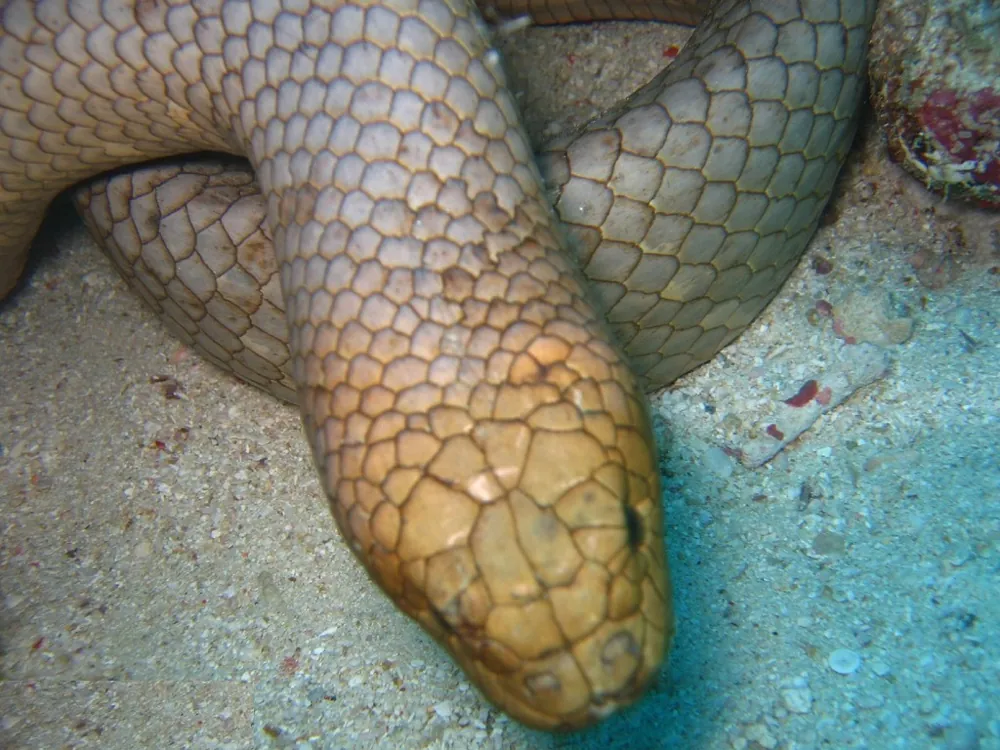
ỊtaThe olive sea snake is a venomous sea snake that lives on coral reefs across the Indo-Pacific, including the Great Barrier Reef. It swims with a paddle-like tail and can grow up to about a metre long. Prawn trawl nets are one of its biggest threats.1



 Otú ị ga-esi mata ya
Ike nsị
Nsị na-esi n'eze nsị ya ma ọ bụ eze ya apụta mgbe ọ na-ata.
Gịnị ka nsị ọ na-agba na-eme?
Its venom is rich in enzymes that break down prey inside the body, which simplifies digestion. The venom also affects both the muscles and nerves of the prey, and it is used to incapacitate the prey.1
Kedu otú o si dị egwu nye mmadụ?
Ihe ize ndụ nye mmadụ: Ọ dị egwu nke ukwuuỌ nwere ike igbu onye na-enwetaghị ọgwụgwọ.It can be aggressive towards prey, but attacks on divers or larger animals are rare. If provoked, it will fight back against the attacker.1
Gịnị ka ọ na-eme mgbe ụjọ tụrụ ya?
If provoked, it will engage the attacker, and during the day it hides inside coral holes.1
 Ọ bụrụ na ọ tara
- Mkpakọ na nkwụsi ahụ (pressure immobilisation): jiri bandeji na-agbatị agbatị (elastic bandage) kee ebe ọ tara nke ọma, wee kee ya gaa n'elu aka ma ọ bụ ụkwụ ahụ niile, jiri splint (osisi nkwado) kwado ya, mee ka onye ahụ ghara imegharị ahụ ma ọlị ruo mgbe enyemaka bịarutere.
- Wepụta onye ahụ na mmiri, kpọga ya ụlọ ọgwụ ngwa ngwa.
Na-ebu ụzọ kpọọ nọmba mberede gị mgbe niile (112, 000, 911). Nke a bụ ndụmọdụ enyemaka mbụ n'ozuzu, ọ bụghị ndụmọdụ ọgwụ. Isi ihe enyemaka mbụ
 Nọrọ na nchekwa
- Emetụla anụ ọhịa aka, ejidela ya, emekwala ya ihe ọjọọ, ọbụna obere, ọbụna ma ọ dị ka ọ na-ehi ụra ma ọ bụ nwụọ anwụ.
- Nye ya ohere. Ọ bụrụ na ị zutere otu, dị jụụ, laghachi azụ nwayọ, hapụ ya ka ọ gaa ụzọ ya.
- Ọ bụrụ na otu tara gị: dị jụụ, emegharịla ahụ, kpọọ nọmba mberede gị (112, 000, 911) ma ọ bụ gaa ụlọ ọgwụ ngwa ngwa. Cheta ka o si dị, foto na-enye aka.
Ọ naghị achụ gị. Ọ na-eji nsị ya ejide nri ma ọ bụ chebe onwe ya, ọ ga-akakwa mma n'anya ya ịzo onwe ya. Ihe ndị ọzọ gbasara ịnọ na nchekwa
Ebee n'ụwa?
Ọ hà aṅaa?
Kedu otú o si dị ogologo?
 dị ogologo dị ka nwamba ụlọ 4 site n'imi ruo n'ọdụ
 dị ogologo dị ka unere 11 a tọgbọrọ n'ahịrị
 nwere ike igwu mmiri ogologo nnukwu ọdọ igwu mmiri (50 m) n'ime sekọnd 40
Kedu otú Olive sea snake si hà ma e jiri ya tụnyere GỊ?
Naanị mgbakọ na mwepụ n'ime browser gị. Ọ dịghị ihe echekwara ma ọ bụ ezigara ebe ọ bụla.
Kedu otú o si agba ọsọ?
Eziokwu
Its tail has light-sensitive cells in the skin, which help it detect light and stay fully hidden inside coral holes during the day.1
Males sometimes approach divers, possibly because they mistake the divers for female sea snakes.1
Prawn trawls are one of its greatest threats, and up to 50% of olive sea snakes caught in trawls are killed.1
Males can reach sexual maturity in their third year, while females do not mature until their fourth or fifth year.1
Onye na-ekpughe akụkọ ụgha
Akụkọ ụgha: Sea snakes regularly attack divers.
Eziokwu: Attacks on divers are rare. Males that approach divers are likely mistaking them for females.1
Maka ndị ọkachamara nsị
- Aha sayensị
- Aipysurus laevis
- Otu
- Agwọ osimiri
- Ezinụlọ
- Elapidae2
- Usoro
- Squamata
- Kọntinent dị iche iche
- Oké Osimiri India, Oké Osimiri Pasifik, Osimiri Coral, Osimiri Timor na Arafura, Oké osimiri niile
- Ụmụ ọhụrụ
- It gives birth to live young, with up to five at a time and, in rare cases, ten or eleven. Gestation lasts about nine months.1
- Ogologo ndụ
- ihe dị ka afọ 151
- Ihe ize ndụ nye mmadụ
- 4 / 5: Ọ dị egwu nke ukwuu3
Ebe eziokwu ndị a si
- Aipysurus laevis (Wikipedia (CC BY-SA 4.0))
- Aipysurus laevis (iNaturalist): aha na nhazi ọkwa.
- Venom Wiki: ọkwa ihe ize ndụ, nha nkịtị na nchepụta ọsọ bụ nke anyị. Lee otú anyị si achọpụta ha: Otú anyị si atụ ihe ize ndụ.
Eziokwu ọ bụla dị na peeji a nwere nọmba na-egosi ebe o si. Ọ bụrụ na anyị mehiere ihe, ndo, anyị bụ ndị hụrụ anụmanụ n'anya, ọ bụghị akwụkwọ akụkọ sayensị. Gwa anyị na [email protected], anyị ga-edozi ya.
 Akpị agụụ na-agụ! Venom Wiki bụ ọrụ otu onye: n'efu, na-enweghị mgbasa ozi na ndị na-esochi gị. Obere onyinye na-enyere aka idebe ya n'ịntanetị.Nye akpị nri
Ndị ọzọ si n'otu ahụ: Agwọ osimiri
 Beaked sea snakeAgwọ osimiriNa-egbu egbu
 Belcher's sea snakeAgwọ osimiriNwere ike igbu mmadụ
 Black-banded sea kraitAgwọ osimiriNwere ike igbu mmadụ
 Blue-lipped sea kraitAgwọ osimiriNwere ike igbu mmadụ
 Dubois' sea snakeAgwọ osimiriNwere ike igbu mmadụ
 Yellow-lipped sea kraitAgwọ osimiriNwere ike igbu mmadụ
Ọ na-ebikwa na: Oké Osimiri India
 Australian box jellyfishJelifish na anụ osimiri na-agba agbaNa-egbu egbuEmetụla ya aka
 Geography coneEjula cone na octopusNa-egbu egbu
 Greater blue-ringed octopusEjula cone na octopusNa-egbu egbu
 Southern blue-ringed octopusEjula cone na octopusNa-egbu egbu
 Hawksbill sea turtleAnụmanụ ndị ọzọ nwere nsị n'ahụNwere ike igbu mmadụ
 Irukandji jellyfishJelifish na anụ osimiri na-agba agbaNwere ike igbu mmadụEmetụla ya aka