
 Afrịka
 Eshia
Eshia Yurop
Yurop Ndịda Amerika
 Ọstrelia na Oshenia
 Antaktika
 Oké Osimiri Pasifik
 Oké Osimiri Atlantik
 Oké Osimiri India
 Oké Osimiri Arktik
 Osimiri Mediterenian
 Osimiri Uhie
 Osimiri Karibịan
 Osimiri Coral
 Osimiri Ndịda China
 Osimiri Filipin
 Osimiri Andaman
 Osimiri Ugwu (North Sea)
 Osimiri Timor na Arafura
 Ọwara Bengal
 Ọwara California
Prairie rattlesnake
 Ịta
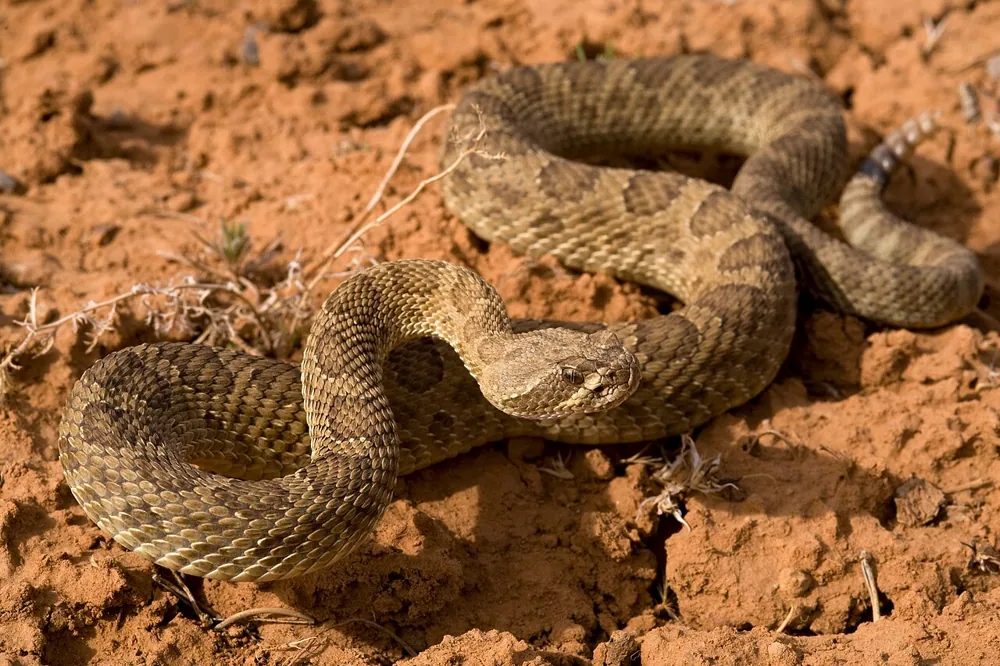
ỊtaThe prairie rattlesnake is a venomous pit viper that lives across the Great Plains and the foothills of the Rocky Mountains. It is found in the western United States, southwestern Canada and northern Mexico. It shakes its tail to give a rattling warning when it feels threatened.1



 Otú ị ga-esi mata ya
- Usually lightly coloured in shades of brown, with patches of dark brown along the back1
- A colour band may be seen at the back of the eye1
- A triangle-shaped head with pit sensory organs on either side1
- Usually four internasal scales on the snout, with three or more in total1
- Commonly grows to more than 100 cm long1
A na-agwakọkarị ya na: Other rattlesnakes can look similar. A key difference is that two internasal scales touch the rostral scale, at the tip of the snout, in the prairie rattlesnake.1
Ike nsị
Nsị na-esi n'eze nsị ya ma ọ bụ eze ya apụta mgbe ọ na-ata.
Gịnị ka nsị ọ na-agba na-eme?
The venom is a complex mixture of proteins, including enzymes such as proteases and peptidases. It is hemotoxic, meaning it damages blood and destroys tissue. It also has neurotoxic properties, meaning it attacks the nerves.1
Kedu otú o si dị egwu nye mmadụ?
Ihe ize ndụ nye mmadụ: Ọ dị njọỊta ya chọrọ dọkịta. Ọnwụ anaghị adịkarị ma ọlị.The species has powerful venom and uses about 20 to 55% of its venom in one bite. It will defend itself if it is threatened or injured.1
Gịnị ka ọ na-eme mgbe ụjọ tụrụ ya?
It rapidly vibrates its tail to make a rasping rattle that warns intruders, and it will defend itself if threatened or injured.1
 Ọ bụrụ na ọ tara
- Mee ka onye ahụ ghara imegharị ahụ, dịkwa jụụ, debe aka ma ọ bụ ụkwụ ahụ ọ tara n'ogo obi, wepụ mgbanaka na ihe ndị kekọrọ ahụ ike, kpọga ya ụlọ ọgwụ ngwa ngwa.
Na-ebu ụzọ kpọọ nọmba mberede gị mgbe niile (112, 000, 911). Nke a bụ ndụmọdụ enyemaka mbụ n'ozuzu, ọ bụghị ndụmọdụ ọgwụ. Isi ihe enyemaka mbụ
 Nọrọ na nchekwa
- Emetụla anụ ọhịa aka, ejidela ya, emekwala ya ihe ọjọọ, ọbụna obere, ọbụna ma ọ dị ka ọ na-ehi ụra ma ọ bụ nwụọ anwụ.
- Nye ya ohere. Ọ bụrụ na ị zutere otu, dị jụụ, laghachi azụ nwayọ, hapụ ya ka ọ gaa ụzọ ya.
- Ọ bụrụ na otu tara gị: dị jụụ, emegharịla ahụ, kpọọ nọmba mberede gị (112, 000, 911) ma ọ bụ gaa ụlọ ọgwụ ngwa ngwa. Cheta ka o si dị, foto na-enye aka.
Ọ naghị achụ gị. Ọ na-eji nsị ya ejide nri ma ọ bụ chebe onwe ya, ọ ga-akakwa mma n'anya ya ịzo onwe ya. Ihe ndị ọzọ gbasara ịnọ na nchekwa
Ọ hà aṅaa?
Kedu otú o si dị ogologo?
 dị ogologo dị ka nwamba ụlọ 3 site n'imi ruo n'ọdụ
 dị ogologo dị ka unere 8 a tọgbọrọ n'ahịrị
 nwere ike ịgba ọsọ mita 100 n'ime sekọnd 97 (mmadụ kacha ọsọ chọrọ 9,6)
Kedu otú Prairie rattlesnake si hà ma e jiri ya tụnyere GỊ?
Naanị mgbakọ na mwepụ n'ime browser gị. Ọ dịghị ihe echekwara ma ọ bụ ezigara ebe ọ bụla.
Kedu otú o si agba ọsọ?


Eziokwu
Females often gather in communal dens to give birth and care for their young. Some females even look after unrelated young while the mothers take a break.1
Newborn snakelets measure 22 to 28 cm and are venomous from the moment they are born.1
Prairie rattlesnakes prefer a straight migration path, even in areas dominated by humans, because it gives them a better chance of survival.1
In Montana, the species reaches its largest size, with specimens sometimes exceeding 120 cm.1
In Canada, the species is listed as a species of special concern because its numbers have steadily declined since the 1930s.1
Maka ndị ọkachamara nsị
- Aha sayensị
- Crotalus viridis
- Otu
- Rattlesnake
- Ezinụlọ
- Viperidae2
- Usoro
- Squamata
- Kọntinent dị iche iche
- Ugwu Amerika
- Ụmụ ọhụrụ
- It gives birth to one to 25 live young per litter, typically four to 12, in late summer or early fall.1
- Otú ọ na-eme n'ọhịa
- Least concern on the IUCN Red List. It is listed as endangered in Iowa and as a species of special concern in Canada.1
- Ihe ize ndụ nye mmadụ
- 3 / 5: Ọ dị njọ3
Ebe eziokwu ndị a si
- Crotalus viridis (Wikipedia (CC BY-SA 4.0))
- Crotalus viridis (iNaturalist): aha na nhazi ọkwa.
- Venom Wiki: ọkwa ihe ize ndụ, nha nkịtị na nchepụta ọsọ bụ nke anyị. Lee otú anyị si achọpụta ha: Otú anyị si atụ ihe ize ndụ.
Eziokwu ọ bụla dị na peeji a nwere nọmba na-egosi ebe o si. Ọ bụrụ na anyị mehiere ihe, ndo, anyị bụ ndị hụrụ anụmanụ n'anya, ọ bụghị akwụkwọ akụkọ sayensị. Gwa anyị na [email protected], anyị ga-edozi ya.
 Akpị agụụ na-agụ! Venom Wiki bụ ọrụ otu onye: n'efu, na-enweghị mgbasa ozi na ndị na-esochi gị. Obere onyinye na-enyere aka idebe ya n'ịntanetị.Nye akpị nri
 Eastern diamondback rattlesnake
 Timber rattlesnake
 Western diamondback rattlesnake
 Sidewinder
 Mojave rattlesnake
 Aruba rattlesnake
 Terciopelo
 Eastern coral snake
 Eyelash viper
 Arizona bark scorpion
 Brown recluse
 Cane toad
.jpg)