
 Afrịka
 Eshia
Eshia Yurop
Yurop Ndịda Amerika
 Ọstrelia na Oshenia
 Antaktika
 Oké Osimiri Pasifik
 Oké Osimiri Atlantik
 Oké Osimiri India
 Oké Osimiri Arktik
 Osimiri Mediterenian
 Osimiri Uhie
 Osimiri Karibịan
 Osimiri Coral
 Osimiri Ndịda China
 Osimiri Filipin
 Osimiri Andaman
 Osimiri Ugwu (North Sea)
 Osimiri Timor na Arafura
 Ọwara Bengal
 Ọwara California
Pygmy rattlesnake
 Ịta
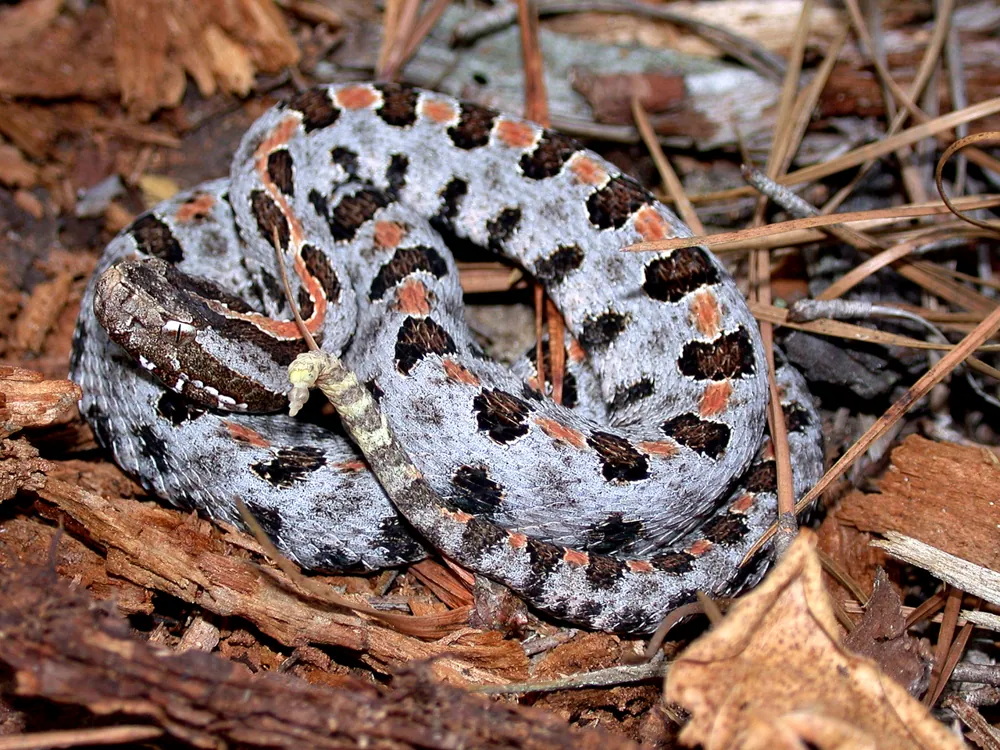
ỊtaThe pygmy rattlesnake is a small, venomous snake that lives in the southeastern United States. It is the smallest rattlesnake found on the North American continent. Its venom is strongly tissue-damaging, but the snake makes so little that a bite is unlikely to be fatal to an adult.1



 Otú ị ga-esi mata ya
- Small but bulky in width, usually 40 to 60 cm long including the tail1
- Dorsal pattern of oval or roughly circular spots with somewhat regular edges1
- Flank spots are mostly round and not much taller than they are wide1
- Usually 23 rows of dorsal scales at midbody1
- Young snakes may be paler or more vividly marked, and have a yellow tail tip. The rattle is tiny and gives only a faint buzz that is heard from a few feet away1
Ike nsị
Nsị na-esi n'eze nsị ya ma ọ bụ eze ya apụta mgbe ọ na-ata.
Gịnị ka nsị ọ na-agba na-eme?
Its venom is cytotoxic, which means it damages cells, and it is strongly haemorrhagic, which means it causes bleeding. The venom is tissue-toxic but contains no neurotoxins, which attack the nerves. The snake produces only a small amount of venom and contains substantial amounts of serotonin and related compounds.1
Kedu otú o si dị egwu nye mmadụ?
Ihe ize ndụ nye mmadụ: Na-afụ ụfụỌ nwere ike ịfụ ụfụ nke ukwuu, mana ọ naghị adịkarị njọ.The snake produces too little venom to be likely to deliver a fatal bite to a human adult.1
Gịnị ka ọ na-eme mgbe ụjọ tụrụ ya?
Some individuals are very aggressive and strike furiously, while others are lethargic and do not rattle at all, and many are reluctant to bite.1
 Ọ bụrụ na ọ tara
- Mee ka onye ahụ ghara imegharị ahụ, dịkwa jụụ, debe aka ma ọ bụ ụkwụ ahụ ọ tara n'ogo obi, wepụ mgbanaka na ihe ndị kekọrọ ahụ ike, kpọga ya ụlọ ọgwụ ngwa ngwa.
Na-ebu ụzọ kpọọ nọmba mberede gị mgbe niile (112, 000, 911). Nke a bụ ndụmọdụ enyemaka mbụ n'ozuzu, ọ bụghị ndụmọdụ ọgwụ. Isi ihe enyemaka mbụ
 Nọrọ na nchekwa
- Emetụla anụ ọhịa aka, ejidela ya, emekwala ya ihe ọjọọ, ọbụna obere, ọbụna ma ọ dị ka ọ na-ehi ụra ma ọ bụ nwụọ anwụ.
- Nye ya ohere. Ọ bụrụ na ị zutere otu, dị jụụ, laghachi azụ nwayọ, hapụ ya ka ọ gaa ụzọ ya.
- Ọ bụrụ na otu tara gị: dị jụụ, emegharịla ahụ, kpọọ nọmba mberede gị (112, 000, 911) ma ọ bụ gaa ụlọ ọgwụ ngwa ngwa. Cheta ka o si dị, foto na-enye aka.
Ọ naghị achụ gị. Ọ na-eji nsị ya ejide nri ma ọ bụ chebe onwe ya, ọ ga-akakwa mma n'anya ya ịzo onwe ya. Ihe ndị ọzọ gbasara ịnọ na nchekwa
Ọ hà aṅaa?
Kedu otú o si dị ogologo?
 dị ogologo dị ka unere 4 a tọgbọrọ n'ahịrị
 nwere ike ịgba ọsọ mita 100 n'ime sekọnd 110 (mmadụ kacha ọsọ chọrọ 9,6)
Kedu otú Pygmy rattlesnake si hà ma e jiri ya tụnyere GỊ?
Naanị mgbakọ na mwepụ n'ime browser gị. Ọ dịghị ihe echekwara ma ọ bụ ezigara ebe ọ bụla.
Kedu otú o si agba ọsọ?


Eziokwu
Its venom was the basis for the drug eptifibatide, which is used to prevent clotting during a heart attack.1
It is the smallest rattlesnake found on the North American continent.1
Its rattle is unusually small, which may show the early stages of how rattles evolved.1
Snake fungal disease has risen sharply in pygmy rattlesnakes over the past decade and is a major cause of death, though some snakes have recovered in the field.1
Females may give birth to live young even while infected with snake fungal disease.1
Onye na-ekpughe akụkọ ụgha
Akụkọ ụgha: Its bite is deadly to people.
Eziokwu: The snake makes so little venom that a bite is unlikely to be fatal to an adult human.1
Maka ndị ọkachamara nsị
Ebe eziokwu ndị a si
- Sistrurus miliarius (Wikipedia (CC BY-SA 4.0))
- Sistrurus miliarius (iNaturalist): aha na nhazi ọkwa.
- Venom Wiki: ọkwa ihe ize ndụ, nha nkịtị na nchepụta ọsọ bụ nke anyị. Lee otú anyị si achọpụta ha: Otú anyị si atụ ihe ize ndụ.
Eziokwu ọ bụla dị na peeji a nwere nọmba na-egosi ebe o si. Ọ bụrụ na anyị mehiere ihe, ndo, anyị bụ ndị hụrụ anụmanụ n'anya, ọ bụghị akwụkwọ akụkọ sayensị. Gwa anyị na [email protected], anyị ga-edozi ya.
 Akpị agụụ na-agụ! Venom Wiki bụ ọrụ otu onye: n'efu, na-enweghị mgbasa ozi na ndị na-esochi gị. Obere onyinye na-enyere aka idebe ya n'ịntanetị.Nye akpị nri
 Eastern diamondback rattlesnake
 Timber rattlesnake
 Western diamondback rattlesnake
 Sidewinder
 Mojave rattlesnake
 Aruba rattlesnake
 Terciopelo
 Eastern coral snake
 Eyelash viper
 Arizona bark scorpion
 Brown recluse
 Cane toad