
 Afrịka
 Eshia
Eshia Yurop
Yurop Ndịda Amerika
 Ọstrelia na Oshenia
 Antaktika
 Oké Osimiri Pasifik
 Oké Osimiri Atlantik
 Oké Osimiri India
 Oké Osimiri Arktik
 Osimiri Mediterenian
 Osimiri Uhie
 Osimiri Karibịan
 Osimiri Coral
 Osimiri Ndịda China
 Osimiri Filipin
 Osimiri Andaman
 Osimiri Ugwu (North Sea)
 Osimiri Timor na Arafura
 Ọwara Bengal
 Ọwara California
Redback spider
 Ịta
ỊtaThe redback spider is a highly venomous spider. It is thought to come from Australia, but it now also lives in Southeast Asia, Japan and New Zealand. It often lives close to people, in warm, sheltered places in and around homes, so it matters a great deal for safety.1
 Otú ị ga-esi mata ya
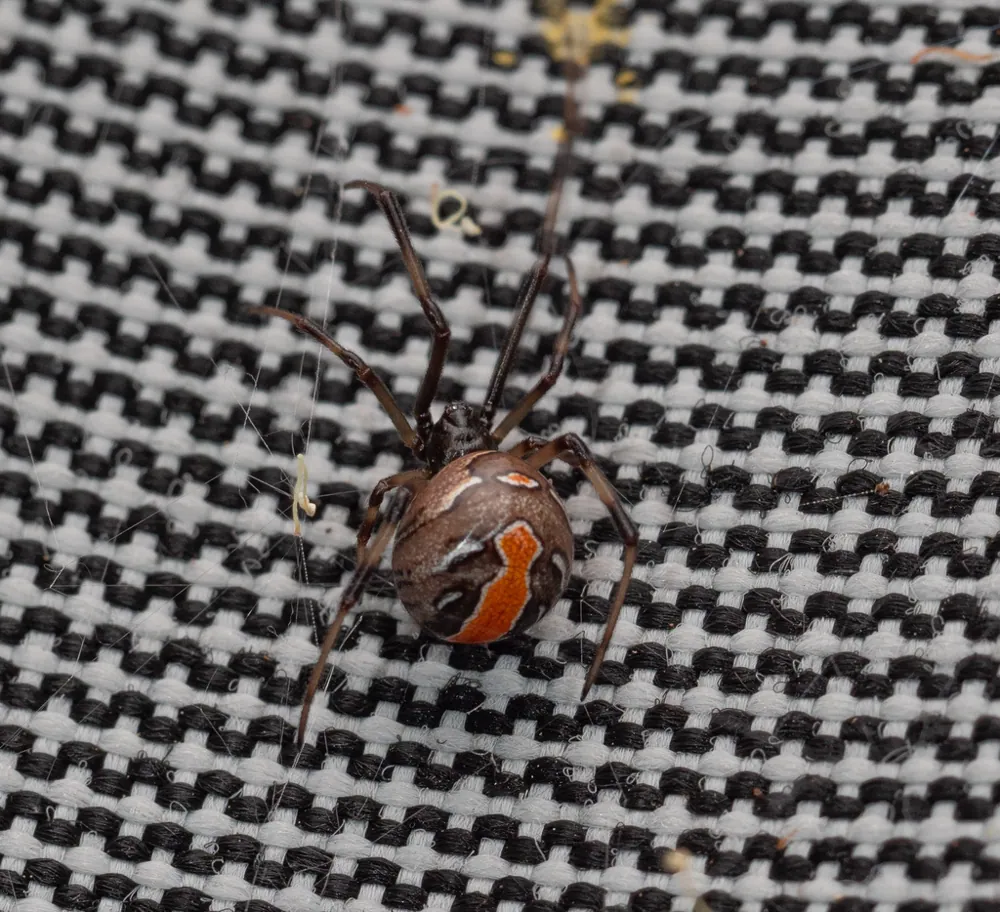
- The adult female has a round, shiny black body with a red stripe on the top of the abdomen.1
- Underneath, she has an hourglass-shaped red or orange streak.1
- The female's body is about 1 cm long, with slender legs.1
- The male is much smaller, 3 to 4 mm long, light brown with white markings on the upper abdomen and a pale hourglass marking underneath.1
- Its web is an irregular, untidy tangle of strong silk, usually in a warm, sheltered spot.1
A na-agwakọkarị ya na: The false redback spider (Steatoda capensis) has a similar build but is uniformly black or plum-coloured, and it has no red stripe on its abdomen.1
Ike nsị
Nsị na-esi n'eze nsị ya ma ọ bụ eze ya apụta mgbe ọ na-ata.
Gịnị ka nsị ọ na-agba na-eme?
The venom is neurotoxic to vertebrates, meaning it attacks the nerves, and it causes a condition called latrodectism. Pain starts around the bite and typically becomes severe, spreading up the bitten limb and lasting for over 24 hours. Localised sweating in patches of skin is highly indicative of latrodectism, and nausea, vomiting, headache and agitation may indicate severe envenomation.1
Kedu otú o si dị egwu nye mmadụ?
Ihe ize ndụ nye mmadụ: Ọ dị njọỊta ya chọrọ dọkịta. Ọnwụ anaghị adịkarị ma ọlị.The redback is one of the few spider species that can seriously harm humans. Because it often lives in buildings, it is responsible for a large number of serious spider bites in Australia.1
 Ozi ọma: ndị dọkịta nwere ọgwụ (antivenom) ma ọ bụ ọgwụgwọ maka nke a.1
Gịnị ka ọ na-eme mgbe ụjọ tụrụ ya?
Its bright scarlet markings may serve as a warning to potential predators.1
 Ọ bụrụ na ọ tara
- Saa ebe ọ tara, tinye akpa ice n'elu ya maka mgbu ahụ. Chọọ enyemaka ọgwụ ma ọ bụrụ na mgbu ahụ siri ike, gbasaa, ma ọ bụ na ahụ adịghị onye ahụ mma.
Na-ebu ụzọ kpọọ nọmba mberede gị mgbe niile (112, 000, 911). Nke a bụ ndụmọdụ enyemaka mbụ n'ozuzu, ọ bụghị ndụmọdụ ọgwụ. Isi ihe enyemaka mbụ
 Nọrọ na nchekwa
- Emetụla anụ ọhịa aka, ejidela ya, emekwala ya ihe ọjọọ, ọbụna obere, ọbụna ma ọ dị ka ọ na-ehi ụra ma ọ bụ nwụọ anwụ.
- Nye ya ohere. Ọ bụrụ na ị zutere otu, dị jụụ, laghachi azụ nwayọ, hapụ ya ka ọ gaa ụzọ ya.
- Ọ bụrụ na otu tara gị: dị jụụ, emegharịla ahụ, kpọọ nọmba mberede gị (112, 000, 911) ma ọ bụ gaa ụlọ ọgwụ ngwa ngwa. Cheta ka o si dị, foto na-enye aka.
Ọ naghị achụ gị. Ọ na-eji nsị ya ejide nri ma ọ bụ chebe onwe ya, ọ ga-akakwa mma n'anya ya ịzo onwe ya. Ihe ndị ọzọ gbasara ịnọ na nchekwa
Ọ hà aṅaa?
Kedu otú o si dị ogologo?
 dị obere nke na ọ nwere ike ịnọdụ n'elu mbọ aka gị
Kedu otú Redback spider si hà ma e jiri ya tụnyere GỊ?
Naanị mgbakọ na mwepụ n'ime browser gị. Ọ dịghị ihe echekwara ma ọ bụ ezigara ebe ọ bụla.
Kedu otú o si agba ọsọ?


Eziokwu
A male redback can successfully mate with a female katipō, a related New Zealand spider, producing hybrid offspring.1
Males often mate with a female who may then eat them, a behaviour called sexual cannibalism that many arachnids show while mating.1
In laboratory tests, redbacks survived an average of 100 days, and sometimes over 300 days, without food.1
After mating, a female can store sperm for up to two years and use it to fertilise several clutches of eggs.1
Spiderlings and larger females steal food from other spiders' webs, and spiderlings sometimes eat their less active siblings.1
Maka ndị ọkachamara nsị
- Aha sayensị
- Latrodectus hasselti
- Otu
- Ududo
- Ezinụlọ
- Theridiidae2
- Usoro
- Araneae
- Kọntinent dị iche iche
- Ọstrelia na Oshenia
- Ụmụ ọhụrụ
- Each clutch averages 250 eggs, housed in a round white silken egg sac. Spiderlings hatch after about 8 days, though cooler temperatures can greatly slow this.1
- Ogologo ndụ
- ihe dị ka afọ 31
- Ihe ize ndụ nye mmadụ
- 3 / 5: Ọ dị njọ3
Ebe eziokwu ndị a si
- Redback spider (Wikipedia (CC BY-SA 4.0))
- Latrodectus hasselti (iNaturalist): aha na nhazi ọkwa.
- Venom Wiki: ọkwa ihe ize ndụ, nha nkịtị na nchepụta ọsọ bụ nke anyị. Lee otú anyị si achọpụta ha: Otú anyị si atụ ihe ize ndụ.
Eziokwu ọ bụla dị na peeji a nwere nọmba na-egosi ebe o si. Ọ bụrụ na anyị mehiere ihe, ndo, anyị bụ ndị hụrụ anụmanụ n'anya, ọ bụghị akwụkwọ akụkọ sayensị. Gwa anyị na [email protected], anyị ga-edozi ya.
 Akpị agụụ na-agụ! Venom Wiki bụ ọrụ otu onye: n'efu, na-enweghị mgbasa ozi na ndị na-esochi gị. Obere onyinye na-enyere aka idebe ya n'ịntanetị.Nye akpị nri
 Katipo
 White-tailed spider
 Peacock spider
 Badge huntsman spider
 Black house spider
 Eastern white-tailed spider
 Coastal taipan
 Common death adder
 Eastern brown snake
 Taipan nke ime obodo
 Sydney funnel-web spider
 Agwọ agụ